

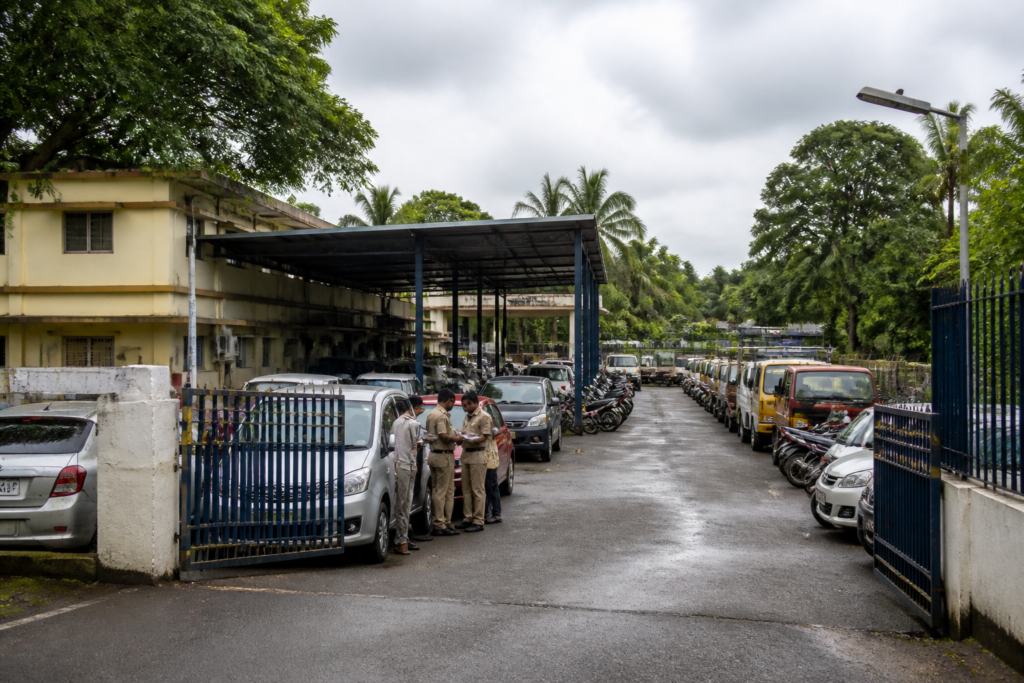
Kerala plans to establish authorised vehicle yards in every taluk to store vehicles seized for non-payment of motor-vehicle tax, Transport Minister C P John told the state Assembly while introducing the Kerala Motor Vehicles Tax Amendment Bill, 2026, on Wednesday.
The proposed network is intended to address a practical gap in the enforcement of the state’s motor-vehicle tax law: the government does not currently have enough land and facilities to keep vehicles seized by enforcement agencies. The minister said the lack of adequate storage infrastructure had made it difficult to implement existing legal provisions effectively.
Under Section 11 of the Kerala Motor Vehicles Tax Act, 1976, motor vehicles department officers not below the rank of assistant motor vehicles inspector and police officers not below the rank of sub-inspector can seize vehicles that are being used, or kept for use, in the state without payment of the applicable tax.
The amendment would allow the government to create authorised yards at the taluk level, bringing vehicle storage closer to the administrative areas where enforcement action takes place. The move could give officials a designated location for seized vehicles instead of relying on limited government land or facilities.
The proposed system would also transfer the cost of seizure-related storage to vehicle owners. Under the bill, owners would have to pay the fee for transporting a seized vehicle to an authorised yard and the parking fee for the period it remains there. The vehicle would not be released merely because the owner later produces proof that the outstanding tax has been paid. All transport and parking charges would also have to be cleared.
The government has not yet announced the rates for transportation or parking. The minister said the fee structure would be decided later. He also stated that the new arrangement would not impose an additional financial burden on the government.
The proposal places local storage capacity at the centre of tax enforcement. Without secure and adequately equipped yards, seizure powers can remain difficult to use even when the legal authority exists. The bill therefore links enforcement not only to officers’ powers but also to the availability of land, vehicle-handling facilities and a system for recording the duration and cost of storage.
The proposal could affect vehicle owners who fail to pay tax as well as those whose vehicles are seized during enforcement operations. Their liability would extend beyond the tax arrears to the costs incurred in moving and retaining the vehicle. The final impact will depend on the fee rates and the operational rules that are notified after the legislative process.
An opposition member, K Premkumar, raised a point of order during the proceedings. The point was rejected, after which the bill was referred to the subject committee for consideration. The committee’s examination and the subsequent legislative steps will determine the final form of the taluk-level yard system.


