

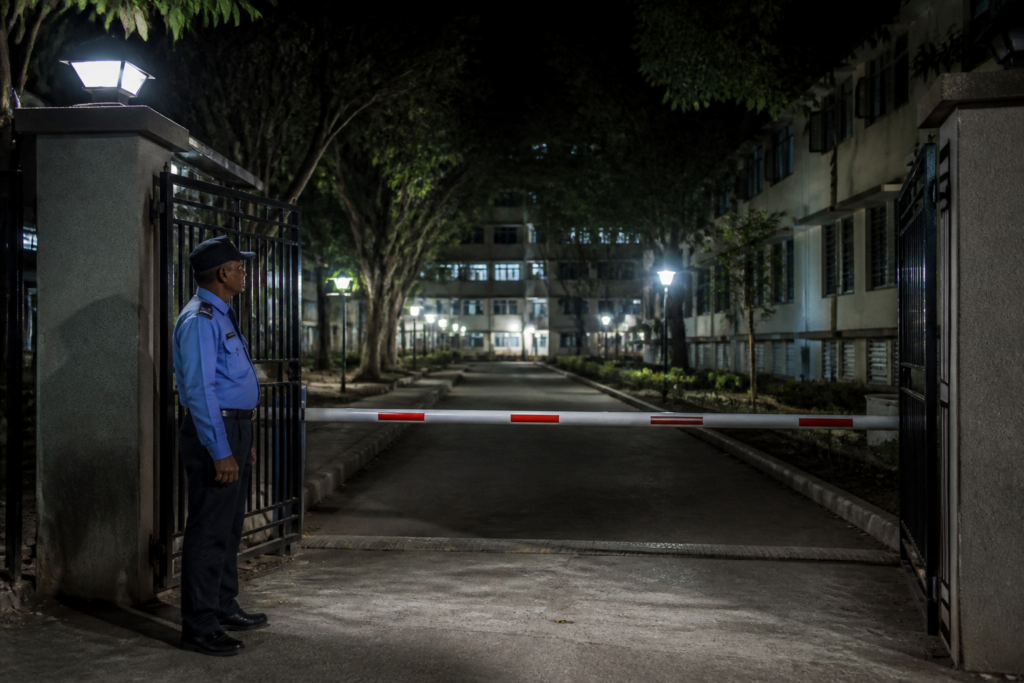
A police case involving two students accused of entering the girls’ hostel at Savitribai Phule Pune University at night has brought the university’s access-control and residential safety systems under scrutiny. The incident, reported to have occurred on 11 October at about 11pm, allegedly involved the students entering a restricted hostel area and attempting to intimidate residents under the guise of “moral policing”.
The Chaturshringi police registered a case against Pramod Rathod and Omkar Gore after a complaint by 51-year-old security guard Sampat Patil. According to the report, both accused students are residents of the university’s boys’ hostel in the Department of Education. The police case was registered under Section 329(1) of the Bharatiya Nyaya Sanhita.
The immediate issue is the alleged entry itself. The report states that men and other students are prohibited from entering the girls’ hostel premises, yet Rathod and Gore allegedly entered the facility in violation of university rules. The accusation that they confronted or threatened students adds a second dimension: the hostel was not only allegedly breached, but the residents were also subjected to conduct described in the report as moral policing.
That distinction matters for understanding what the case places before the university administration. A residential hostel is an institutional space governed by access rules, security procedures and responsibilities towards students living on campus. The reported incident raises questions about how restricted entry is monitored at night, how guards are expected to respond when rules are breached, and how complaints from residents are escalated to the police and university authorities.
The available account identifies the security guard as the person who noticed the incident and intervened. Patil subsequently approached the Chaturshringi police, providing the basis for the case. This suggests that the first documented response came through the security function rather than through a publicly described hostel grievance or university disciplinary mechanism. The report does not state whether the hostel had electronic access controls, visitor registers, surveillance cameras or a night-duty administrative officer in place at the time.
Those missing details are important because physical security at a large residential campus depends on more than a rule prohibiting entry. The effectiveness of a restriction depends on whether access points are clearly controlled, whether staff can identify authorised residents, whether incidents are recorded, and whether students know where to seek help. The supplied report confirms the alleged breach and the police action, but it does not establish which specific control failed or whether the university had previously recorded similar incidents.
The case also highlights the layered nature of responsibility on a university campus. The police are examining the alleged offence, while the university is responsible for hostel administration, access policies and internal disciplinary processes. The report names the investigating officer as Police Sub-Inspector Umesh Koli, but it does not mention any separate statement from the university administration or detail any internal inquiry.
This separation between criminal investigation and institutional response is significant. A police case addresses the conduct alleged in the complaint. It does not, by itself, explain whether the campus’s security arrangements were adequate, whether residents were promptly supported, or whether the university will review hostel protocols. Those questions require information from the university and from the relevant campus security authorities, none of which is included in the supplied report.
The numerical details in the account show the narrow but concrete scale of the incident: two students have been named as accused, the reported entry occurred at approximately 11pm, and the complaint was made by a 51-year-old security guard. The incident is located within the girls’ hostel premises of a university campus, rather than in a general public space. These details establish the setting and the sequence of the reported response, but they do not provide a wider measure of hostel safety across the university.
The report also does not state how many students were present, whether any student suffered a physical injury, whether the accused students had any authorised reason to be on the premises, or whether arrests were made. “Moral policing” is presented as an allegation in the account, and the final determination will depend on the police investigation and any subsequent legal process. The registration of a case should therefore not be treated as a finding of guilt.
For students living in hostels, the practical question is whether residential boundaries are enforceable at the point of entry and whether complaints can move quickly from campus security to institutional and police action. In this case, the security guard’s intervention and complaint led to police registration. At the same time, the available information does not show whether the university has communicated any additional measures to residents or staff after the reported incident.
The episode therefore exposes a governance gap in the public record even before the investigation concludes. The police response is documented, but the institutional response remains unclear. A complete account would need the university to clarify the hostel’s access rules, the security arrangements operating on the night of 11 October, the existence of any internal inquiry, and the support available to the affected students.
The matter is now with the Chaturshringi police, with Police Sub-Inspector Umesh Koli conducting the further investigation. The next established developments are expected to come through that investigation and any statement or disciplinary action from Savitribai Phule Pune University.


