

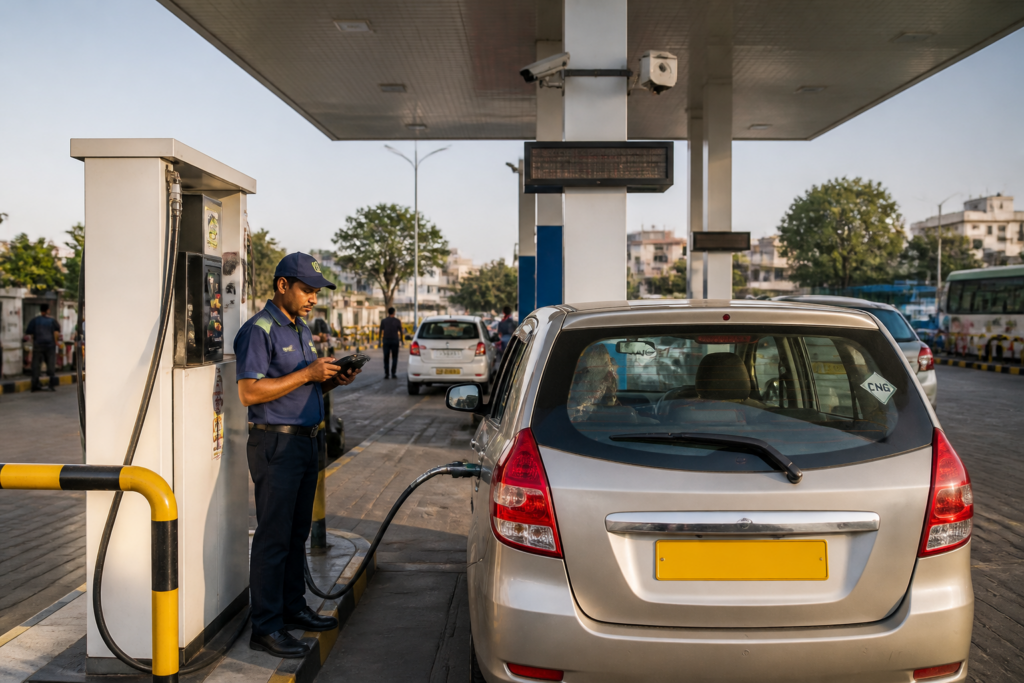
Indraprastha Gas Limited has launched an artificial intelligence-powered system at 10 CNG stations in Delhi to identify vehicles with expired or invalid cylinder hydrotest certificates before they are refuelled, adding an automated layer to existing safety checks.
The pilot was launched at IGL’s Shantipath CNG station by Dr Sanjay Kumar Singh, Joint Chief Controller of Explosives for the North Circle at the Petroleum and Explosives Safety Organisation. IGL Managing Director Kumar Shanker, Director (Commercial) Mohit Bhatia and other senior officials were also present.
Under the system, cameras installed at participating stations capture vehicle registration numbers. An artificial intelligence application then checks the hydrotest status of the vehicle’s onboard CNG cylinder through PESO’s online portal.
When the system detects an expired or invalid certificate, alerts are sent to station personnel through handheld devices, LED displays and public announcement systems. Staff can then intervene before refuelling takes place.
The technology is intended to supplement, rather than replace, manual verification by station personnel. The existing requirement is covered under Rule 35(1) of the Gas Cylinders Rules, as amended in 2025. The automated process seeks to make the verification step more consistent at stations where vehicles arrive for refuelling throughout the day.
Singh described the initiative as “a nascent step towards safety that can be rolled out at large scale”. He also linked the importance of improved safety systems to the planned increase in natural gas’s share of the overall energy mix to 15% and to the possibility of future hydrogen blending.
The pilot places the vehicle registration number at the centre of the verification process, connecting station-level cameras with regulatory information held on PESO’s online portal. For station operators, the system creates multiple alert channels so that a potentially non-compliant vehicle can be identified before gas is dispensed.
IGL has also strengthened its safety checks and launched a campaign to raise awareness about CNG cylinders among vehicle users. The company said it will assess the pilot before considering wider expansion to additional stations.
The initiative comes as CNG infrastructure relies on both operator checks and vehicle owners maintaining valid cylinder documentation. The pilot’s next milestone will be IGL’s assessment of the 10-station deployment and any decision on whether the automated verification system should be expanded.


