

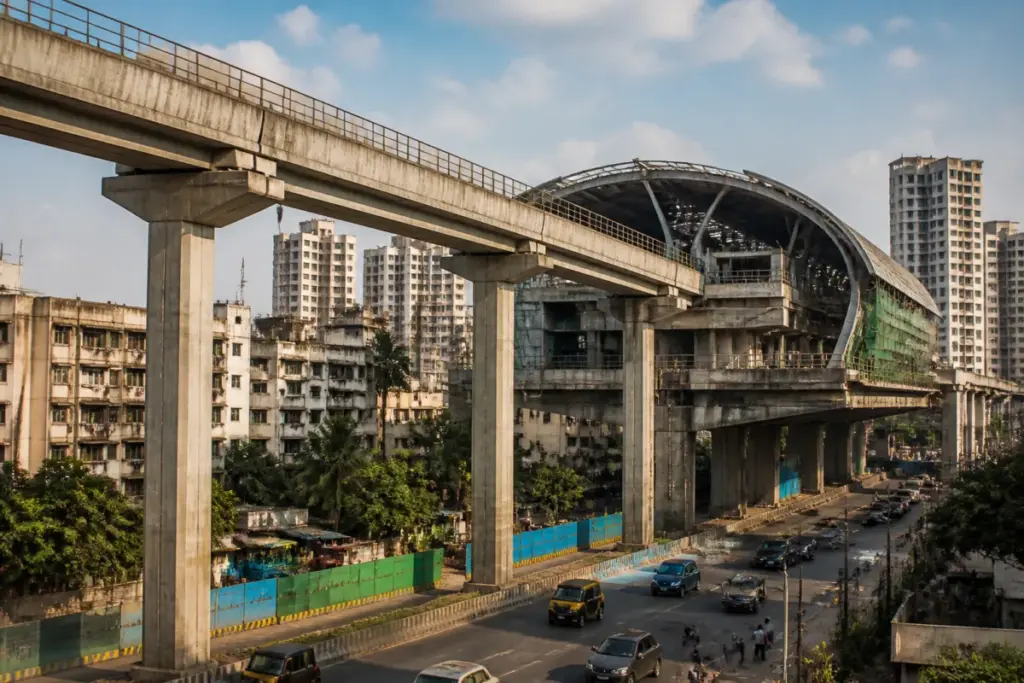
Mumbai Metro Line 9 Phase II, extending from Kashigaon to Subhash Chandra Bose Stadium in Mira-Bhayandar, is expected to be completed in December, according to the Mumbai Metropolitan Region Development Authority (MMRDA). The four-station extension will expand metro connectivity deeper into Mira-Bhayandar and link the suburb to Mumbai’s existing metro network.
The civil and systems work on the stretch is expected to be completed before MMRDA invites the Commissioner of Metro Railway Safety (CMRS) to inspect the corridor. Passenger services can begin only after the mandatory safety inspection and certification are completed.
The second phase will include stations at Sai Baba Nagar, Meditya Nagar, Shaheed Bhagat Singh Garden and Subhash Chandra Bose Stadium. The extension will build on the first phase of Metro Line 9, which runs from Dahisar East to Kashigaon and was opened to the public in April 2026.
Metro Line 9 is an extension of Metro Line 7, which connects Dahisar East with Gundavali in Andheri East. Once the full corridor is operational, commuters from Mira-Bhayandar will have a direct metro connection to the wider suburban metro network, including the route towards Andheri and other parts of Mumbai.
The line is expected to provide an alternative to road-based travel and overcrowded Western Railway suburban services. The corridor will also run parallel to one of the region’s busiest travel routes, the Western Express Highway, where congestion frequently affects journeys between Mumbai’s western suburbs and the Mira-Bhayandar area.
MMRDA estimates that Metro Line 9 could reduce travel time by between 50% and 75%, depending on prevailing road traffic conditions. The authority expects the reduction to make peak-hour journeys more predictable for residents travelling between Mira-Bhayandar, Dahisar and destinations across Mumbai.
Mira-Bhayandar’s expanding residential population has increased demand for daily travel towards Mumbai’s employment centres. At present, commuters depend largely on road transport and suburban trains, making the availability of a metro connection significant for journeys that involve traffic delays or crowded rail services.
The effect of the new phase on road congestion and suburban rail demand will depend on passenger uptake, service frequency and the ease of interchange with Metro Line 7. The immediate next step is the completion of the remaining civil and systems work, followed by the CMRS inspection and safety certification before the section can open to passengers.


