

Tamil Nadu’s El Niño expert advisory panel has warned of severe urban flooding, intense cyclones and above-normal rainfall between October and December, followed by heat stress, water scarcity and drought risks in 2027. The warning covers the 2026-27 and 2027-28 cycles and has prompted the state government to accelerate flood mitigation, desilting and water-storage work.
The high-level committee, comprising climate scientists from IIT Madras, Anna University and weather experts, submitted a multi-hazard report to the Tamil Nadu government. It cautioned that El Niño should not be treated only as a drought indicator, as it can produce contrasting weather conditions, including intense rain in some areas and rainfall deficits in others.
The panel has identified Chennai and Cuddalore among the coastal districts at risk of severe flooding during the northeast monsoon. It also warned of landslides and sudden flash floods in the hilly terrains of the Nilgiris, Coimbatore and Dindigul. Since rainfall is expected to be uneven across the state, several areas could face deficient rainfall followed by severe heat stress and water shortages during 2027.
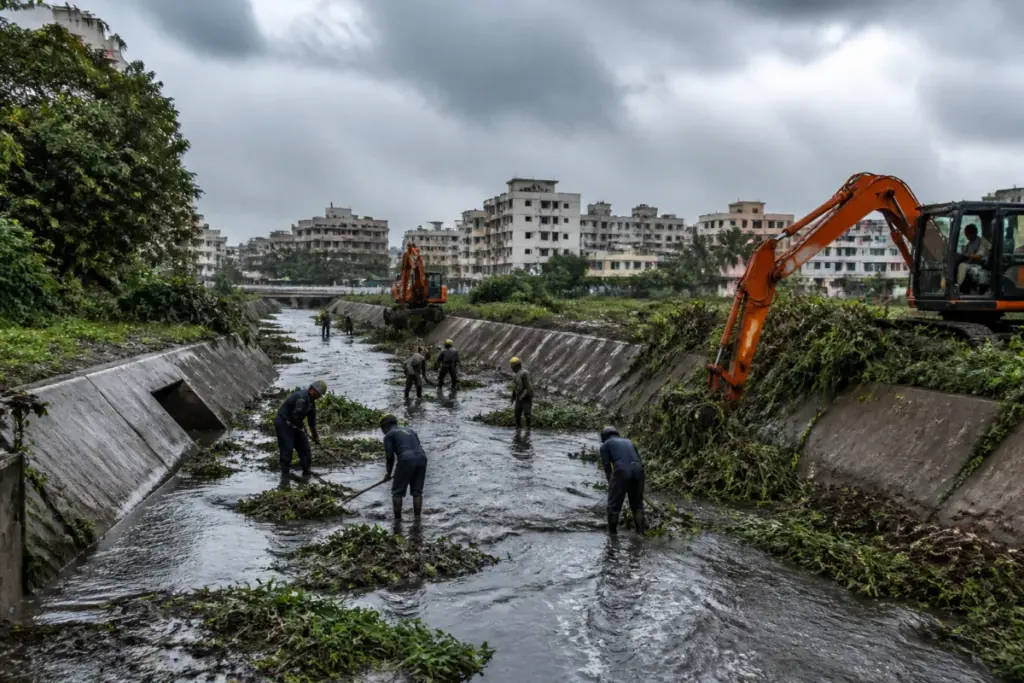
Among its recommendations, the committee has called for heavy desilting of critical river basins, agricultural tanks and stormwater channels to improve their capacity to hold sudden volumes of floodwater. It has also recommended advanced drones for damage assessment, identifying search-and-rescue routes and tracking waterlogged areas. For the summer drought risk, the panel has asked the government to secure alternative drinking-water sources.
In Chennai and its surrounding districts, the government said flood mitigation work carried out since 2022 had reduced the number of highly vulnerable flood zones from 800 in 2015 to 219 in 2026. Work is being undertaken across the Kosasthalaiyar basin in north Chennai, the Kovalam basin in the south, the Otteri Nullah-Cooum drainage system in western Chennai and other canal networks, including the Captain Cotton and Virugambakkam canals.
The Kosasthalaiyar basin project, covering 651 km, has been completed, while the Kovalam basin project is in its final stages. Stormwater drains covering 1,102 km of the city’s 1,683-km network have been desilted, according to the report. More than 1,320 high-power dewatering pumps have also been positioned near subways and locations that regularly experience waterlogging.
The Chennai Metropolitan Development Authority is restoring 10 major urban lakes, including Retteri, Velachery, Puzhal and Perumbakkam. Around Chennai, 51 lakes have been rejuvenated, while the government is examining whether the Moovarasampet quarry can be converted into a balancing reservoir to receive sudden floodwater from neighbouring areas.
A major focus is the Okkiyam Maduvu channel, which carries water from the Pallikaranai marshland towards the Buckingham Canal. A Rs. 91-crore channel is being built to drain 1,000 cubic feet of water per second and protect Velachery, Semmenchery and Perumbakkam. A separate Rs. 73-crore drainage project along Old Mahabalipuram Road towards Thoraipakkam is nearing completion in the Sholinganallur zone.
The government is also planning to replace a two-kilometre bottleneck created by the Pallavaram-Thoraipakkam radial elevated bridge with a new elevated bridge costing Rs. 450 crore. In peripheral lake linkages such as Navalur lake, floating excavators are being used to remove water hyacinth and improve water movement. The advisory panel’s warning will now be followed by continued basin desilting, drainage work and preparations for the coming northeast monsoon.


