

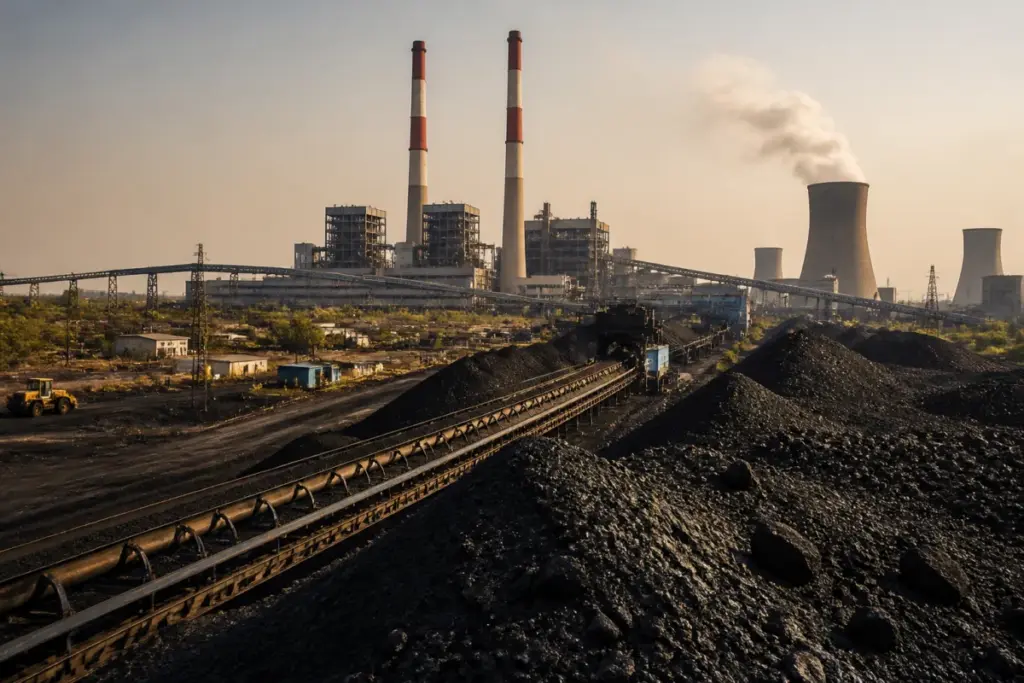
Telangana’s reported coal-stock position has raised concerns about the reliability of thermal power generation, with the Yadadri Thermal Power Plant said to have fuel for only five days and the State’s thermal stations holding about nine days of stock on average. The figures, presented in a Telangana Today explainer, also bring attention to the procurement decisions and institutional responsibilities behind the State’s electricity supply.
The material supplied does not establish whether the reported stock levels represent an official State-wide assessment, plant records, a regulatory benchmark or figures provided by a particular agency. It also does not include the dates on which the stock was measured. Those details are important because coal inventories change with daily generation, mine output, railway movement, imported supplies and demand. Without the underlying records, the figures should be treated as reported claims rather than independently established facts.
The immediate urban significance is clear even though the evidence remains incomplete. Thermal power plants are part of the infrastructure system that supports homes, commercial establishments, public services and industry. A sustained fuel shortfall can affect generation, while uncertainty over supplies can complicate scheduling and procurement. The supplied report, however, does not state that a power shortage has occurred, nor does it provide data on outages, generation losses, load-shedding or consumer-level disruption.
Yadadri is identified in the report as a 4,000-MW thermal power plant. The report says the plant has coal stocks for around five days, while Telangana’s thermal power stations have about nine days of stock on average. These numbers point to a difference between the position at a major individual plant and the broader average across the State’s thermal fleet. They do not, by themselves, show how much electricity Yadadri was generating, how much coal it was consuming each day or whether additional consignments were already scheduled.
That distinction matters because stock adequacy cannot be assessed only by counting days of fuel. The relevant calculation would also depend on the plant’s operating load, the quality and calorific value of the coal, the number of units running, the expected arrival of fresh supplies and the availability of alternative generation. None of these details is included in the supplied material. As a result, the five-day figure signals a supply concern but does not establish the duration or severity of any potential power crisis.
The report places Singareni Collieries Company Limited, or SCCL, at the centre of the debate over coal availability. SCCL’s role is presented as one of the key questions facing Telangana’s power sector. The supplied content does not specify the company’s production levels, contractual obligations, dispatch schedule, transport arrangements or the quantity of coal supplied to State-owned thermal stations during the period under discussion.
This missing institutional detail prevents a firm conclusion about why stocks are reportedly low. A shortfall could relate to production, dispatch, transport, procurement, plant demand or the timing of deliveries, but the supplied material does not identify which of these factors was responsible. It also does not provide a statement from SCCL confirming or disputing the reported position.
The explainer also refers to a debate over coal procurement and imports. New coal supply agreements are mentioned as a possible way to prevent a power shortage. The material does not identify the parties to those agreements, the contracted volumes, the delivery schedule, the price, the source of the coal or whether the agreements had been signed and made operational. It therefore remains unclear whether the proposed arrangements were a completed administrative step or an option under discussion.
The distinction between domestic production and imported coal is significant for power-sector planning. A State utility must coordinate fuel procurement with plant operations, transport logistics and electricity demand. But the supplied report does not provide the procurement structure or explain which agency has authority over each stage. It also does not establish whether imports would supplement SCCL supplies, replace a portion of them or be used only for a specific plant.
The political dimension adds another layer of uncertainty. The report refers to competing allegations by the Congress government and BRS Working President KT Rama Rao. Those allegations are identified as part of the debate, but the supplied material does not reproduce their full wording, provide supporting documents or record responses from all the institutions involved. The claims should therefore remain attributed to the respective political actors and should not be presented as independently verified explanations for the reported stock position.
For readers, the central issue is not only whether coal stocks have fallen below a required level. It is also how the State defines an adequate reserve, who monitors it, how frequently the data is published and what contingency measures are triggered when supplies decline. The supplied material does not identify the applicable stock benchmark or the authority responsible for declaring a shortage. Without that information, the phrase “required levels” cannot be evaluated against a clearly stated standard.
The case also illustrates the dependence of electricity reliability on systems that are largely invisible to consumers. Power generation requires more than installed capacity. It depends on fuel availability, contracts, mine output, transport and the ability of generating stations to convert fuel into electricity. A plant may have substantial installed capacity but still face operational pressure if fuel deliveries do not keep pace with consumption. The report raises this structural question, but does not provide the operational data needed to measure its scale in Telangana.
The State’s thermal power stations are said to have around nine days of coal stock on average. An average, however, can conceal wide differences between plants. Yadadri’s reported five-day position is one example of that problem. Other stations could hold more or less fuel, but the supplied material does not provide a plant-wise table. It also does not explain whether the average includes Yadadri and which other thermal stations were counted.
The absence of a time series is another limitation. A single stock figure cannot show whether inventories are falling steadily, recovering after a temporary dip or moving within a normal operating range. To establish a trend, readers would need comparable data across several dates, along with daily receipts, consumption and generation. None of those figures is supplied in the report summary.
The report’s framing makes the issue relevant to governance as well as infrastructure. Coal supply arrangements involve public-sector companies, power utilities, government departments and transport systems. When responsibility is divided across institutions, public accountability depends on clear records and timely communication. If a shortage is alleged, the public needs to know who measured the stocks, what benchmark was applied and what corrective action was authorised.
The supplied material does not provide those answers. It also does not confirm whether the Telangana government, SCCL, the power-generation utility or any regulatory authority has issued a formal statement. The absence of such material is the principal reason this draft requires verification before publication as an established account of a power-supply risk.
What can be established from the supplied report is narrower. Telangana’s coal stocks are reported to be below required levels; Yadadri’s stock is reported at approximately five days; the average for the State’s thermal stations is reported at around nine days; and a public debate is underway over SCCL, coal procurement, imports and new supply agreements. These claims are attributable to the Telangana Today explainer, but the underlying evidence is not included.
Before the story is treated as confirmed, the stock figures should be checked against official plant-level or utility records, with the measurement dates and benchmark clearly stated. SCCL’s production and dispatch position, the status of any new supply agreements, and the government’s response should also be established. Confirmation of whether consumers have experienced or are expected to experience supply restrictions would help distinguish a fuel-supply warning from an actual power shortage.
Until those details are available, the reported coal-stock position is best understood as a significant warning about Telangana’s power infrastructure rather than proof of an impending crisis. The next developments to monitor are an official stock assessment, clarification from SCCL and the power authorities, and documentary details of any domestic or imported coal supply agreements.


