

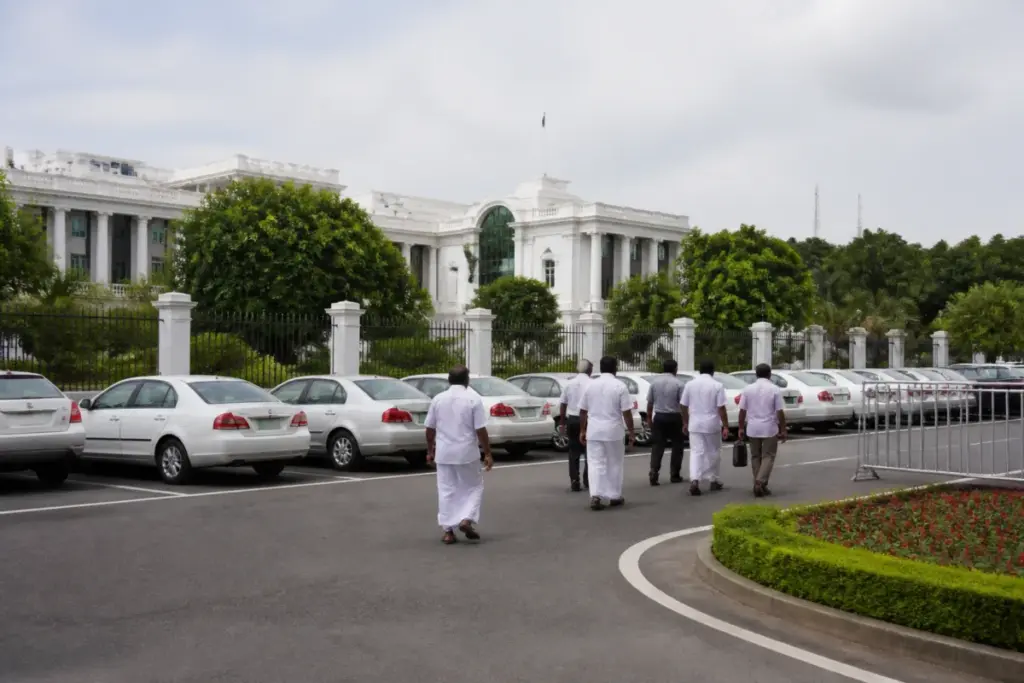
Tamil Nadu’s decision to provide cars to legislators is not only a question of official travel. It is a test of how a state converts a political assurance into a recurring public asset programme, how benefits are distributed across constitutional and political offices, and how expenditure is justified when the total upfront bill is expected to approach ₹40 crore.
A gazette notification issued by the Tamil Nadu government in early October amended the Tamil Nadu Legislative Assembly Travelling Allowance Rules to establish purchase ceilings for official vehicles. The limits are ₹26 lakh for ministers, the Assembly Speaker, deputy Speaker, Leader of the Opposition and chief government whip, and ₹15 lakh for MLAs. The ceilings include ex-showroom price, taxes, registration fees and motor vehicle insurance premiums. They will rise by 5% every year.
The notification, issued by Public Department secretary E Sundaravalli on October 1, provides the administrative mechanism for implementing Chief Minister C Joseph Vijay’s Assembly announcement on cars for MLAs. The announcement followed a request from VCK MLA L E Jothimani, who represents Kattumannarkoil, for cars to be provided to all legislators. The proposal then became a political issue, with opposition and Left party legislators questioning whether the benefit should be accepted while the state faces financial pressure.
The numbers make the decision more than a routine travelling allowance revision. According to the report, the government would spend more than ₹10 crore on cars for 35 ministers, including the chief minister, and four other designated offices: the Speaker, deputy Speaker, Leader of the Opposition and chief government whip. Around ₹29.25 crore would be spent on cars for the remaining MLAs. The total cost for 234 vehicles is expected to be around ₹40 crore, excluding additional recurring costs.
That last qualification is central. The announced figure is primarily a purchase estimate, not the complete cost of operating a vehicle fleet. The supplied report does not provide figures for fuel, servicing, repairs, drivers, replacement cycles, insurance renewals or administrative management. It therefore establishes the scale of the initial procurement, but not the full lifetime cost to the state. The distinction matters because vehicle schemes can create expenditure beyond the original capital outlay.
The notification also creates two different ownership and procurement arrangements. Cars for ministers will be purchased in the name of the government. Vehicles for the other eligible legislators will be procured in the name of the secretary of the Tamil Nadu Legislative Assembly Secretariat. This division indicates that the scheme is being implemented through more than one administrative channel, even though the public-facing benefit is broadly described as the provision of cars to legislators.
Ownership is not merely a legal detail. It determines who controls the asset, which office records it, how it is assigned, and what happens when an elected representative leaves office. The supplied report does not specify the rules for transfer, return, replacement or disposal of vehicles after a minister’s or MLA’s tenure ends. Those details will determine whether the programme functions as a tightly controlled official transport system or as a wider entitlement attached to an officeholder.
The annual 5% revision introduces another structural feature. The purchase ceilings are not fixed permanently at ₹26 lakh and ₹15 lakh. They will increase each year, allowing the scheme to adjust automatically without requiring a fresh political decision for every revision. That may simplify administration, but it also means the value of the entitlement will expand over time. The report does not state whether the annual increase is linked to a specified price index, vehicle-market data or another administrative benchmark.
This is where the distinction between a policy announcement and an accountable public programme becomes important. A ceiling can limit the price of each vehicle, but it does not by itself establish whether the state will purchase at the ceiling, whether lower-cost vehicles will be preferred, whether common procurement will produce savings, or whether different categories of officeholders will receive different models. None of those procurement conditions is specified in the supplied material.
The political response has made the issue a question of choice as well as entitlement. Leader of the Opposition Udhayanidhi Stalin said he and 59 DMK MLAs would not require the vehicles, according to the report. Left party MLAs also expressed unwillingness to accept them. This means the government’s proposed fleet may not ultimately be identical to the number of vehicles authorised by the notification if eligible members formally decline the benefit.
However, the report does not establish whether such refusals reduce the approved expenditure, whether vehicles will be cancelled before procurement, or whether the allocation can be redirected. That gap illustrates why implementation records will matter more than the announcement alone. The final number of vehicles purchased, the offices that accept them and the amount actually spent will determine the programme’s fiscal footprint.
The scheme also raises a question about the administrative purpose of official cars. The notification is framed through the Tamil Nadu Legislative Assembly Travelling Allowance Rules, suggesting that the stated objective is to support official movement connected to legislative responsibilities. Yet the supplied report does not detail travel patterns, constituency distances, sitting-day requirements or existing transport arrangements for MLAs. Without that information, the public record does not establish whether direct vehicle ownership is the most efficient way to meet the travel needs identified by legislators.
That absence of baseline information limits the ability to evaluate the policy on operational grounds. The announcement tells readers what benefit has been approved and the financial ceiling attached to it. It does not show what travel problem the scheme is intended to solve, how that problem is currently managed, or how performance will be assessed. These are not minor technicalities: they are the evidence needed to distinguish a transport arrangement from a general office entitlement.
There is also an institutional accountability issue. Ministers’ vehicles will be bought in the name of the government, while vehicles for the remaining legislators will be procured through the Assembly Secretariat. The two channels may involve different records, approval processes and reporting responsibilities. The notification names the Public Department secretary as the issuing authority, but the supplied report does not identify the procurement agency, tender method, delivery schedule or system for publishing expenditure.
For a programme involving 234 vehicles, those details would provide the clearest test of public value. A transparent record could show the approved ceiling, actual purchase price, taxes and registration costs, the number of vehicles accepted or declined, and recurring expenditure after deployment. It could also clarify whether the government has treated the vehicles as pooled official assets or assigned them individually to elected representatives.
The policy’s financial scale should also be read precisely. The reported ₹40 crore is a near-term estimate for 234 vehicles and excludes additional recurring costs. The figure is therefore neither a complete budget for the scheme nor evidence of its eventual total cost. It is the starting point for assessing a programme whose annual ceiling revisions and operating expenses could extend its fiscal effect beyond the first purchase.
The controversy is consequently not only about whether legislators should receive cars. It is about whether a publicly funded mobility benefit has been designed with clear eligibility, ownership, procurement and cost controls. The government has supplied the first layer through the gazette notification: who is covered and how much can be spent. The next layer will be visible only through implementation records.
The evidence presently confirms that Tamil Nadu has authorised purchase ceilings, a 5% annual increase and an estimated initial expenditure of about ₹40 crore for 234 vehicles, subject to the acceptance and procurement process. It does not yet establish the final number of vehicles, the actual purchase price, the operating cost or the rules governing vehicles when officeholders change. Those are the milestones that will determine whether the policy remains a one-time procurement decision or becomes a continuing cost of legislative administration.


