

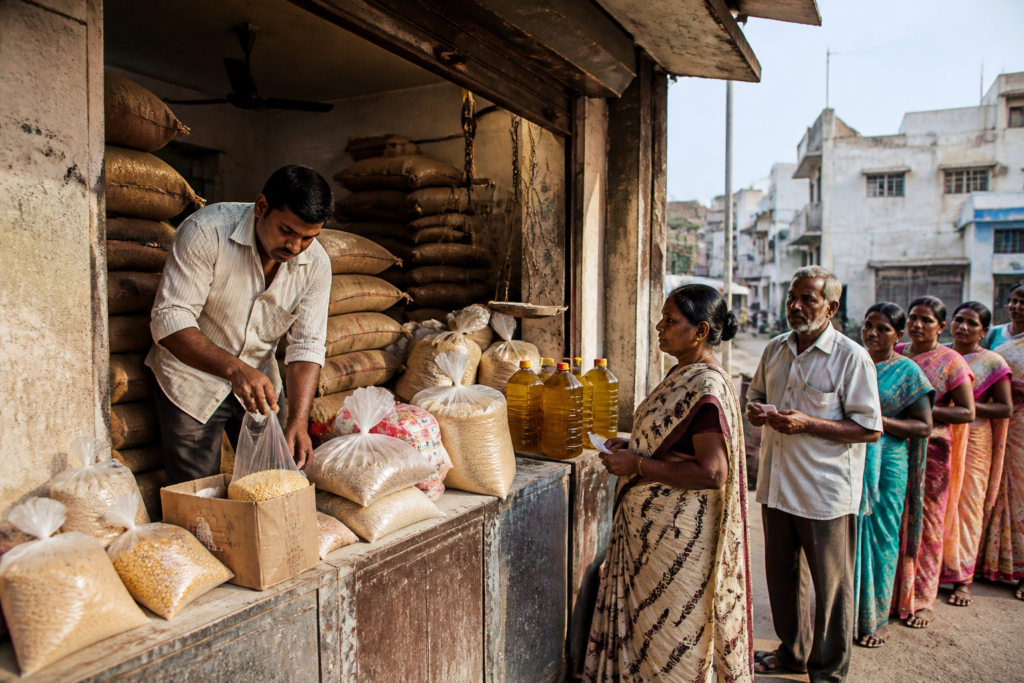
Tamil Nadu may distribute two months of ration supplies in advance as rice, sugar and pulses become more expensive ahead of Deepavali, according to a report by Dinamalar. The proposed measure would allow eligible rice-card holders to collect their November and December supplies from the end of this month, but the plan has not yet received final confirmation.
Tamil Nadu’s ration shops currently provide rice-card holders with 20 kg of rice free of cost, along with 2 kg of sugar, 1 kg of toor dal and 1 litre of palm oil at subsidised prices, according to the report. The advance distribution is intended to support households facing higher prices for essential food items.
Dinamalar attributed the proposal to a Food Department official, who said foodgrain production had been affected in several states after below-normal southwest monsoon rainfall. The report said the prices of rice, pulses, sugar and other essential commodities had risen by more than Rs 20 per kg in some cases, increasing pressure on household budgets.
The timing of the proposed distribution is linked to Deepavali, which is due to be celebrated next month. The official said the government had decided to provide the ration allocation meant for November and December from the end of the current month. However, the official also said that the proposal would be discussed with the Chief Minister before a final decision was taken.
That distinction is important for ration-card holders because an advance release would change the normal monthly collection cycle across the state’s public distribution network. The report does not specify whether all ration shops would follow the same distribution schedule, whether cardholders would need to collect both months’ supplies in a single visit, or how stocks would be allocated to individual shops.
The report also noted a change in demand for subsidised rice. Some rice-card holders who previously did not collect their rice are now reported to be purchasing it because open-market rice prices have increased. This suggests that price movements outside the ration system are influencing demand within the public distribution network, although the report does not provide statewide sales figures or stock data.
Tamil Nadu’s ration shops serve as a direct food-security channel for households that hold eligible cards. In periods of price volatility, the system’s role extends beyond routine monthly distribution: the availability of subsidised staples can determine whether families can absorb increases in the open market or must reduce consumption. An advance allocation could provide short-term support, but its implementation would depend on confirmed procurement, shop-level stocks and clear instructions to beneficiaries.
The report does not establish whether the proposed schedule has been issued through a government order or formal Food Department notification. It also does not state the total quantity of rice, sugar, pulses or palm oil to be released, the number of beneficiaries covered, or the financial implications for the state. These details will be necessary to assess the measure’s operational scale.
The Food Department’s proposal remains subject to consultation with the Chief Minister and a final government decision. Any formal announcement is expected to clarify the distribution dates, eligible commodities, quantities and procedures for ration-card holders.


