

Tamil Nadu’s monsoon preparedness has come under criticism after We The Leaders Foundation chief K Annamalai alleged that the state had not completed key precautionary work ahead of the northeast monsoon, including lake desilting and the restoration of basic infrastructure in rural areas.
Speaking to reporters in Coimbatore on Tuesday after attending the “Home Is the First Classroom” programme at Thamarai World School, Annamalai urged the state government to appoint officials and ensure that local bodies complete pending monsoon-related works. His remarks placed the responsibility for preparedness on both the state administration and local civic bodies.
Annamalai said the actual status of the government’s measures would become clear when the state receives heavy rain. He specifically questioned whether Chennai would face flooding and whether stormwater drain work had been implemented properly. The report did not provide independent data on the present condition of Chennai’s drains, the extent of lake desilting completed or the number of pending works across Tamil Nadu.
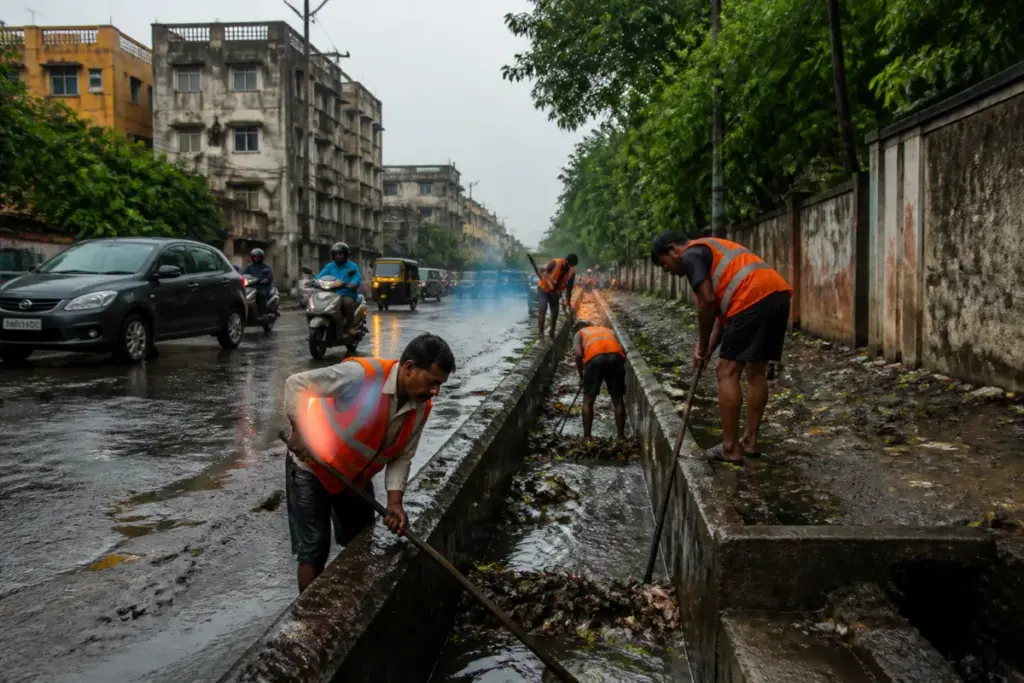
The comments point to two separate but connected layers of monsoon preparation. In cities such as Chennai, stormwater drainage is central to moving rainwater away from roads and neighbourhoods. In rural areas, the condition of lakes and basic infrastructure can affect water storage, local access and the ability of communities to cope with intense rainfall. An incomplete project at either level can limit the effectiveness of broader seasonal preparedness.
Annamalai accused the administration of being under the control of officials and alleged that this had resulted in inadequate action in rural areas. He also alleged that the current ruling dispensation was repeating mistakes made earlier by the DMK. These political allegations were not accompanied in the report by a response from the state government or by documentary evidence detailing the status of specific projects.
The criticism comes as local bodies are expected to execute much of the practical work required before heavy rain, including clearing or improving drainage infrastructure and addressing local bottlenecks. Annamalai called for officials to be appointed and for pending work to be monitored through the local-government system, but the report did not specify a completion schedule, funding allocation or agency-wise responsibility for the measures he referenced.
For residents, the immediate concern is whether preventive work is completed before severe rainfall exposes gaps in drainage and civic maintenance. The difference between an announced preparedness plan and work completed on the ground can determine whether roads remain passable, neighbourhoods flood and essential infrastructure continues to function during heavy rain.
The state government’s response to the allegations, along with official information on stormwater-drain work, lake desilting and rural infrastructure restoration, will be necessary to establish the precise level of preparedness. Annamalai said the performance of these measures would be tested when heavy rain arrives.


