

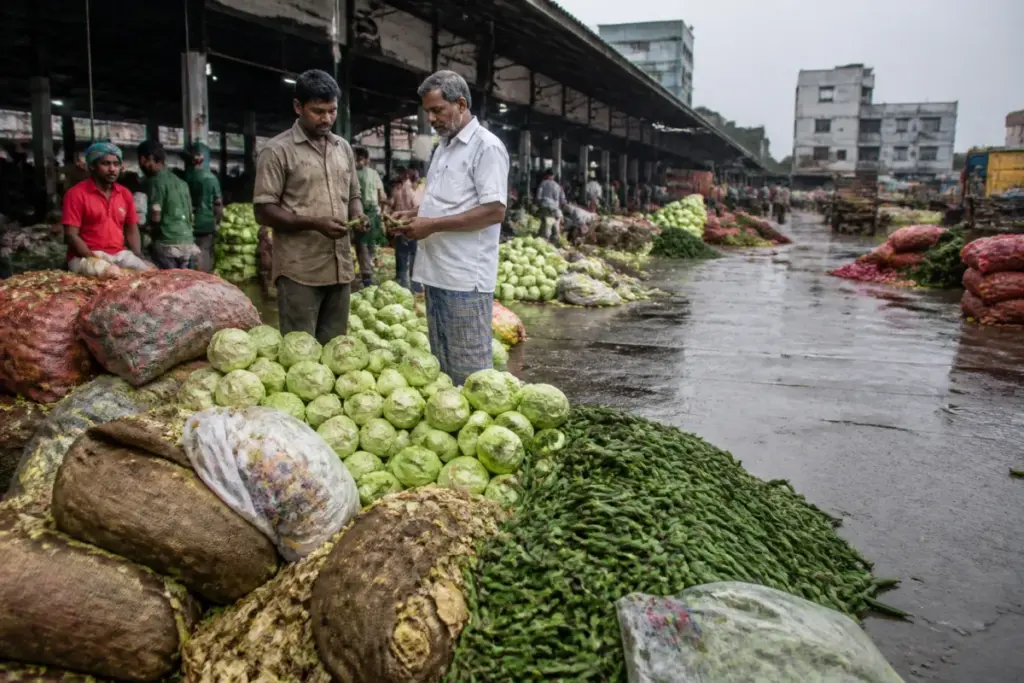
Unsold vegetables piled up inside and outside Chennai’s Koyambedu wholesale market during the long Ayudha Pooja holiday, as poor footfall, heavy rain and changing shopping patterns left traders with large quantities of produce that could not be sold. Sacks of lady’s finger, cabbage, beans and onions were reported to have lost freshness and begun rotting in the open.
The market usually records brisk trade during festivals, when demand from wholesale buyers and retail vendors rises. This year, however, fewer buyers turned up, leaving traders to reduce prices in an effort to clear their stocks. The fall in sales affected vegetables arriving from districts across Tamil Nadu as well as neighbouring states.
S Muthu Kumar, president of the Semi Wholesale Vendors Association, attributed the lower footfall partly to the relocation of southbound bus services from Koyambedu to Kilambakkam. He said many people who previously visited the market before travelling to their hometowns no longer came to Koyambedu.
“The relocation of southbound bus services to Kilambakkam has affected footfall at Koyambedu, as many people who usually visit the market before travelling to their hometowns no longer come there,” Kumar said. He added that heavy rain had worsened the losses because vegetables drenched in rainwater quickly lose freshness and become unsuitable for sale.
Kumar said festival demand had normally been strong enough for traders to expect higher sales, but that expectation was not met during this holiday period. Even after prices were cut, he said, buyers remained absent. The combination of residents leaving Chennai for their hometowns and the shift in bus operations affected the flow of customers to the market.
He also pointed to the growing use of online grocery services as another factor affecting market sales. More consumers are choosing home delivery instead of purchasing vegetables in person, adding to the pressure on a wholesale market whose trade depends on the movement of buyers, retail vendors and produce through the complex.
The reported waste highlights how closely Koyambedu’s trading activity is linked to transport access, weather conditions and the timing of consumer demand. When expected buyers do not arrive, perishable produce cannot be held indefinitely, even when traders lower prices. The losses are therefore not limited to market sellers; they also affect the wider chain that brings vegetables from farms and other wholesale centres to Chennai consumers.
The Chennai Metropolitan Development Authority, which is associated with the administration of the Koyambedu market complex, did not respond to attempts by the newspaper to obtain a comment. The report does not provide an official assessment of the quantity of vegetables discarded or any immediate plan to address the market’s reduced footfall and spoilage during the holiday period.


