

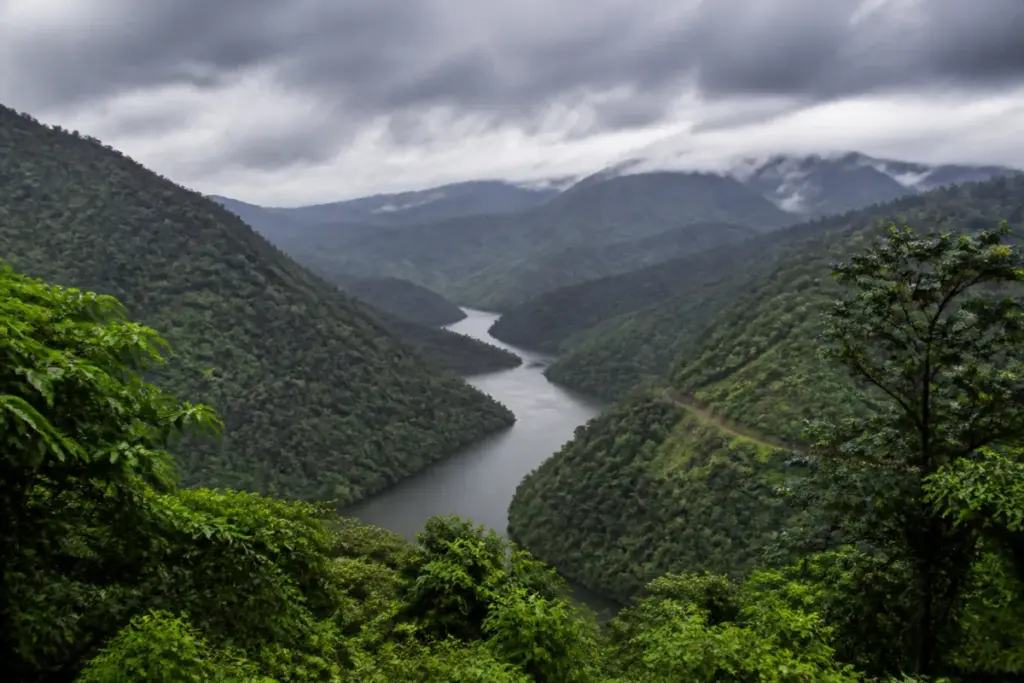
The Sharavathi pumped storage project has entered a critical stage in the debate over how India should expand electricity infrastructure inside ecologically sensitive landscapes. A civil independent expert committee has submitted a 55-page report to the National Board for Wildlife opposing the proposed 2,000 MW project and alleging that an earlier study by the National Institute of Advanced Studies, or NIAS, was one-sided and contained inaccurate information.
The report was submitted by a committee that includes scientists, environmental experts and retired Justice Gopal Gowda, according to Ananth Hegde Ashisara, one of its members. Speaking about the submission, Ashisara said the committee had urged the National Board for Wildlife to reject the NIAS report and withhold approval for the project proposed by Karnataka Power Corporation Limited, or KPCL.
The immediate dispute is therefore not only about the project itself. It is also about the quality and scope of the evidence being placed before the institutions responsible for assessing a major intervention in the Sharavathi Valley Wildlife Sanctuary area. The committee’s central allegation is that the NIAS report moved beyond an impartial assessment and effectively argued in favour of implementing the project.
That allegation is contested in the material supplied for this report and has not been independently established here. The source report does not include a response from NIAS, KPCL, the Ministry of Environment, Forest and Climate Change or the National Board for Wildlife. It also does not state that final wildlife or environmental approval has been granted. What is established is that the civil expert committee has submitted its objections to the national wildlife authority and is seeking rejection of the project.
The project proposed by KPCL would have a capacity of 2,000 MW. Pumped storage projects generally depend on moving water between reservoirs or storage points at different elevations, using electricity to pump water upwards and generating power when water flows down through turbines. The supplied report does not provide the Sharavathi project’s detailed design, reservoir configuration, land requirement, tunnel length, construction schedule or estimated cost. Those omissions are important because the environmental footprint of such a project depends heavily on its physical design and construction method.
According to the civil committee, the earlier expert review led by H.S. Singh had identified risks including extensive biodiversity loss, deforestation, threats to wildlife and landslides. The committee said that review had recommended that the project should not be permitted. Ashisara alleged that the subsequent NIAS assessment did not adequately address these concerns and instead concluded that the project should proceed.
The difference between the two assessments highlights a recurring institutional problem in infrastructure decision-making: an environmental study can be treated either as a test of whether a project is suitable for a location or as a way of identifying conditions under which the project can be made acceptable. The supplied report does not provide the full text of either assessment, so it is not possible to compare their methodologies, data or conclusions. But the existence of conflicting positions means that the basis on which the wildlife authority makes its decision will be significant.
### The evidence dispute
The civil expert committee has identified several areas that it says were missing or inadequately examined in the NIAS report. These include the impacts of large tunnels, an underground power station, changes to groundwater levels and the possibility of landslides. It has also alleged that the report did not examine conventional or alternative options that could meet the project’s stated objectives without placing the same pressure on the sanctuary landscape.
These concerns relate to different layers of risk. Deforestation and habitat loss concern the direct conversion or disturbance of land. Tunnels and underground construction raise questions about excavation, spoil disposal, rock stability and groundwater behaviour. A change in groundwater conditions can affect both ecological systems and the stability of slopes, while landslides can threaten construction workers, wildlife habitats and nearby communities. The source material records the committee’s objections but does not provide technical measurements or independent findings that would confirm the scale of any of these risks.
The committee has also challenged the justification for locating the project in a sensitive ecological zone. Ashisara said the NIAS report failed to explain why the project had to be developed in an area such as the Sharavathi sanctuary. This question is central to the environmental review process. A project’s electricity-generation capacity does not by itself establish that a particular forest location is indispensable. That conclusion would require a comparison of alternative sites, technologies, storage options and system requirements.
The supplied report says the committee believes that such alternatives were not adequately examined. It does not identify the alternatives considered by NIAS or KPCL, nor does it provide a technical comparison between them. As a result, the public record described in the report leaves a key question unresolved: whether the location was selected because it is technically necessary or because it is considered administratively and economically convenient for the proposed design.
### Why the institutional process matters
The National Board for Wildlife is the authority to which the committee submitted its objections. Its role in the project’s approval process is therefore important, although the supplied material does not set out the full sequence of permissions required or the board’s current procedural position. The committee is asking the board to reject the NIAS report and deny approval for the Sharavathi pumped storage project.
The dispute also raises questions about the independence of studies commissioned or used in project approval processes. NIAS is an academic research institution, while KPCL is the state-owned entity proposing to implement the project. The civil committee alleges that the study prepared by NIAS was designed in a manner favourable to KPCL. That is a serious claim, but the source does not provide evidence about the terms of reference, commissioning arrangement, peer-review process, data collection methods or institutional safeguards behind the NIAS report.
Those details would allow the public to assess whether the study examined the project’s impacts impartially, whether dissenting evidence was considered and whether its conclusions were based on a defined environmental threshold or on the project’s stated energy objectives. Without access to the underlying documents, the dispute remains a contest between the conclusions described by the civil committee and the conclusions attributed to NIAS.
The source report also records a broader argument attributed to the civil committee: NIAS allegedly went beyond its assigned task by arguing that the project was necessary because the country faces electricity shortages. This distinction matters. Establishing a national or state-level need for electricity is not the same as establishing that a particular project should be built in a particular wildlife landscape. A robust approval process would need to address both questions separately: whether additional storage capacity is required, and whether this site and this design are environmentally acceptable.
### The energy transition question
Pumped storage is increasingly discussed as a way to balance electricity supply because stored water can be used to generate power when demand rises. However, the supplied report does not provide a state or national storage-capacity target, details of renewable-energy integration, projected demand, or an explanation of how the Sharavathi project fits into Karnataka’s electricity system. It therefore cannot establish whether the proposed 2,000 MW capacity is essential, optional or replaceable through other measures.
That missing system-level evidence is significant. A project may be described as necessary in general energy terms while its specific location remains open to challenge. Conversely, ecological objections to a site do not by themselves settle the wider question of how the electricity system should manage peak demand or store energy. The quality of decision-making depends on bringing both sides of that question into the same assessment rather than allowing one to displace the other.
The committee’s objections show why project-level impact studies need to be connected to wider planning documents. A decision on Sharavathi should be able to explain the project’s energy function, its alternatives, its land and water implications, its construction risks and its effect on the sanctuary in one transparent chain of reasoning. The material supplied does not show that such a consolidated assessment has been made available.
### What remains unresolved
The latest development confirms that the proposed project faces organised opposition from a committee of scientists, environmental experts and public figures, and that its objections have reached the National Board for Wildlife. It does not confirm that the NIAS report has been formally accepted, that the project has received final approval, or that construction has begun.
Several facts require clarification before the dispute can be fully assessed: the contents and terms of reference of the NIAS study; the H.S. Singh committee’s complete recommendations; the project’s exact footprint; the proposed tunnel and underground power-station design; the findings on groundwater and landslide risk; the alternatives examined; and the responses of NIAS, KPCL and the relevant government authorities.
The Sharavathi pumped storage project now represents a test of whether infrastructure approvals in sensitive landscapes can demonstrate both energy necessity and ecological defensibility. The next significant development will be the response of the National Board for Wildlife and the concerned authorities to the 55-page civil committee report, along with the disclosure of the technical studies on which any decision is based.


