

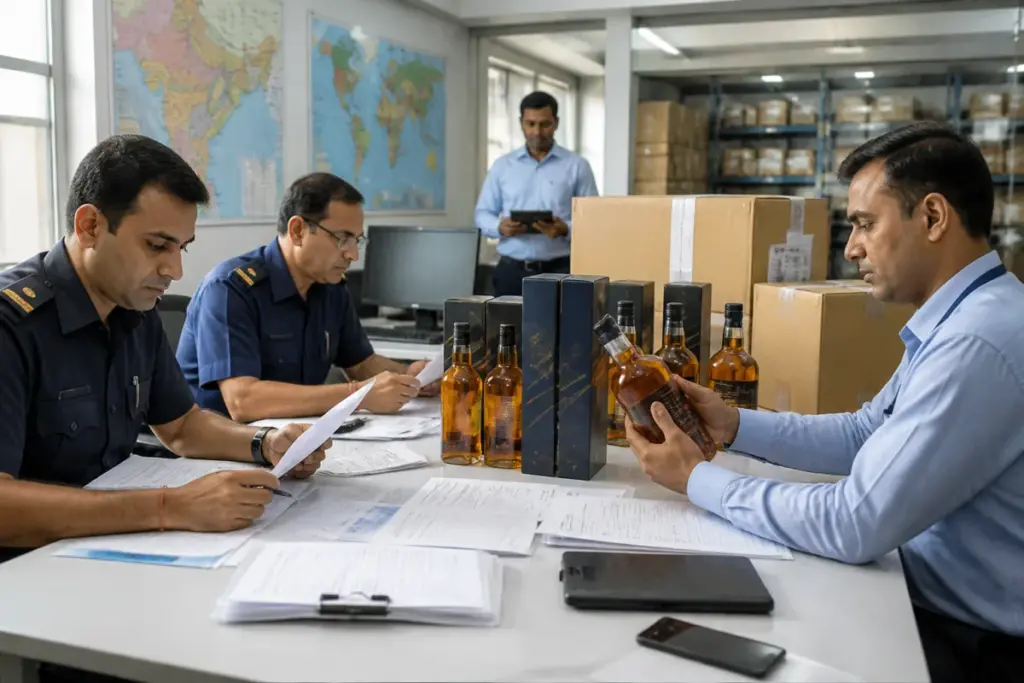
India’s investigation into Pernod Ricard and Diageo over Scotch whisky imports is more than a dispute over how two companies described their products. It exposes the administrative challenge created when a trade agreement lowers duties for a category of goods but customs and tax authorities disagree over which forms of that product qualify. The outcome could affect import costs, liquor pricing and the way multinational companies structure supply chains in India.
Tax authorities are examining whether bulk Scotch whisky imports were wrongly classified to claim reduced tariffs under the India-UK trade agreement, according to a Reuters report carried by the Times of India. The agreement came into effect on July 15 and reduced tariffs on certain Scotch imports from 150 per cent to 75 per cent. The rate is scheduled to fall further to 40 per cent over the next 10 years.
The investigation centres on bulk Scotch concentrates imported for blending and bottling in India. Tax inspectors have argued that the duty reduction may not apply to these bulk imports, while the companies maintain that they are cooperating with the authorities and complying with local laws. That distinction is central because the same broad product category can carry very different commercial consequences depending on how it is described, processed and entered into the country.
The case therefore sits at the intersection of trade policy and tax administration. A tariff cut written into an international agreement does not automatically eliminate disputes at the border. Companies still have to demonstrate that their goods meet the relevant classification and eligibility requirements, while authorities must apply those rules consistently across different products and import arrangements.
The immediate action has involved searches and document reviews. Tax inspectors visited Pernod Ricard’s India headquarters near New Delhi and questioned company executives about Scotch imports, according to people cited in the Reuters report. United Spirits, Diageo’s Indian unit, disclosed in a stock exchange filing that its offices at multiple locations had been searched as part of what it described as an “industry-wide exercise”. The filing did not specify the subject of the searches.
Pernod Ricard told Reuters that it was cooperating with the Directorate of Revenue Intelligence and providing the information requested by officials. Diageo also said it was cooperating with Indian authorities and had always complied with local laws. United Spirits said it had supplied the documents and clarifications sought. The companies’ responses establish that the investigation is active, but they do not settle the underlying classification question.
That question matters because bulk Scotch is not necessarily sold to consumers in the same form in which it enters India. The report says Pernod Ricard and Diageo import bulk Scotch concentrates, which are mixed with other ingredients to produce brands including Royal Stag, Blenders Pride and McDowell’s. Whether these imports qualify for the lower tariff is now being examined by authorities.
The tariff reduction has already had a visible effect on selected products. Diageo and Pernod Ricard reduced prices by around 10 to 15 per cent for some products in Maharashtra, Rajasthan, Goa and Uttar Pradesh. The affected brands included Diageo’s Johnnie Walker Black Label and J&B. Pernod Ricard sought approval for lower prices for Chivas, Ballantine’s and The Glenlivet.
Those price changes show how an international trade measure can travel through several layers before reaching consumers. The agreement changes the import duty; the companies then assess the effect on their costs; state authorities and market conditions influence retail pricing; and consumers ultimately see the result in selected products and locations. If the classification of bulk imports is disputed, the certainty behind those pricing decisions becomes less secure.
The issue is particularly significant because alcohol markets in India operate through a complex combination of national trade rules and state-level regulation. The tariff is determined at the import stage, but the final consumer experience varies across states. The report identifies Maharashtra, Rajasthan, Goa and Uttar Pradesh as markets where selected price reductions have already taken place. It does not establish whether the investigation will change those prices or how any future duty demand would be passed through the market.
The scale of the commercial interest is substantial. Reuters describes Pernod Ricard and Diageo as dominant players in India’s $65 billion alcohol market. The British government said in July that whisky and gin were among the “iconic UK products” expected to benefit from India’s tariff reductions. UK whisky exports to India were worth more than £200 million in 2022, according to the British government.
Crisil Ratings said this year that the UK accounts for nearly 75 per cent of India’s imported spirits market, primarily because of Scotch whisky. These figures explain why the classification dispute has implications beyond the two companies under investigation. A decision about the treatment of bulk Scotch could affect the wider economics of imported spirits and the commercial expectations created by the India-UK agreement.
The dispute also reflects a recurring weakness in cross-border commerce: policy benefits can be clear at the headline level but contested in implementation. A tariff reduction may be announced as a market-opening measure, yet its practical value depends on product definitions, supporting documents, customs interpretation and subsequent tax scrutiny. Businesses make pricing and sourcing decisions based on the announced rate, while authorities retain the responsibility of determining whether particular imports satisfy the agreement’s conditions.
The Reuters report places the investigation within a broader history of disputes involving foreign companies and Indian tax authorities. Companies including Samsung, LG and Volkswagen have faced disagreements over import classifications and tariff payments, with officials sometimes raising substantial back-tax demands years after goods were imported. The comparison does not determine the Scotch case, but it indicates why classification remains a significant source of regulatory exposure for companies operating across borders.
For companies, the institutional issue is not simply the level of duty. It is the risk that a classification accepted at one stage may later be challenged, potentially creating demands for additional tax and producing uncertainty around past imports. For the government, the issue is equally delicate: authorities must protect revenue and prevent misuse of preferential tariffs without undermining the credibility of a trade agreement or treating compliant businesses unpredictably.
Pernod Ricard is already facing other regulatory challenges in India, including antitrust cases and a $314 million back-tax demand over allegations that it undervalued certain imports. The company denies wrongdoing. Diageo agreed in August to reformulate some popular drinks after India’s food safety regulator banned them in some states over the addition of flavours that allegedly breached regulations. These separate matters do not establish liability in the Scotch investigation, but they show the range of regulatory obligations facing large alcohol companies in India.
The central uncertainty is whether bulk Scotch concentrates fall within the products entitled to the reduced duty under the India-UK agreement. The supplied report does not include a final tax determination, a formal notice setting out the authorities’ conclusions or a court ruling. It also does not state whether the searches will result in a demand for additional duty. At this stage, the investigation remains an examination of import declarations and classifications.
The case is consequently a test of how India’s trade concessions are translated into operational rules. The tariff reduction has created the possibility of lower prices and greater market access, but the classification dispute shows that those benefits depend on administrative clarity as much as on the agreement itself. The next significant developments will be the authorities’ findings, any formal demands issued to the companies and the companies’ responses to those findings.


