

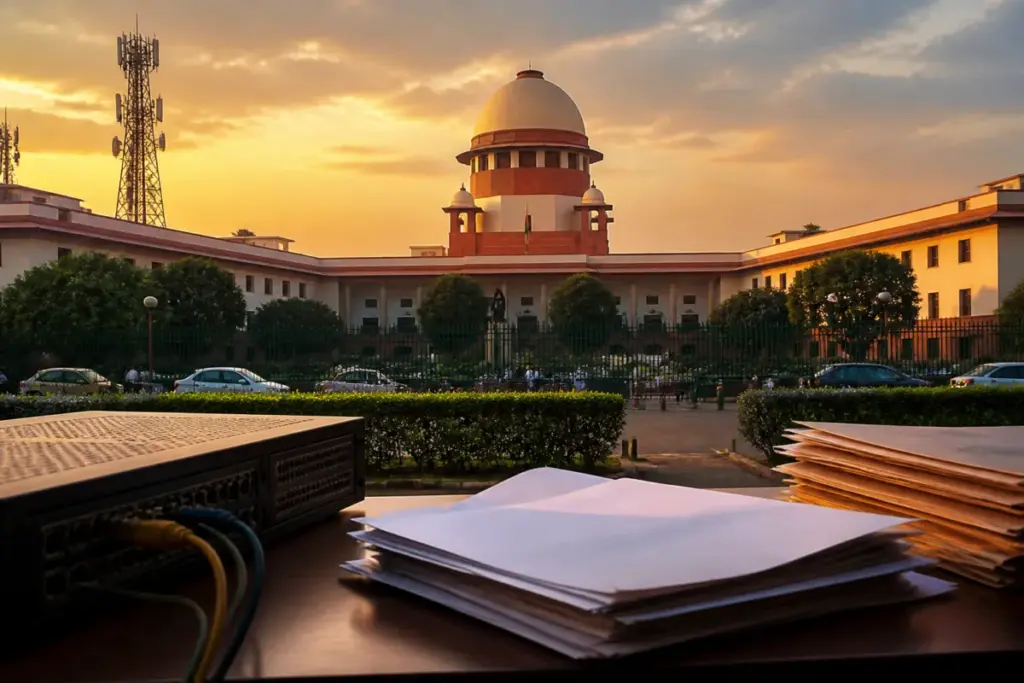
Reliance Communications’ resolution professional Anish Nanvaty has filed a curative petition in the Supreme Court seeking recall of its February 13 judgment that excluded telecom spectrum from proceedings under the Insolvency and Bankruptcy Code (IBC). The petition argues that the ruling is causing irreversible harm to lenders and has left banks without recourse to an asset against which loans were advanced.
The petition was filed on Friday, according to two people aware of the development, as part of the insolvency proceedings involving RCom and Aircel. In its February judgment, a bench of Justices P S Narasimha and A S Chandurkar held that spectrum allocated to telecom companies and recorded as assets on their books could not be subjected to proceedings under the IBC.
The dispute centres on whether spectrum can be monetised or transferred during a corporate insolvency process. Lenders to Aircel and RCom had sought to use the spectrum to recover dues. The Supreme Court ruling followed petitions filed by the State Bank of India and the two insolvent telecom operators against a 2021 order of the National Company Law Appellate Tribunal.
The NCLAT had held that spectrum could be transferred or sold under a resolution plan only after all outstanding government dues had been cleared. The Supreme Court subsequently ruled that spectrum could not be treated as an asset available for insolvency proceedings, affecting the lenders’ recovery strategy.
Nanvaty’s petition argues that excluding spectrum has stripped banks of the asset against which they lent, effectively leaving them with loans without recourse. It also contends that the judgment created a sectoral exception that has no basis in the IBC. According to the petition, such an interpretation could extend beyond telecom to mining leases, oil and gas licences, infrastructure concessions and hydro water rights.
The resolution professional has further argued that the judgment did not adequately consider the explanation to Section 14(1) of the IBC. That provision states that licences, permits, registrations, quotas, concessions and similar rights should not be terminated during a moratorium if current dues are paid. The petition says RCom’s current dues were paid.
The filing also raises the position of the Department of Telecommunications in RCom’s insolvency process. The department submitted its claim as an operational creditor, and claims amounting to ₹31,276 crore were admitted. Nanvaty has argued that this gave the telecom department de facto super-priority, contrary to the principle cited in the Supreme Court’s 2019 Swiss Ribbons judgment, which upheld the constitutional validity of the IBC.
The curative petition seeks reconsideration of the February ruling. The supplied report does not state whether the Supreme Court has listed the petition for hearing or issued notice to the concerned parties.


