

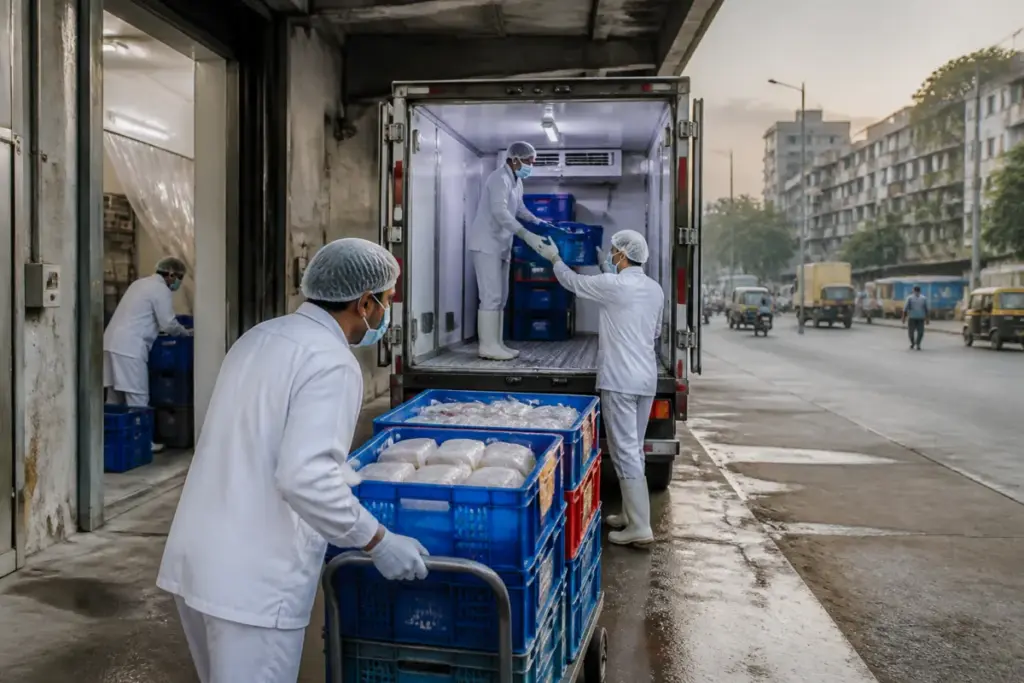
The Food Safety and Standards Authority of India (FSSAI) has directed food businesses to maintain prescribed temperature conditions while storing and transporting perishable products such as khoa, paneer, meat and fish, warning that temperature abuse can compromise food safety and public health.
In an advisory posted on Sunday, the regulator said perishable food commodities are vulnerable to microbial growth and spoilage when they are not handled under appropriate temperature conditions. The direction applies across the supply chain, from procurement and sourcing to delivery to the end-consumer.
FSSAI said the Food Safety and Standards (Licensing and Registration of Food Businesses) Regulations, 2011, already specify hygienic and sanitary requirements for Food Business Operators (FBOs). The regulations require the handling and transportation of relevant food products to be carried out under controlled temperature conditions.
The regulator has asked businesses involved in the manufacture, packing, storage, transportation, distribution and sale of the identified perishable commodities to comply strictly with these requirements. It also directed them to use clean, covered and hygienic vehicles for moving the products.
The advisory requires FBOs to maintain prescribed temperatures during both storage and transportation. It further calls for food-grade packaging and suitable secondary packaging materials, with safeguards against dust, moisture, pests, physical damage and cross-contamination during storage, loading, unloading and transit.
Businesses have also been asked to maintain appropriate records and traceability of consignments. They must be able to produce invoices or other relevant documents when required, creating a documented chain of custody from sourcing through delivery.
FSSAI said subjecting perishable food products to temperature abuse may adversely affect food safety and public health and would constitute non-compliance with the hygiene and sanitary requirements prescribed under the regulations. The direction places responsibility on multiple links in the food distribution network rather than only on manufacturers or retailers.
The regulator has directed State Food Safety Commissioners and Regional Directors of FSSAI to instruct licensing authorities and food safety officers to maintain strict vigilance. Inspections and transportation checks are to be used to assess compliance with the temperature, vehicle hygiene, packaging, protection and traceability requirements.
For cities, the advisory covers the less visible infrastructure behind daily food consumption: storage facilities, delivery vehicles, loading points and distribution networks that connect producers to markets and households. The immediate compliance test will depend on how consistently these conditions are maintained between procurement, transit, storage and final delivery. FSSAI’s directions to state authorities and field officers set the next step as increased vigilance during inspections and transportation checks.


