

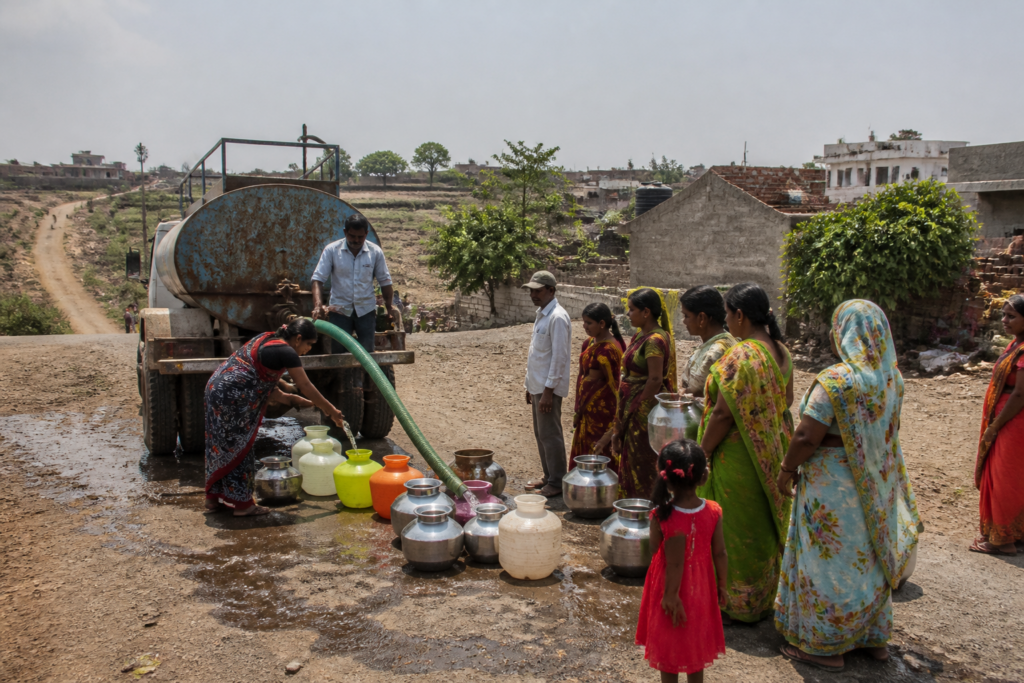
The Pune water crisis has prompted tanker deliveries to five villages and 53 hamlets in the district, with approximately 18,650 residents currently dependent on emergency supplies, according to the Zilla Parishad’s Rural Water Supply Department. Eight tankers are operating in affected areas, including parts of Baramati, Daund and Indapur talukas.
The administration is monitoring local conditions and approving additional tanker services where required. The department said most tanker trips are being completed according to schedule, but continued scarcity has made emergency distribution necessary even after the district recorded average rainfall of 819 mm, or about 95% of its average rainfall.
The current response combines short-term tanker supply with efforts to restore and expand groundwater sources. The administration has approved 294 new borewell projects at an estimated cost of approximately ₹2.49 crore. Drilling for all the approved borewells has been completed, according to the Rural Water Supply Department.
A further 611 borewell repair works have been approved, with an estimated allocation of ₹2.56 crore. The repairs are intended to restore defunct borewells and improve the capacity of sources that are currently providing insufficient water. Where necessary, the administration is also acquiring private wells and borewells to maintain supplies in scarcity-affected areas.
The government has separately granted administrative approval for special repairs to 33 rural piped water supply schemes. Approval has also been given for 10 water-source strengthening works and 21 projects involving well deepening and desilting. Together, these works have received approximately ₹5.36 crore in sanctions.
The department reported that works under regional water supply schemes at Morgaon, Regional Bele and Regional Shivri have been completed. These schemes form part of the district’s wider effort to strengthen rural supply infrastructure alongside the immediate tanker response.
The administration and the Rural Water Supply Department are now preparing a contingency plan covering October 2026 to June 2027. Officials have been instructed to take measures needed to maintain adequate water supply in rural areas during the period. The administration said it would continue monitoring conditions and implement measures according to requirements in individual locations.


