

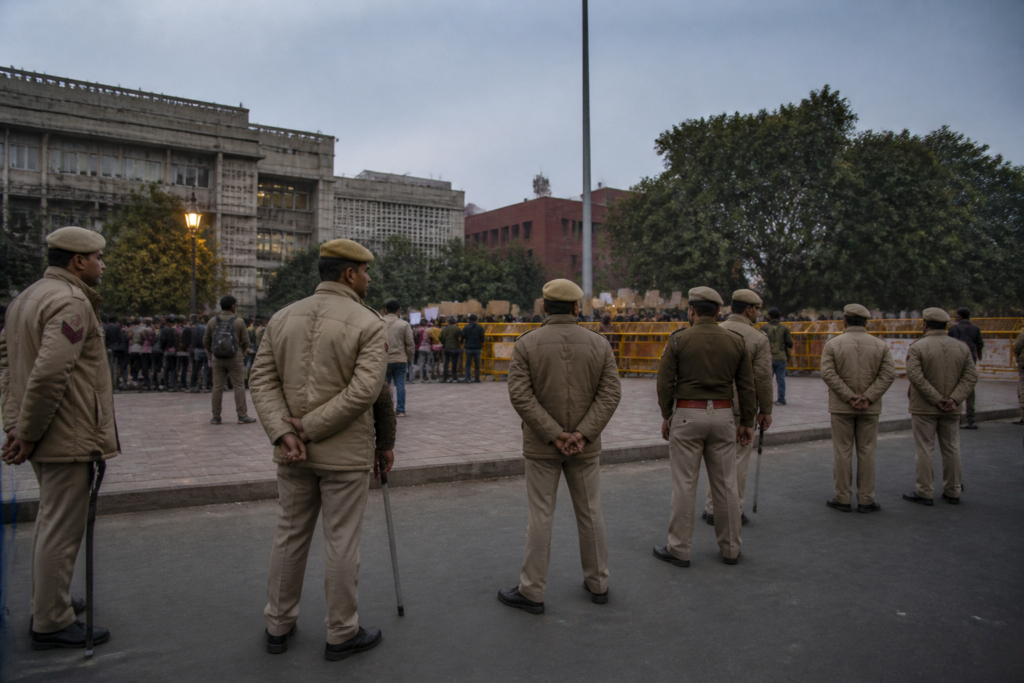
The reported detention of All India Students’ Association (AISA) national president Neha Bora near Mandi House in central Delhi has raised questions about how police are handling a proposed protest and whether her location has been disclosed to her organisation or legal representatives.
According to a report by Jagran, Delhi Police detained Bora on Friday, October 16, while she was on her way to the proposed ‘Lehra Do Tiranga’ demonstration in Delhi. AISA said she was taken to an unknown location after being detained and claimed that she did not have access to her mobile phone.
The organisation questioned why Bora was allegedly moved in a car with blackened windows and why she was not allowed to meet her lawyers. AISA described the action as an “abduction” rather than a detention and demanded that Delhi Police disclose where she was being held and release her. These allegations were made by AISA and were not independently confirmed in the supplied report.
The incident took place in the Mandi House area, a central Delhi location that has frequently been used for demonstrations, marches and public gatherings. The reported detention came ahead of a proposed protest under the banner ‘Lehra Do Tiranga’. The report did not provide details of the police order, legal provision or administrative instruction under which Bora was detained.
Jagran also reported that Abhijit Deepke, founder of the Cockroach Janata Party, had been detained earlier from his residence in Delhi’s Jhandewalan area. His detention was also reported in connection with the proposed march. Separate reports cited by Jagran referred to a heavy police presence around Connaught Place and a tricolour march by Left organisations.
The episode places attention on the administrative mechanics surrounding demonstrations in central Delhi: preventive detention, movement restrictions, communication with detainees and access to lawyers. When a person’s location is not publicly clarified, the immediate public-interest question is not only whether a protest proceeds, but also which authority is responsible for communicating the grounds and place of detention.
AISA’s public appeal focused on Bora’s whereabouts and sought an explanation from Delhi Police. The supplied report did not include a response from the police, a formal detention notice, a court order or a statement from Bora herself. Further clarity will depend on an official account of the detention, the grounds cited by authorities and confirmation of where she was taken.


