

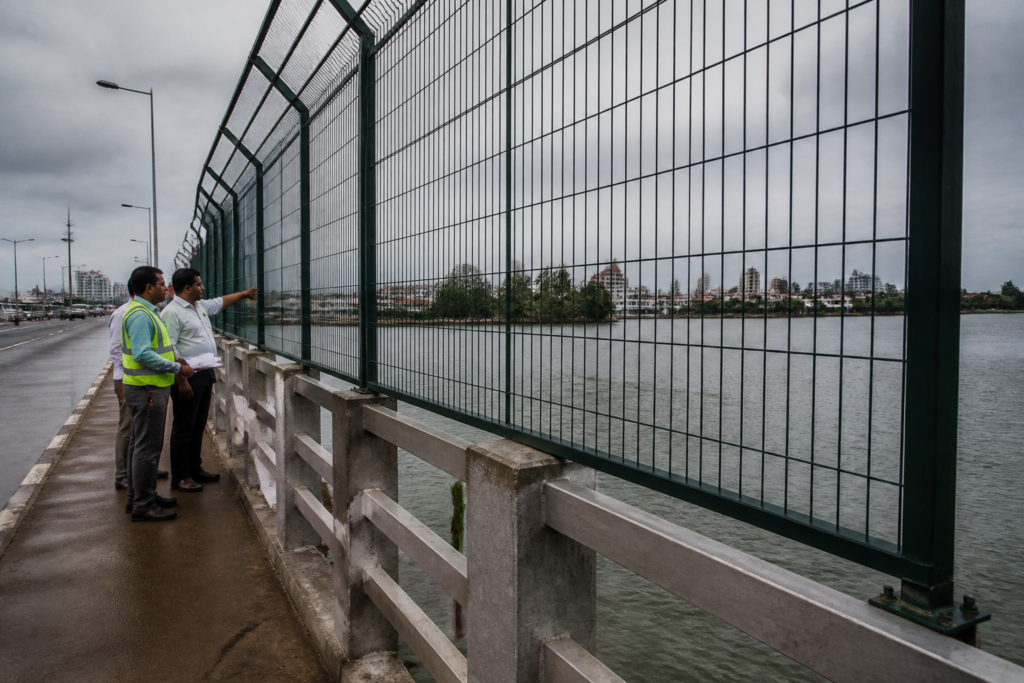
A renewed demand for protective fencing on Kochi’s bridges has emerged after three people entered the backwaters from bridges within a week, including one death from the B.O.T. Bridge and two women who survived separate incidents at the Harbour Bridge.
The incidents have intensified calls for fencing around bridge railings to make it more difficult for people to enter the water. Local reporting identified the Harbour Bridge, B.O.T. Bridge, Vendurutthy Bridge and Kannangatt Bridge as locations from which people have frequently attempted to enter the backwaters.
In one incident at the Harbour Bridge, a woman survived after falling into a marshy area. In another, fishermen rescued a second woman. A woman who entered the water from the B.O.T. Bridge died, according to the report.
The physical conditions around the bridges make rescue operations difficult. Strong currents in the area can carry people away and complicate efforts to locate or reach them. The latest incidents have therefore renewed the argument that access-control measures on the bridges could provide an additional opportunity for intervention and rescue.
The proposed measure is fencing approximately one person high around the existing bridge railings. Those supporting the demand argue that such fencing could prevent at least some people from entering the backwaters and reduce the frequency of incidents at the identified locations.
The proposal is not new. Police had earlier recommended that the Public Works Department consider installing wire fencing after repeated incidents in which people entered the backwaters and bodies could not always be recovered. That recommendation was not acted upon, according to the report.
The Harbour Bridge presents a separate implementation challenge because it is recognised as a heritage structure. Authorities have argued that installing wire fencing there may not be practical because of the bridge’s heritage status. The position leaves the safety demand unresolved even as the bridge continues to be identified among the locations where such incidents occur.
The issue places responsibility across multiple parts of the urban system. Bridge design and maintenance fall within the public works framework, while police handle emergency response and rescue coordination. Any decision on fencing would also have to address the physical design of each bridge, its heritage characteristics where applicable and the need to preserve safe movement for pedestrians and vehicles.
The immediate demand follows the latest reported incidents, but the underlying question is older: whether bridges that provide public access to deep, fast-moving water should incorporate additional safety barriers and response measures. The report does not indicate that a new fencing order or implementation schedule has been issued. For now, the police recommendation and the demand from local stakeholders remain pending with the authorities.


