

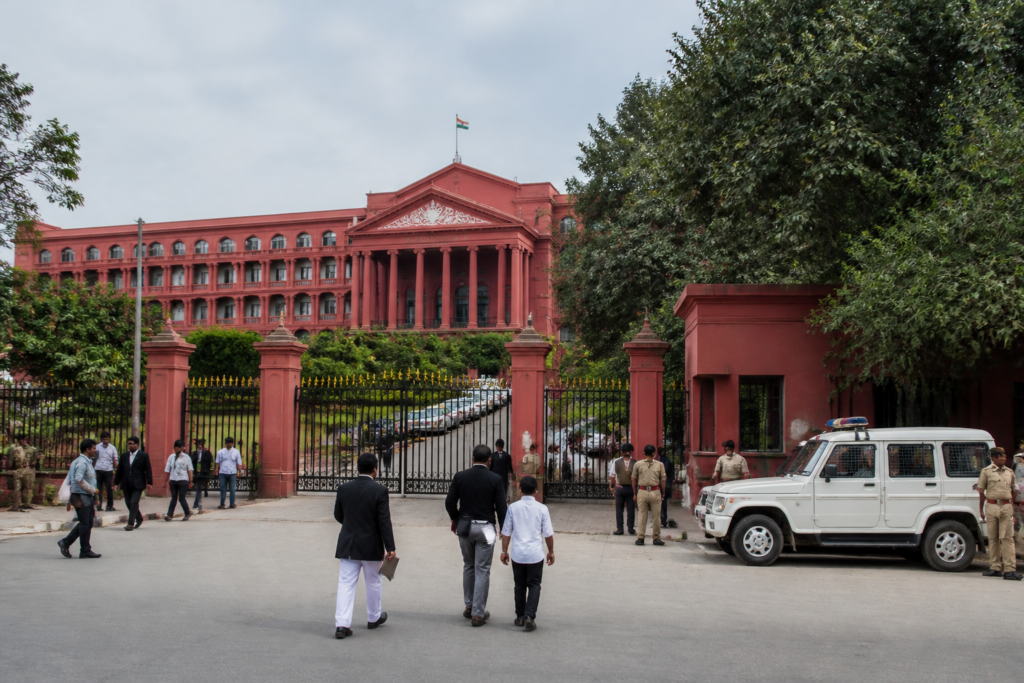
The Karnataka High Court has directed the state government to establish district-level committees to address illegal immigration within three months, while quashing two criminal cases filed against a Bengaluru resident who informed police about six people allegedly living without passports or visas.
The direction was issued by a single-judge bench of Justice M. Nagaprasanna while allowing a petition filed by T. Nagendrappa. The court said the committees must be formed within three months from the date the government receives a copy of the order. It also directed the state to submit a compliance report to the High Court registry.
The case arose from an incident near the DS Max apartment complex in Bengaluru. According to the report, Nagendrappa informed Bellandur police on July 22, 2026, that six Bangladeshi nationals were allegedly residing in the area without passports or visas. The police subsequently took the individuals to the Foreigners Regional Registration Office, or FRRO.
About 15 minutes after the information was given to police, a Bangladeshi woman filed a complaint against Nagendrappa alleging assault. Bellandur police registered a criminal case against him under Sections 74, 79, 115(2), 126(2), 351(2), 351(3) and 352 of the Bharatiya Nyaya Sanhita, 2023, according to the report.
A separate complaint was also registered at the Varthur police station. The High Court quashed both FIRs filed against Nagendrappa. The order also set out an administrative mechanism for dealing with illegal immigration, requiring district-level committees rather than leaving the issue solely to individual police action.
The court’s direction places a three-month deadline on the state government and requires a formal report on compliance. The order does not, in the material supplied, specify the composition, powers or operating procedure of the proposed committees.
The case highlights the institutional steps being sought for handling suspected immigration violations in Bengaluru and other districts. The immediate legal outcome is the cancellation of the two FIRs against Nagendrappa, while the broader administrative response will depend on how the state constitutes the committees and reports their formation to the High Court.


