

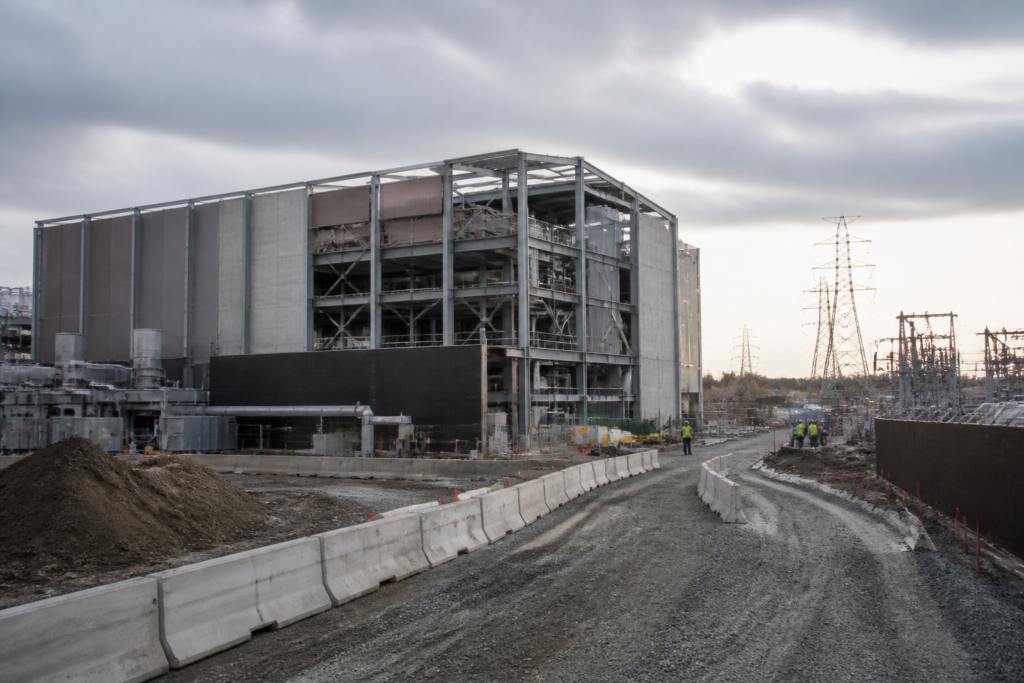
CoreWeave’s sharp stock selloff has exposed a structural vulnerability at the centre of the artificial intelligence infrastructure boom: the computing capacity needed to meet rising demand is being built with increasingly expensive debt. The company’s shares fell more than 20% in the first three sessions of the week, while the cost of protecting its bonds against default reached a record intraday level on Thursday. The immediate market panic eased after Nvidia chief executive Jensen Huang expressed confidence in the company, but the episode has made the financing risk behind AI data centres difficult to ignore.
CoreWeave is a so-called neocloud provider, supplying computing capacity used to develop and run artificial intelligence systems. Its business sits between chip manufacturers, large technology customers and the physical infrastructure required to support high-performance computing. That infrastructure includes data centres, specialised servers and advanced chips, all of which require substantial capital before revenue from customer contracts is fully realised.
The company has been funding the expansion of its data-centre network by issuing bonds. That model worked in an environment where investors were willing to finance aggressive growth and where expectations of continuing AI demand supported high valuations. It becomes more difficult when Treasury yields rise, inflation remains persistent and the cost of new borrowing increases. CoreWeave’s market performance has therefore become a measure not only of investor sentiment towards one company, but also of how much financial stress the AI infrastructure buildout can absorb.
The scale of the market reaction shows how quickly concerns over financing can overwhelm the underlying demand story. CoreWeave shares fell more than 15% on Wednesday, and on Thursday morning credit-default swaps implied a probability of more than 60% that the company could default within five years. The stock later recovered, ending Thursday 5.9% higher after Huang said he was optimistic about the company’s position and that its cost of capital was decreasing. On Friday, however, the shares fell as much as 9.4% and remained on track for their largest weekly decline since November.
The company’s stock is still more than 50% above the level of its initial public offering in March 2025, which was backstopped by Nvidia. But it has fallen 66% from its June 2025 peak and is down 12% this year, leaving it less than $30 above its debut price. Those movements matter because access to capital is central to a business that must continue expanding its physical capacity to convert customer demand into revenue.
The immediate question for investors is whether demand for AI computing can grow quickly enough to offset the cost of building that capacity. Thomas Di Fazio, an exchange-traded fund strategist at Roundhill Financial, described the current market as one in which macroeconomic concerns were prompting investors to sell before assessing the longer-term outlook. He also said it was difficult to regard the latest market movement as a clear signal that the risks had passed.
The opposing view is that AI computing demand remains strong enough to support continued investment. Deutsche Bank analyst Brad Zelnick, who has a buy rating on CoreWeave, pointed to the company’s customer base, execution record, backlog conversion and infrastructure performance. He wrote that more capital would be required, but argued that it could be raised steadily and supported by the company’s customer backlog. This assessment treats debt not simply as a liability, but as a financing bridge between current construction spending and future contracted or expected demand.
That bridge is exposed to a basic timing problem. Data centres and computing facilities require large upfront investments, while the financial return depends on sustained utilisation and customer payments over time. If interest costs rise before additional capacity is generating sufficient revenue, the company must either issue debt at less favourable terms, raise equity, slow construction or secure support from strategic partners. Each option can affect the pace and cost of the broader infrastructure rollout.
CoreWeave’s relationship with Nvidia adds another layer to that financing structure. Nvidia is both a supplier to CoreWeave and a shareholder, making the chip company an important commercial partner. Bloomberg Intelligence analyst Robert Schiffman said that this relationship could provide a source of capital if CoreWeave’s access to markets tightened. Huang, however, rejected the idea that the company required a bailout, saying its strength was improving and that its cost of capital was decreasing.
The company’s effort to obtain investment-grade ratings for chip-backed debt also illustrates the scale of its ambitions. CoreWeave secured such ratings for the first time in March, and co-founder Brannin McBee said the company wanted to win similar ratings for future borrowing. That objective suggests that the company expects to continue using debt to fund expansion. It also means that credit-market confidence is not a secondary concern: it is directly connected to how much infrastructure CoreWeave can build and at what cost.
The wider market has already begun pricing in the risks of the AI capital cycle. The Philadelphia Stock Exchange Semiconductor Index fell 9.7% during the week and was down 22% from its June peak. Dell Technologies and Hewlett Packard Enterprise, both involved in the server and computing hardware ecosystem, also declined sharply. CoreWeave was treated as a higher-risk participant because its data-centre expansion relies heavily on high-yield borrowing.
This distinction is important for understanding the AI infrastructure economy. Demand for chips, servers and computing capacity can remain robust while the companies supplying that infrastructure face financial pressure. Growth in physical demand does not automatically produce safe returns for every infrastructure provider. The cost of capital, the duration of customer contracts, the timing of construction and the quality of the debt issued all determine whether demand translates into financial resilience.
Matt Bartolini, global head of research strategists at State Street Investment Management, said the industry was still at an early stage of the AI capital-expenditure cycle. In his assessment, interest rates might not stop the expansion, but they would change the calculation behind continued debt issuance and raise the question of whether future growth could credibly support the financing burden. He also argued that the underlying demand was likely to continue despite changes in interest rates.
That combination of strong demand and expensive finance creates a difficult policy and planning environment for the built infrastructure supporting AI. Data centres are not only technology assets; they are large physical developments requiring land, power, cooling systems, network connectivity, construction capacity and long-term capital. The financial health of operators can therefore influence the pace at which this infrastructure is delivered, even when demand from technology companies remains high.
The CoreWeave episode also shows why the AI buildout cannot be assessed solely through announcements of new chips or cloud contracts. The infrastructure must be financed, constructed and operated over time. A company may have a strong backlog and access to advanced hardware, yet still face stress if borrowing costs rise faster than its revenue or if markets become unwilling to fund additional construction. Conversely, favourable demand conditions can help sustain investment if customers provide sufficient visibility and cash flow.
The evidence in the current selloff does not establish that CoreWeave is headed for default. The market’s credit pricing reflected heightened concern, while Nvidia’s chief executive and a Deutsche Bank analyst offered more positive assessments. The company’s shares have also recovered from their worst intraday levels before falling again. What the episode establishes is a sharper divide between confidence in long-term AI demand and concern about the near-term financial structure used to build the required capacity.
For cities and the wider built environment, that divide will matter as AI infrastructure expands. The next phase of data-centre growth will depend not only on demand for computing services, but also on whether investors continue to fund the land, buildings, energy systems and equipment needed to supply it. CoreWeave’s volatile week has put that financing question at the centre of the AI infrastructure story, with future borrowing, customer backlog conversion and the cost of capital remaining the key developments to monitor.


