

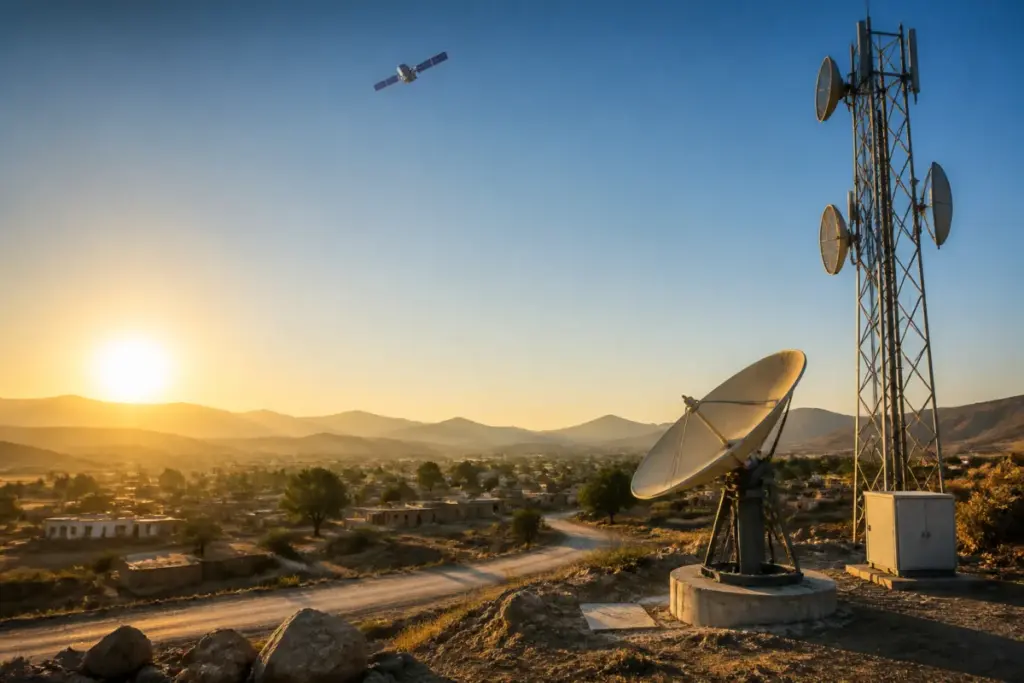
India is positioning itself as a potential leader in 6G while using satellite technology and direct-to-device services to address connectivity gaps, particularly in remote areas, Julian Gorman, head of Asia-Pacific at the GSMA, has said in an interview with Business Standard.
Gorman said satellite networks would complement conventional mobile infrastructure as India moves towards next-generation telecommunications. Direct-to-device, or D2D, services are expected to extend connectivity by enabling compatible devices to communicate through satellite systems, according to the report.
The comments come as countries begin testing and trialling 5G Advanced, the next stage in the development of current-generation mobile networks. The transition is expected to shape the technologies, standards and commercial models that will eventually support 6G services.
Gorman described India as having set itself the task of becoming a leader in 6G. His assessment covers more than the development of faster mobile networks. The GSMA executive also discussed the integration of artificial intelligence, the challenge of monetising network investments and the need for stronger anti-scam measures as telecommunications systems become more deeply embedded in daily life.
The GSMA represents more than 700 companies across the global telecommunications industry. Its assessment is significant for India because the country’s next connectivity phase will involve several infrastructure systems rather than mobile towers alone. Satellite links, terrestrial networks and device-level services will need to work together if connectivity is to reach locations where conventional networks remain difficult or expensive to deploy.
The report also points to the importance of international spectrum coordination. Agreements expected at the 2027 World Radiocommunication Conference, or WRC-27, will help shape how satellite and other next-generation services are rolled out globally. Spectrum decisions at the conference will therefore form part of the regulatory environment in which D2D and 6G-related services develop.
For users in remote areas, the significance of the shift lies in the possibility of extending communications beyond the existing reach of mobile infrastructure. The report does not provide a rollout timetable, coverage target or investment figure for India’s 6G plans, and it does not establish when commercial D2D services will become widely available.
The GSMA’s comments also connect network expansion with the operational challenges of the telecom sector. Artificial intelligence is being considered as part of future network development, while operators continue to examine how advanced services can generate revenue. At the same time, anti-scam systems are becoming an important part of protecting users as more services move through digital networks.
The next major international milestone identified in the report is WRC-27, where global spectrum agreements are expected to influence the future deployment of satellite and next-generation connectivity services.


