

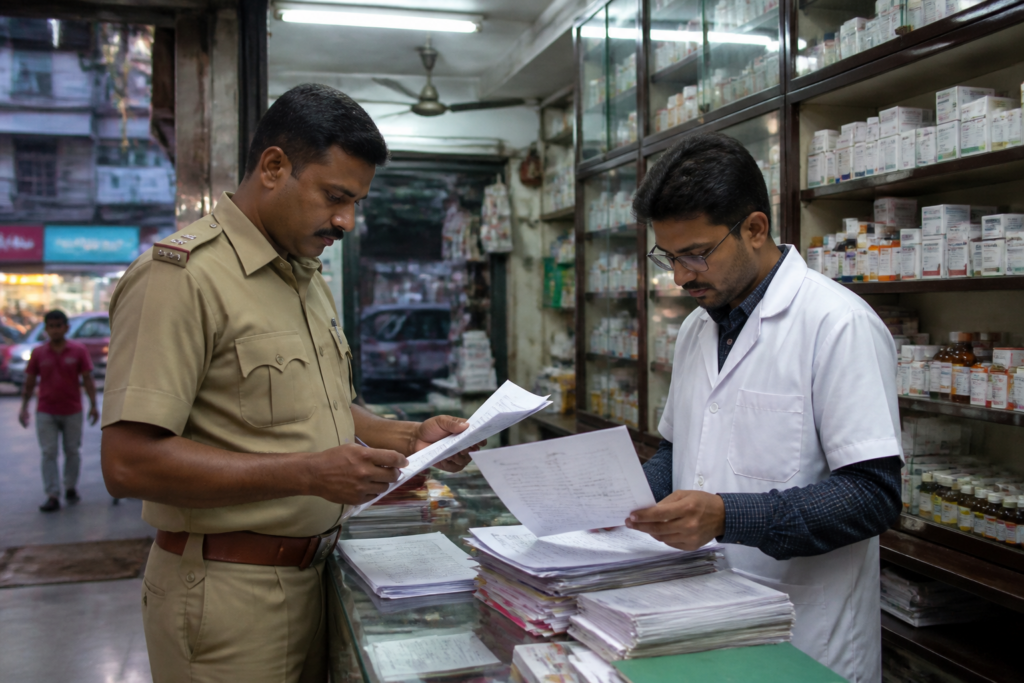
Hyderabad medical shops are facing regulatory action after Telangana Standards Authority for Food and Essential Drugs (TG SAFE) detected violations at 137 outlets during a city-wide enforcement drive against the illegal sale and diversion of habit-forming medicines on October 15.
The inspections covered medical shops in Saroornagar, Balapur, Hayathnagar, Musheerabad, Secunderabad, Begumpet and Amberpet. Enforcement teams used decoy operations and test purchases to check whether medicines classified under Schedules H1 and X of the Drugs Rules were being dispensed in accordance with prescription and record-keeping requirements.
The medicines covered in the inspections included Alprazolam, Nitrazepam, Tramadol, Tapentadol and Zolpidem tablets, along with codeine-containing cough syrups and Pregabalin-based formulations. These medicines are subject to controls intended to prevent unauthorised dispensing, misuse and diversion from legitimate medical use.
According to TG SAFE, the violations included selling prescription medicines without a valid prescription from a registered medical practitioner. Officials also found that some shops had failed to maintain prescription records and Schedule H1 drug registers, or were dispensing medicines without a registered pharmacist present.
The enforcement teams further detected sales without bills, failures to maintain or produce sales and purchase bills, and irregularities in keeping copies of transaction records. These requirements create an auditable trail for controlled medicines and allow regulators to track how such drugs enter and move through the retail supply chain.
Show-cause notices have been issued to all 137 medical shops where violations were detected. The notices give the outlets an opportunity to respond before further departmental action is taken. The Drugs Wing is expected to examine the violations under the Drugs and Cosmetics Act, 1940, and the rules framed under it.
The possible action includes suspension or cancellation of drug licences, depending on the findings and the responses submitted by the medical shops. The reported violations therefore carry consequences beyond individual transactions, with the regulatory process potentially affecting whether the outlets can continue operating under their existing licences.
The drive also places the role of pharmacists and documentation at the centre of medicine-safety enforcement. A valid prescription, the presence of a registered pharmacist and properly maintained purchase and sales records are required safeguards for medicines that regulators classify as requiring tighter controls.
TG SAFE has advised medical shops to exercise caution while dispensing prescription medicines and to maintain the records mandated under the rules. The next formal step will be departmental action by the Drugs Wing after the show-cause process is considered.


