

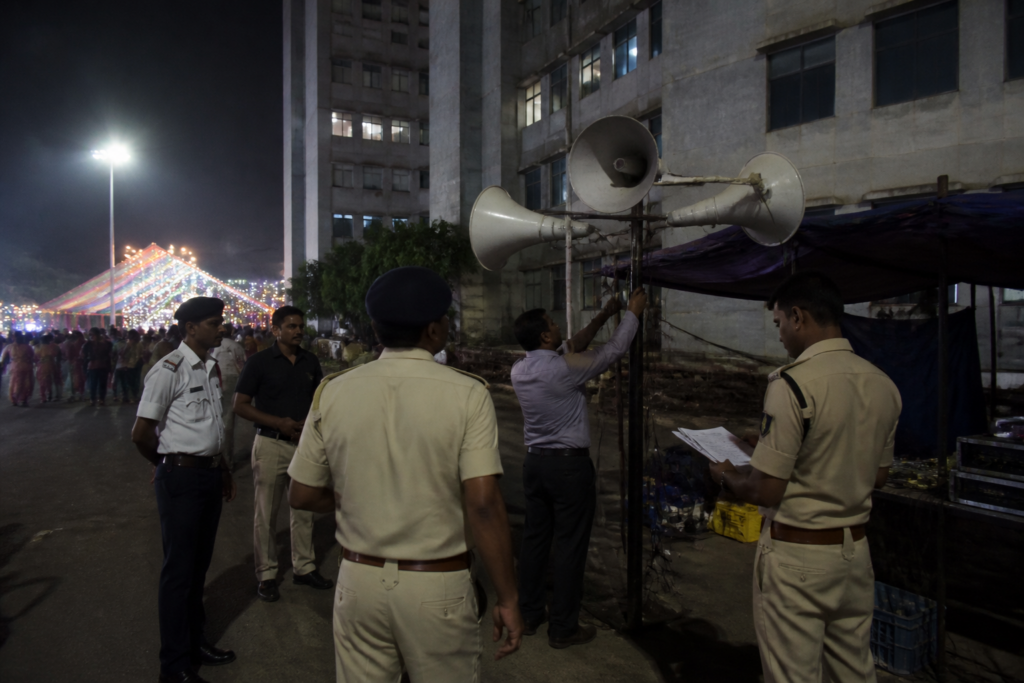
The Gujarat High Court has asked the Gujarat government to conduct surprise inspections and enforce noise-control rules during Navratri, particularly in areas designated as silent zones. The court has also directed authorities to submit a detailed response on the measures taken to prevent violations during the nine-day festival period.
The directions were issued by a division bench while hearing a petition concerning the use of DJs and loudspeakers in silent zones during Navratri. The court noted that the matter was not limited to Veraval and represented a concern affecting the entire state, with the problem becoming more serious during the festival’s nine days.
The bench sought information from all relevant authorities on the action already taken and asked the state government to place a detailed response before the court. The government requested two days to submit further details in the matter.
During the hearing, the Gujarat Pollution Control Board (GPCB) presented a report on the applicable noise-control requirements. The report referred to the Environment Ministry’s notification issued in 2000, under which loudspeakers and DJs are prohibited in silent zones. The GPCB also told the court that loudspeakers cannot be used at night.
The rules distinguish between public spaces and certain private venues. According to the information presented before the court, loudspeakers at banquet halls and party plots may be used within the prescribed decibel limits. However, public use of loudspeakers requires prior permission from the police. In silent zones around hospitals, the night-time noise limit is required to remain below 45 decibels.
The GPCB report stated that noise exceeding 45 decibels at night is prohibited in silent zones. The limits are particularly relevant around hospitals and other locations classified as silent zones, where enforcement depends on identifying violations and ensuring that permitted activities remain within the prescribed thresholds.
The state government told the court that inspections are being carried out to ensure that noise stops before midnight in 75 per cent of cases. The submission was made in response to the petition and formed part of the court’s consideration of enforcement during Navratri.
The hearing also included a brief courtroom intervention related to sound levels. The court switched off its microphones for a few minutes while the petitioner was being spoken to, according to the report.
The court’s direction places the immediate focus on how state and local authorities monitor festival venues, silent zones and private event locations. The government is expected to provide its detailed response within the additional two days sought during the hearing.


