

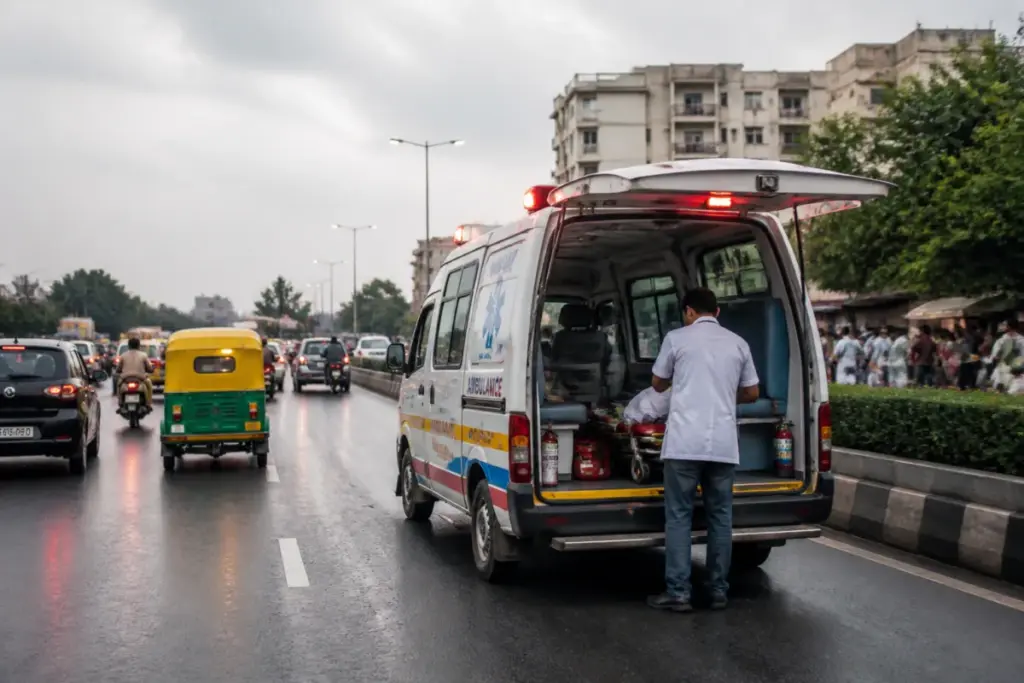
Gujarat 108 emergency service recorded 50,979 emergency cases in nine days during the festival period, with pregnancy and childbirth cases forming the largest category, according to figures reported by Sandesh. The cases were recorded across the state between October 11 and October 19, when increased movement and changes in food consumption contributed to a heavier demand for emergency assistance.
The service received 5,831 emergency calls across Gujarat on October 19 alone. The reported figures cover calls handled through the 108 emergency control rooms and ambulance network during the nine-day period.
Pregnancy and childbirth-related emergencies accounted for 10,943 cases, the highest number among the categories cited in the report. Road accidents were the second-largest category, with 6,817 cases recorded during the festival period as traffic and vehicle movement increased on roads across the state.
The data also showed 6,314 cases involving severe stomach pain, which the report linked to changes in food consumption during the festive period. A further 5,842 cases involved interpersonal conflict, assault and general injuries. Emergency teams reportedly reached patients at the scene and transported them to hospitals for treatment.
Other categories cited in the report included 4,348 cases of serious breathing difficulty, 2,955 heart-related emergencies and 1,497 cases involving poisoning or venomous bites. The report presents these figures as part of the emergency workload handled by the 108 service during the nine-day period.
The pattern places several distinct demands on Gujarat’s emergency-response system at the same time. Ambulances and control rooms must manage time-sensitive pregnancy and childbirth cases alongside road injuries, assaults and acute medical conditions. These cases differ in urgency, treatment requirements and hospital coordination, but all require rapid call handling, dispatch and transport.
The accident figures also connect emergency-service demand with road conditions and festival-period mobility. Increased travel can raise the number of people exposed to traffic risks, while emergency teams must operate across urban, semi-urban and rural areas to move patients to hospitals during the critical period after an incident.
According to the report, 108 control-room personnel and ambulance staff worked continuously during the nine-day period and transported thousands of patients to hospitals within the “golden hour”. The supplied report does not provide a district-wise breakdown, comparative figures for the corresponding period in previous years, or details of ambulance deployment by location.
The reported totals therefore indicate the scale of demand handled by Gujarat’s emergency network but do not, by themselves, establish how much the workload increased compared with a normal period. Further details on response times, hospital destinations, district-level call volumes and outcomes were not included in the report. The 108 service’s control rooms and ambulance teams are expected to continue handling emergency calls across the state after the festival period.


