

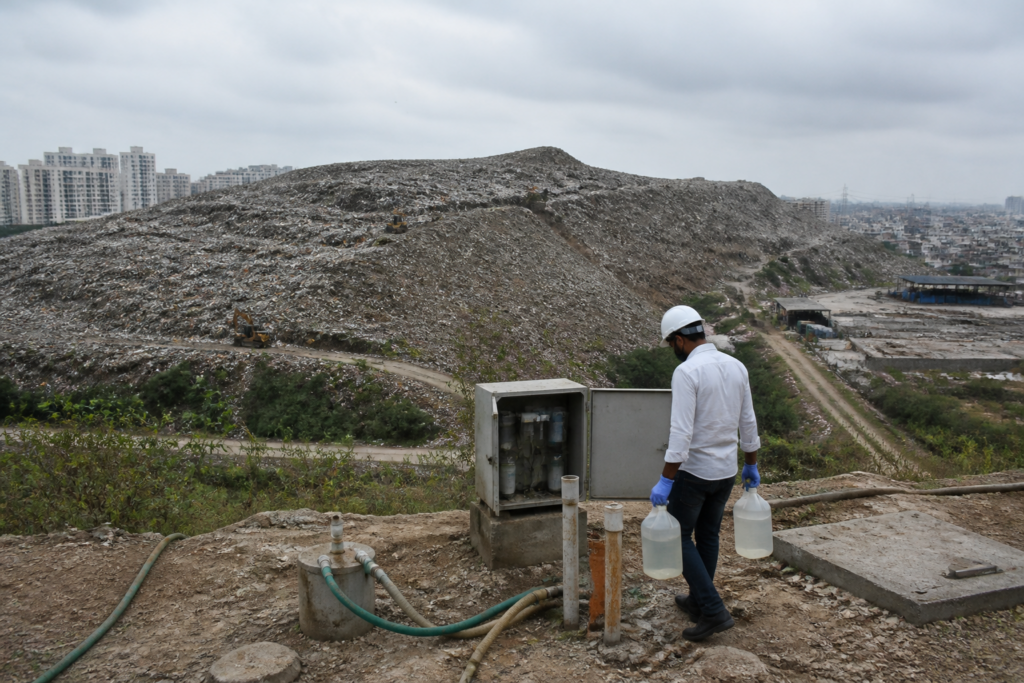
Groundwater testing linked to the Ghazipur landfill fire has not begun because the Delhi Pollution Control Committee (DPCC) does not have the required equipment, according to the committee’s submission before the National Green Tribunal (NGT). The tribunal has now directed DPCC’s member secretary to appear virtually at the next hearing and provide details of the laboratory’s condition, available testing equipment and the status of procurement.
The development turns a routine compliance question into a larger test of Delhi’s environmental monitoring system. The landfill fire is the immediate trigger for the proceedings, but the information placed before the NGT points to a basic institutional problem: the agency expected to assess possible groundwater impacts says it cannot yet conduct the required testing because essential equipment is unavailable.
DPCC’s counsel told the tribunal that the committee had issued a tender for purchasing the equipment through the Government e-Marketplace portal. Testing, the tribunal was informed, would take place after the equipment is received. The supplied report does not state when the tender was issued, what equipment is being purchased, how long procurement is expected to take or whether any interim testing arrangement is in place.
Those missing details matter because environmental monitoring depends not only on the existence of a regulatory order but also on the ability of the responsible institution to generate timely and credible evidence. In this case, the sequence is clear from the material before the tribunal: a fire-related case is being heard; groundwater testing is considered necessary; DPCC does not currently have the required instruments; procurement has been initiated; and the NGT wants a fuller account of the laboratory and equipment position.
The tribunal’s direction places the responsibility for closing that information gap directly on DPCC’s senior administration. At the next hearing, the member secretary is expected to appear virtually and submit details on the laboratory’s status and the equipment available for testing. The NGT has therefore moved beyond accepting a general statement that procurement is under way. It has sought an account of the monitoring infrastructure itself.
This is significant for the way environmental compliance operates in a city. A regulatory body may be responsible for assessing pollution, but that responsibility has practical requirements: laboratories, sampling equipment, trained personnel, procurement systems and documented results. If any one of these elements is missing, the process can shift from measurement to explanation. The Ghazipur proceedings show that the tribunal is examining that operational layer rather than treating monitoring as an automatic administrative function.
The supplied report does not establish that groundwater contamination has occurred, nor does it provide test results indicating the nature or extent of any impact. It also does not establish the cause, duration or spread of the landfill fire. The central fact currently established is narrower: DPCC has said that it lacks the necessary groundwater-testing equipment and that a purchase tender has been issued. Any assessment of contamination must therefore await the testing and the presentation of results before the tribunal.
That distinction is important in a landfill case. A fire can create an urgent demand for environmental information, but urgency does not replace evidence. Groundwater testing is intended to provide that evidence. Without sampling results, the public record cannot answer whether pollutants have migrated into groundwater, whether any observed change is connected to the landfill or what remedial action may be required. The NGT’s order seeks to move the case towards that evidentiary stage.
The procurement detail also reveals how administrative systems can affect environmental response times. DPCC’s counsel said the equipment would be purchased through the Government e-Marketplace and that testing would follow once the equipment was received. The report does not provide a procurement deadline or identify whether the tender has progressed beyond issuance. As a result, the timeline between the tribunal’s direction, equipment purchase, delivery, laboratory readiness and testing remains unclear.
For residents and communities living around large waste-processing and disposal sites, this timeline is not an abstract administrative matter. The immediate public concern is whether environmental conditions are being measured and whether the results will be available to the authority responsible for responding. The supplied material does not identify affected neighbourhoods, report complaints from residents or provide health findings. It does, however, show why the availability of testing capacity has become part of the tribunal’s scrutiny.
The case also highlights the difference between regulatory responsibility and regulatory capability. DPCC is the agency whose laboratory and equipment position is being examined in the proceedings. Yet the report indicates that the committee’s capacity to carry out this specific form of testing is incomplete. That does not by itself establish broader institutional failure across all environmental functions. It does show that, for groundwater testing connected to this case, the monitoring chain is not ready to produce results immediately.
The NGT’s intervention creates a formal accountability pathway. DPCC must explain its laboratory position, list the equipment available and update the tribunal on the purchase process. The tribunal can then assess whether the proposed testing arrangement is adequate and whether the procurement explanation resolves the monitoring gap. Until that happens, the case remains dependent on administrative assurances rather than completed groundwater evidence.
The episode raises a structural question for Delhi’s waste infrastructure: whether environmental safeguards are being built into the operation of landfill sites as continuously available systems or activated only after a serious incident brings them before a court or tribunal. The supplied report does not provide enough information to answer that question across Delhi. It does show that, in the Ghazipur matter, the requirement to establish environmental conditions has encountered an equipment shortage at the responsible regulatory body.
That shortage is especially consequential because the tribunal is not merely seeking a statement on whether testing will occur. It has asked for the status of the laboratory and the equipment available to it. This focus recognises that credible environmental oversight depends on institutional capacity that can be demonstrated, audited and used when needed. A future testing result will have meaning only if the sampling and laboratory process is sufficiently documented and reliable.
The next hearing, scheduled for 19 January, will be the immediate milestone. DPCC’s member secretary is expected to appear virtually and provide the requested details. The material supplied does not indicate whether the equipment will have been received by then, whether groundwater samples will already have been collected or what further directions the tribunal may issue. Those are the developments that will determine whether the current procurement explanation becomes a functioning monitoring response.
For now, the Ghazipur landfill proceedings establish a limited but important fact: groundwater testing connected with the fire has been delayed because DPCC says it lacks the necessary equipment. The NGT has demanded a more detailed account of the laboratory, the available instruments and the procurement process. The central issue at the next stage will be whether Delhi’s environmental authorities can convert that explanation into timely, verifiable groundwater evidence.


