

The Municipal Corporation of Delhi’s plan to develop pink parks in every ward is intended to create safer, more welcoming recreational spaces for women and young children. But a spot check of three existing pink parks, reported by the Times of India, shows that the immediate challenge is not only expanding the network. It is making the facilities usable, secure and properly managed after they are created.
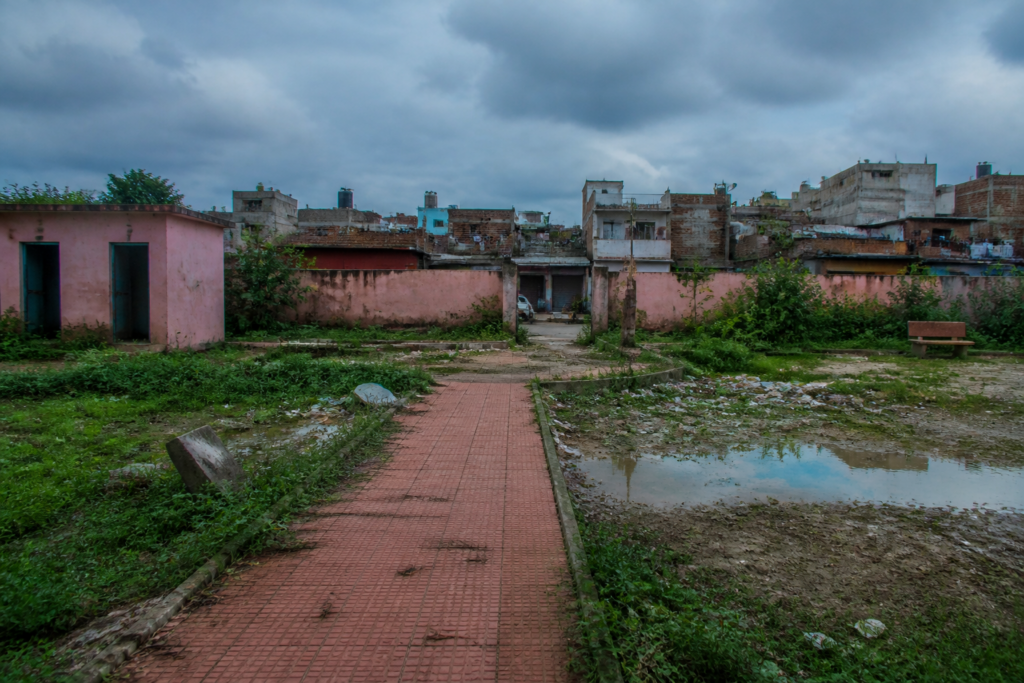
The reported conditions are basic but consequential. At parks near Mirdard Road, Parda Bagh in Daryaganj and Indira Gandhi Mahila Park in Mayur Vihar Phase 1, the newspaper found missing or broken boundary walls, no security guards, no CCTV cameras, locked washrooms, accumulated garbage, stagnant water and weak enforcement of entry restrictions. These are not separate design defects. Together, they determine whether a public space feels accessible and safe enough for women to use.
The timing gives the issue greater urgency. The inspection followed the gang rape reported at Aastha Kunj Park last month, an incident that intensified concerns about women’s safety in Delhi’s parks. The MCD subsequently announced plans to develop pink parks in every ward. Earlier this week, standing committee chairperson Satya Sharma directed the horticulture department to identify suitable locations for the facilities, which are intended to support women’s morning and evening walks and recreation.
That sequence exposes a recurring problem in urban administration: new facilities can receive political and administrative attention more quickly than existing ones receive operational support. A park may be announced, named and formally designated for a particular user group, but its public value depends on daily maintenance, functioning entrances, lighting and surveillance, security deployment, sanitation and enforcement. If those systems are absent, the designation alone cannot deliver safety.
The three parks described in the report illustrate different versions of the same institutional gap. At the small pink park near Mirdard Road, close to Maulana Azad Dental College, the main gate was locked and only a narrow side gate was open. The park appeared deserted, its washroom was locked and chained, and rainwater had accumulated near garbage. There were no CCTV cameras or security guards. Maintenance workers told the newspaper that no security personnel had been deployed and that they remained on the premises because they were concerned about women’s safety.
Parda Bagh in Daryaganj presented a more mixed picture. The park was described as relatively well maintained, with workers cleaning the grounds and trimming overgrown grass. Yet a broken section of its boundary wall opened the park to a lane containing mechanic workshops and two-wheeler repair shops. People were reportedly entering through the damaged section, and some were using the premises to urinate. The park’s designation for women and children below five years therefore existed alongside weak physical control over access.
The report also observed men and older school students inside Parda Bagh, while residents said the park had lacked CCTV cameras and security guards for a long time. This matters because access rules are only meaningful when they can be implemented. A women-only or women-focused facility cannot depend solely on a signboard or an administrative order. Its boundaries, gates, staffing and supervision must make the intended use possible.
At Indira Gandhi Mahila Park in Mayur Vihar Phase 1, Trilokpuri, the reported deficiencies were more extensive. The large green space had overgrown vegetation, scattered garbage and stagnant water. No guard was on duty and there were no visitors at the time of the inspection. Maintenance workers said women might not feel safe visiting without security arrangements, particularly after 5pm, and raised concerns about possible snatching incidents in the area. Men and young children were also seen inside the premises, raising further questions about how entry restrictions were being enforced.
The evidence in the report does not establish a citywide audit of pink parks, nor does it quantify how many facilities currently exist or what budgets have been allocated for their operation. It does, however, identify the practical conditions that shape public-space safety at street level. The absence of visitors is itself important as an operational observation, although it cannot by itself establish why people were not using the park. The reported accounts from workers and local residents point to perceived insecurity, but those perceptions should not be treated as a substitute for a formal safety assessment.
The institutional responsibility is also fragmented in ways that can weaken accountability. The horticulture department has been directed to identify locations, while park maintenance, sanitation, boundary repairs, surveillance and security deployment must operate together for the facility to function. The supplied report does not specify which MCD unit is responsible for each of these tasks, whether security is outsourced, how often inspections occur or how complaints are escalated. Those unanswered administrative questions are central to the expansion plan.
Location selection is another issue that cannot be separated from safety. A pink park may be physically present within a ward but still be difficult to use if it has poor visibility from surrounding streets, limited access, damaged edges or no reliable connection to nearby homes and public transport. The report’s description of Parda Bagh shows how a broken boundary can connect a supposedly controlled space to an adjoining commercial lane. At Mirdard Road, a locked main gate and narrow side access created a different form of exclusion: the park was technically open, but not easily or confidently accessible.
Maintenance also has a direct relationship with safety. Garbage, stagnant water, overgrown vegetation and locked washrooms can reduce the time people spend in a park and make the space appear unattended. The report does not claim that poor maintenance directly causes sexual violence or snatching. It shows instead that physical neglect and weak supervision can make a public space less inviting and less observable. For women deciding whether to visit alone, particularly in the evening, these details can influence use as strongly as the park’s formal purpose.
The proposed ward-level expansion therefore raises a question about what the MCD means by a pink park. If the programme is primarily a construction or designation exercise, the city may add more spaces without resolving the problems visible in existing ones. If it is treated as a service-delivery programme, each facility will require a defined operating standard covering access, sanitation, lighting, security, surveillance, boundary integrity and maintenance response. The supplied report does not say whether such a standard exists.
The difference between creating a park and running one is especially important in municipal systems. Capital works are visible: a boundary, gate, play area or gym can be photographed and inaugurated. Recurring services are less visible but determine whether residents continue to use the space. Guards must be deployed on a schedule, cameras must function and be monitored, washrooms must be opened and cleaned, vegetation must be managed, waste must be removed and repairs must be completed. Without these recurring inputs, the initial investment can lose its public value.
The report also indicates a gap between intended users and actual users. Pink parks are meant for women and children below five years, but men, older school students and young children were reportedly present in some of the inspected facilities. The presence of unauthorised users is not merely an enforcement issue. It can indicate that the rules have not been communicated, that the facility lacks staff to supervise entry or that the park’s design does not support controlled access. The MCD’s expansion plan will need to clarify whether these spaces are exclusive, prioritised for women, or open public parks with designated facilities.
A credible expansion programme would need evidence from existing parks before new locations are finalised. That evidence would include the condition of boundaries and gates, availability of guards, functioning status of CCTV cameras, washroom access, lighting, waterlogging, waste removal, visitor patterns and complaints. None of these figures is supplied in the report, so the scale of the citywide problem cannot yet be measured. The absence of that information is itself a limitation in assessing whether the proposed expansion is ready for implementation.
The central lesson from the three parks is not that dedicated women’s spaces cannot work. It is that their success depends on administration beyond the initial announcement. The facilities must be maintained as public spaces, monitored as safety-sensitive sites and managed according to clearly stated access rules. Their location, physical design and daily staffing must reflect how women actually move through and judge urban environments.
For the MCD, the next step reported is the identification of suitable locations by the horticulture department. What remains unclear is whether the corporation will first publish a condition assessment of existing pink parks, define responsibility for security and maintenance, and establish measurable standards for new facilities. Until those details are available, Delhi’s pink park plan remains more clearly defined as an expansion proposal than as a demonstrated citywide safety system.


