

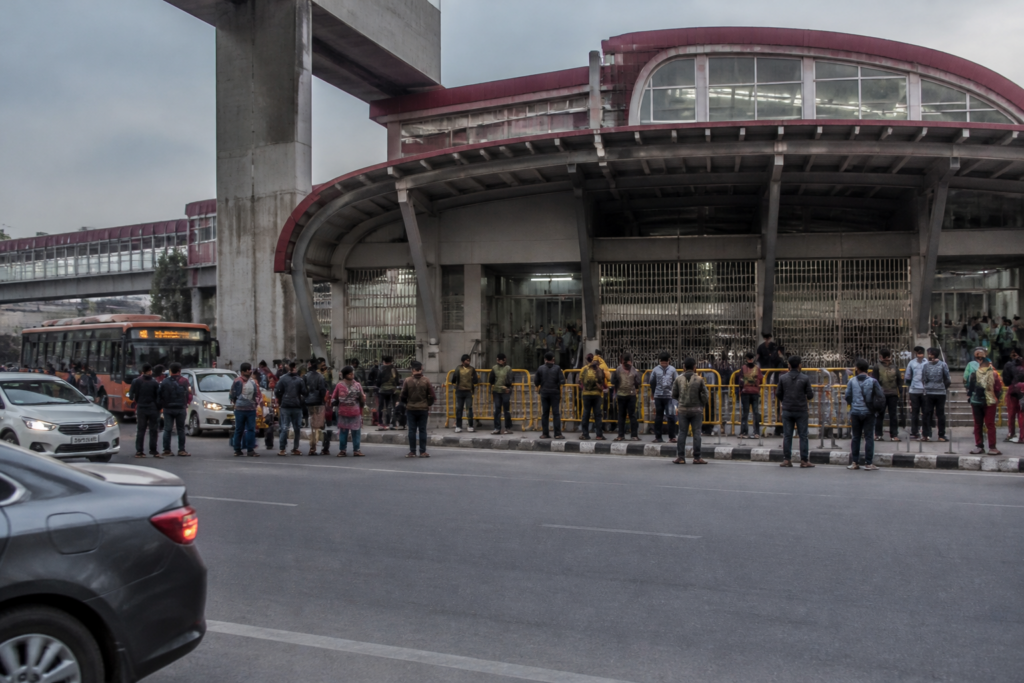
Senior officials, including Union Home Secretary Govind Mohan and Delhi Police Commissioner Anurag Kumar, apologised to the Supreme Court on Thursday over restrictions imposed on Delhi Metro and rail services during a protest called by the Cockroach Janta Party on October 10. The case concerns alleged non-compliance with the court’s direction that public transport should not be completely shut down in a way that causes inconvenience to citizens.
The officials began their affidavits with an unconditional apology after receiving contempt notices. The Ministry of Home Affairs later said that starting an affidavit responding to a contempt notice with an unconditional apology is a mandatory legal procedure, and does not by itself mean that the authorities have accepted that contempt was committed.
In a social media post, the ministry said the party responding to a contempt notice is required to begin its affidavit with an unconditional apology before presenting other facts and arguments. It said the same procedure applies in every contempt petition. The ministry added that the Union Home Secretary, the police commissioner and other officials followed this established process while filing their affidavits.
The ministry said the affidavit subsequently explained that the actions taken by the government and police were lawful and that no case of contempt was made out against them. Delhi Police Commissioner Anurag Kumar also apologised unconditionally before the court but defended the measures taken by the police.
According to the report, Kumar told the court that preventive steps had been taken on October 10 after considering intelligence inputs and an assessment of the ground situation. He said timely and lawful action had prevented a potentially serious deterioration in law and order. He also argued that Delhi’s status as the national capital had to be taken into account while assessing the measures adopted by the authorities.
The restrictions had been imposed after the Cockroach Janta Party announced a protest in Delhi. The police said the demonstration was being organised without permission and introduced several measures to stop it. Dozens of trains arriving in Delhi were cancelled, while the gates of 57 Delhi Metro stations were initially ordered to be closed.
The restrictions were challenged before the Supreme Court. The court subsequently directed that there should not be a blanket shutdown that caused hardship to the public. After the direction, the number of Metro stations with closed gates was reduced from 57 to 45. Internet services also remained suspended within a four-kilometre area in New Delhi, according to the report.
The hearing was conducted by a bench comprising Chief Justice Surya Kant and Justice Joymalya Bagchi. The proceedings place the management of public transport during security-related operations under judicial scrutiny, particularly when preventive restrictions affect commuters who are not connected to the protest.
The immediate issue before the court is whether the authorities’ actions amounted to a violation of its direction on keeping Metro and rail services from being completely shut down. The affidavits filed by the officials combine an apology required in the contempt process with an argument that the restrictions were necessary and legally justified. Further proceedings will determine how the court assesses that explanation.


