

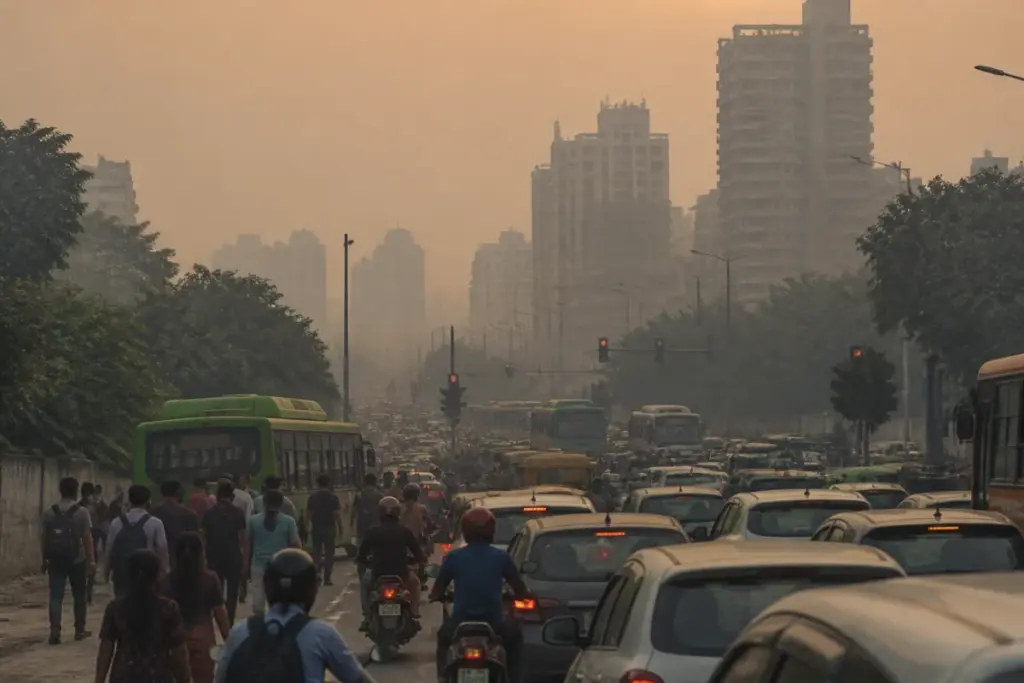
Delhi’s air quality deteriorated sharply over 24 hours, with the city’s average AQI rising from 90 to 159 and 12 areas crossing the 200 mark, according to a report by Live Hindustan – NCR published on October 17. The areas included residential neighbourhoods and locations with heavier traffic, where the AQI entered the poor category.
The report said pollution levels could remain elevated over the next three to four days because no rain is expected in Delhi and other parts of the National Capital Region during that period. It also said temperatures are unlikely to fall significantly, with maximum temperatures expected to remain around 32-34 degrees Celsius through October 23.
Delhi’s average AQI of 159 on Saturday remained in the moderate category, but the daily increase was substantial. The average had been recorded at 90 a day earlier, representing a rise of 69 points in 24 hours. The deterioration was reported across both residential and high-traffic areas, indicating that the worsening conditions were not limited to a single localised pocket.
The report attributed the expected increase in pollution partly to higher traffic loads during the Durga Puja period, along with dust and fireworks. These factors could add to emissions and particulate matter during a period when weather conditions are less favourable for dispersing pollutants, the report said.
Wind conditions are also expected to vary through the day. Citing the India Meteorological Department, the report said wind speeds could remain between 15 and 20 kilometres per hour during the daytime from October 19 to October 22. Skies are expected to remain clear in the afternoon, while winds may become weaker in the morning and evening. The weaker wind periods could coincide with higher pollution levels during those parts of the day.
Hourly readings cited from AQI.in showed how quickly conditions changed. The AQI stood at 135 at 10.30 am on October 16 and later improved to 65. That improvement did not last, with the reading rising to 240 by the evening. It subsequently eased to 216 at 10.30 am on October 17.
The latest readings show the importance of tracking pollution through the day rather than relying only on the citywide average. A moderate average can coexist with poor air in specific neighbourhoods, particularly around traffic corridors and densely settled areas. For residents, the reported morning and evening deterioration means exposure conditions may differ significantly by time and location.
According to the report, Delhi’s pollution levels are expected to remain under pressure over the next three to four days in the absence of rain. The weather outlook and AQI readings will determine whether the citywide average and the number of areas in the poor category rise further.


