

Crude oil prices have moved sharply higher as reported attacks around Saudi Arabia’s energy infrastructure and uncertainty over tanker movement through the Strait of Hormuz raise fresh concerns about the security of global oil supplies. For India, the immediate issue is not only whether petrol and diesel prices rise, but how a prolonged energy shock could move through transport, freight, manufacturing and household costs.
Brent crude was trading at $106.58 a barrel on 14 October, while US West Texas Intermediate stood at $94.94, according to the supplied report. The increase reflects a market responding to the possibility of disruption across several links in the oil chain: production sites, storage facilities, export infrastructure and the maritime routes that connect producers with refineries and consumers.
The reported incident that intensified market concern occurred on 13 October in Dhahran, Saudi Arabia. A Saudi Aramco administrative building was reportedly targeted in a suspected attack by Yemen’s Houthi rebels, with limited fire reported. The supplied report does not establish that Saudi oil production or exports were halted. Its significance lies in the vulnerability of infrastructure associated with one of the world’s major oil-producing countries.
That distinction is important. Oil prices can rise before physical supplies fall. Traders price in the possibility that production, storage or exports may be disrupted. If the perceived risk becomes sufficiently high, refiners, shipping companies and other market participants adjust their expectations even while oil continues to flow. The result can be a risk premium in prices without an immediate, measurable shortage at the point of consumption.
For cities, this creates a transmission problem rather than a single fuel-price event. Urban economies depend on continuous movement: buses, private vehicles, goods carriers, construction equipment, delivery networks and inter-city freight all require energy directly or indirectly. A higher crude price first affects the cost of imported oil and petroleum products. It can then influence the cost of moving people and materials across the urban system.
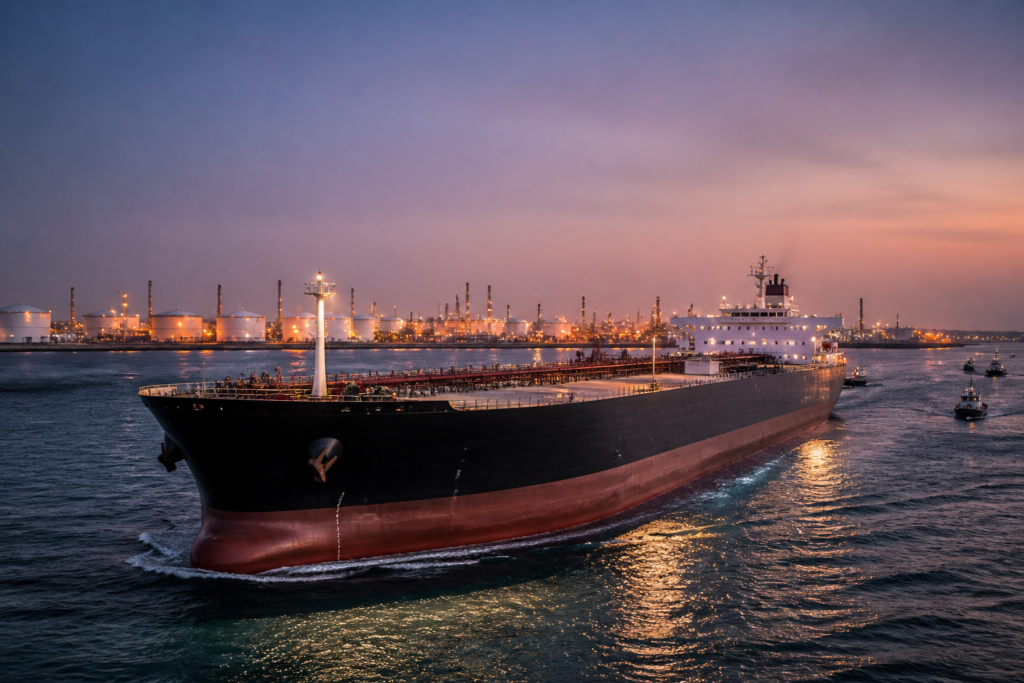
The Strait of Hormuz is central to the concern because the route is one of the world’s most important oil transport corridors. The report says tanker attacks earlier in October had already affected oil movement through the route, citing Reuters. Continued uncertainty could delay deliveries and raise freight and insurance costs even if tankers are not completely prevented from sailing.
This is where the distinction between production capacity and usable supply becomes relevant. Oil may remain available at the wellhead, but a disruption in shipping can prevent it from reaching refineries on schedule. For an oil-importing country, delayed cargoes can create operational and financial pressure even when the global market has not entered a formal supply shortage.
The impact on India will depend on the duration and scale of the price increase. India meets a large share of its energy requirements by importing crude oil, so sustained international price gains can increase the country’s import bill. More dollars are then required to purchase the same volume of oil, potentially increasing demand for foreign currency and putting pressure on the rupee.
The currency channel matters because a weaker rupee can make imported crude more expensive in domestic terms. That does not automatically translate into an immediate increase in petrol and diesel prices. Domestic fuel prices also reflect government taxation, decisions by oil marketing companies and changes in operating costs. The relationship between international crude prices and retail fuel prices therefore depends on more than the daily benchmark price.
The time lag between an international shock and its domestic consequences is equally important. A brief price spike may be absorbed through existing commercial arrangements or company decisions. A longer period of elevated prices is more difficult to contain because the higher cost is repeatedly embedded in new cargoes, freight contracts and industrial supply chains.
Transport is the first major urban channel. Higher fuel costs can raise the operating expenses of freight carriers, buses, logistics companies and other mobility services. Even where passenger fares do not change immediately, operators may face pressure on margins, maintenance budgets or service frequency. Goods movement can also become more expensive, affecting the cost of bringing food, construction materials and manufactured products into cities.
The second channel is production. The report notes that expensive oil can increase the cost of manufacturing and other economic activity. Factories use fuel and transport services, while many businesses depend on road-based distribution. If logistics costs remain high, the effect may spread through wholesale and retail prices rather than appearing only at petrol pumps.
The construction and real-estate sectors are also exposed through transport and equipment costs, although the supplied report does not quantify the impact on either sector. Construction sites depend on the movement of cement, steel, aggregates, machinery and workers. A broad increase in freight and energy costs can therefore affect project budgets and delivery economics, but the extent would depend on the duration of the shock and the ability of firms to pass costs through.
The inflation effect is similarly conditional. The report says that prolonged crude-price increases may add pressure to the cost of goods and services, but it does not provide a forecast or a quantified estimate. The outcome would depend on how high prices rise, how long they remain elevated, the exchange-rate response, domestic fuel-price decisions and the availability of alternative supplies.
Possible relief from other producers is another part of the market calculation. The report points to the possibility of higher diesel exports from Russia helping the fuel market. That could provide some relief, but it may not fully offset concerns about crude supply from West Asia. Refined-product availability and crude availability are related but not identical: additional diesel cargoes may ease one part of the market while shipping risks continue to affect crude deliveries.
This distinction exposes the institutional complexity of energy security. The risk is managed across several systems at once: oil-producing countries protect fields and export facilities; shipping companies assess maritime routes; insurers price security risks; refiners plan cargoes; oil marketing companies manage domestic fuel decisions; and the government monitors inflation, the rupee and the import bill. No single intervention controls the entire chain.
For urban administrations, the immediate response is usually indirect. Municipal bodies do not determine global crude prices, but their transport and service systems experience the consequences. Public transport agencies, waste contractors, construction departments and urban logistics operators can all face higher operating costs. The supplied report does not identify any city-level response, but the transmission mechanism is clear: an external energy shock can become a local service-delivery pressure.
The issue also demonstrates why energy security is an urban planning concern. Cities are often assessed through roads, transit systems, housing and public services, while the energy required to operate those systems remains less visible. When fuel prices rise, the dependence becomes apparent through bus operations, freight costs, construction activity and household expenditure.
The current evidence confirms a rise in international crude benchmarks alongside heightened concern about attacks and tanker movement in West Asia. It does not establish a shutdown of Saudi production, a closure of the Strait of Hormuz or an immediate increase in Indian retail fuel prices. Those are separate developments that would require specific confirmation.
The indicators to monitor are therefore the security of Saudi energy infrastructure, the continuity of tanker movement through Hormuz, the availability of alternative crude and refined-product supplies, the duration of elevated Brent prices, the rupee’s movement and decisions by the government and oil marketing companies. Together, these factors will determine whether the present market anxiety remains a temporary risk premium or becomes a wider cost shock for India’s urban economy.


