

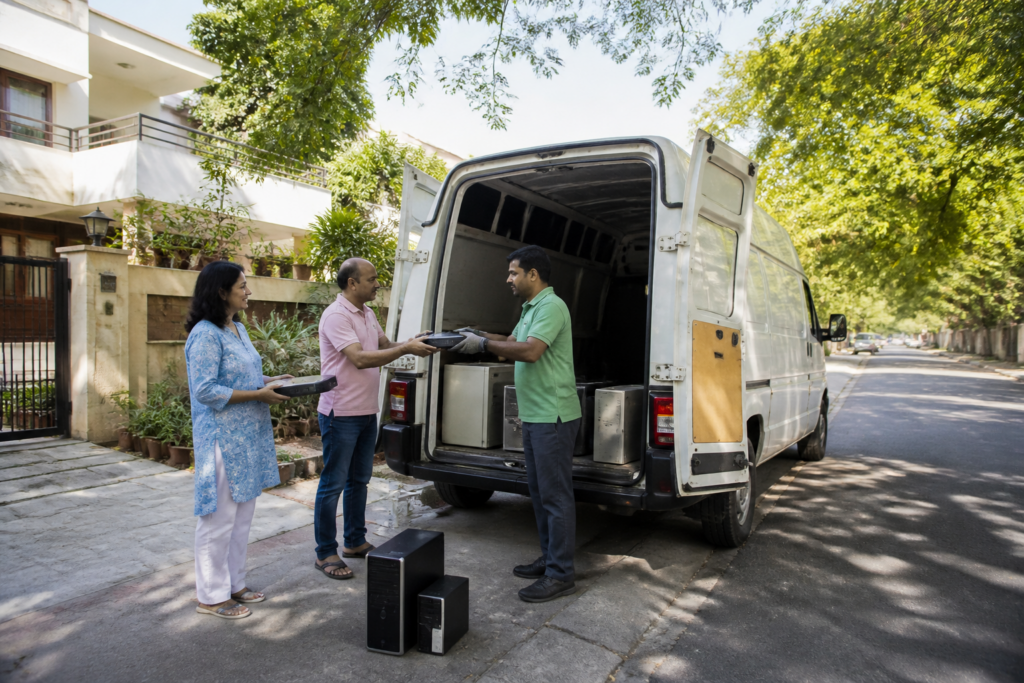
Chandigarh has launched a doorstep e-waste collection drive to move discarded electronic equipment away from informal scrap channels and towards authorised recycling. The initiative, Project Punarjanma—“The Reincarnation of Technology”—was launched by the Chandigarh Pollution Control Committee (CPCC) in partnership with the Rotary Club at Paryavaran Bhawan in Sector 19-B on Wednesday, coinciding with International E-Waste Day.
Under the programme, a dedicated e-waste collection van will operate across the city and collect discarded electrical and electronic equipment directly from residents. The initiative will also run awareness campaigns in educational institutions, residential areas and through civil society groups.
The CPCC said the project is intended to promote responsible disposal, strengthen authorised recycling and support the development of a regional circular economy model. The CPCC member secretary highlighted the health and environmental hazards associated with dumping e-waste through informal scrap dealers and urged residents to use authorised collection channels instead.
A Chandigarh administration spokesperson specifically advised residents not to dispose of or sell e-waste to unorganised scrap sellers. “Residents are advised to avoid disposing of or selling e-waste to unorganised scrap dealers and to use authorised collection channels,” the spokesperson said.
Residents can request a pickup by calling or messaging 98829 71255 or 82880 79366. The collection van is expected to provide a direct route for households seeking to dispose of unwanted electronic items, although the source report does not specify the van’s operating timetable, coverage schedule or the categories and quantities of e-waste it will accept.
The city’s partnership with the Rotary Club places public outreach alongside collection operations. Awareness activities will be conducted across institutions and neighbourhoods under the project’s “Recycle Today for a Greener Tomorrow” motto. The stated aim is to make authorised disposal more accessible while informing residents about the risks associated with unregulated handling of electronic waste.
E-waste includes discarded electrical and electronic equipment, which can enter informal recycling networks when households sell or discard old devices through unorganised channels. The CPCC’s warning establishes the central administrative concern behind the campaign: collection must be connected to authorised recycling rather than simply shifting electronic waste from homes to informal handlers.
The initiative also gives Chandigarh a citywide mechanism for linking residents with collection services instead of relying only on individual disposal decisions. Its effectiveness will depend on public participation, the reach of the mobile collection system and the ability of the authorised recycling chain to process the material collected. The CPCC and Rotary Club have not announced further operational details in the supplied report.
For now, Project Punarjanma marks the start of a municipal-level effort combining doorstep pickup, institutional outreach and public awareness. The next stated steps are the operation of the collection van and the rollout of campaigns across educational institutions, civil society groups and residential areas.


