

Chandigarh’s municipal corporation and the UT administration’s engineering department do not own a super suction machine to clean deep storm water drains, an RTI response has revealed, raising concerns about the city’s preparedness for heavy monsoon rainfall and recurring waterlogging.
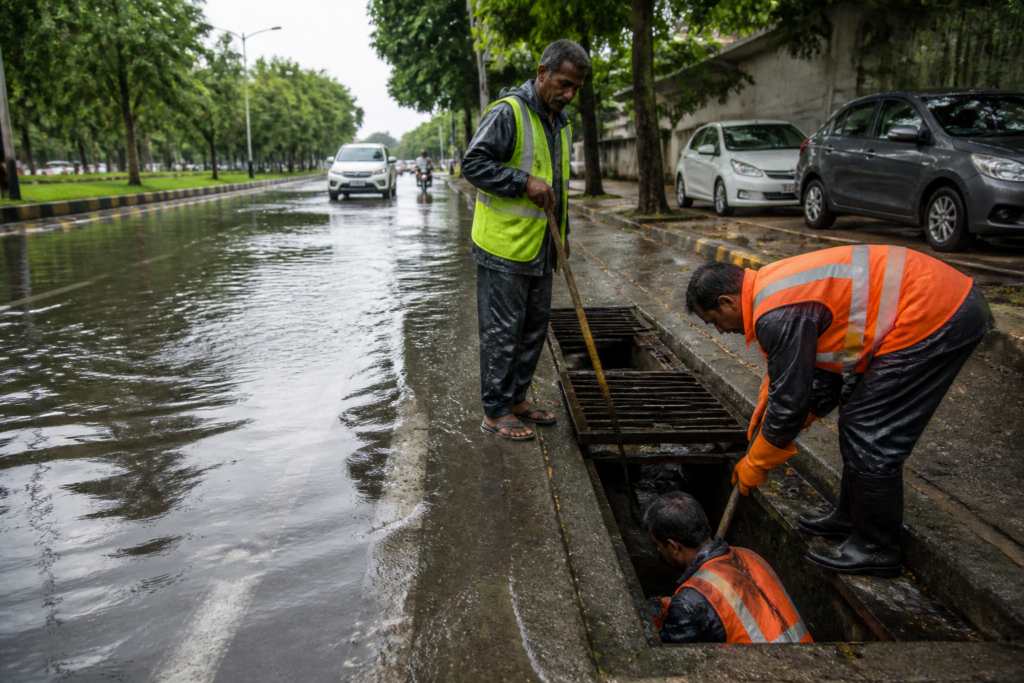
The information was obtained by environmental activist L R Budhania, who said both civic authorities depend largely on manual cleaning. According to him, manual work can remove superficial debris but cannot effectively clear deep silt and compacted blockages inside storm water drains.
“Both the administration and civic body lack the proper system to clean up the drainage, particularly the deeper parts. Manual cleaning can only clear the superficial portions, resulting in frequent waterlogging,” Budhania said.
The Chandigarh Municipal Corporation had earlier hired a super sucker on rent through one of its wings, but its use was limited to a small portion of a single sector, according to the report. The absence of dedicated high-pressure suction equipment means the two civic bodies do not have their own machinery for sustained mechanised cleaning of deeper drainage sections.
The equipment gap has come into focus amid repeated instances of flooding during intense rainfall. During a recent spell, 72.4 mm of rain fell in two hours, inundating roads, disrupting traffic and damaging key stretches, including Madhya Marg.
Water also entered basements, showrooms and residential units in Sector 16, Sector 22 market and the Sector 26 grain market. These incidents have added pressure on the city’s storm water drainage system, particularly when heavy rain delivers large volumes of runoff within a short period.
The RTI findings do not establish that the lack of a super suction machine alone caused the reported flooding. However, they point to a specific maintenance limitation in the system used to keep deep drains operational before and during the monsoon.
Budhania said intense rainfall naturally puts pressure on the drainage network, but the lack of mechanised cleaning capacity could worsen the city’s vulnerability by leaving deeper obstructions unaddressed. He said the findings had renewed the question of whether the Municipal Corporation and the UT administration should strengthen their equipment and systems for drain maintenance.
The immediate issue for the civic authorities is the capacity to clean deeper portions of the storm water network, beyond the superficial debris that can be removed manually. Any response would involve decisions on equipment ownership, hiring arrangements and the extent of drain sections covered by mechanised cleaning. The authorities’ next steps on strengthening this capacity remain to be stated.


