

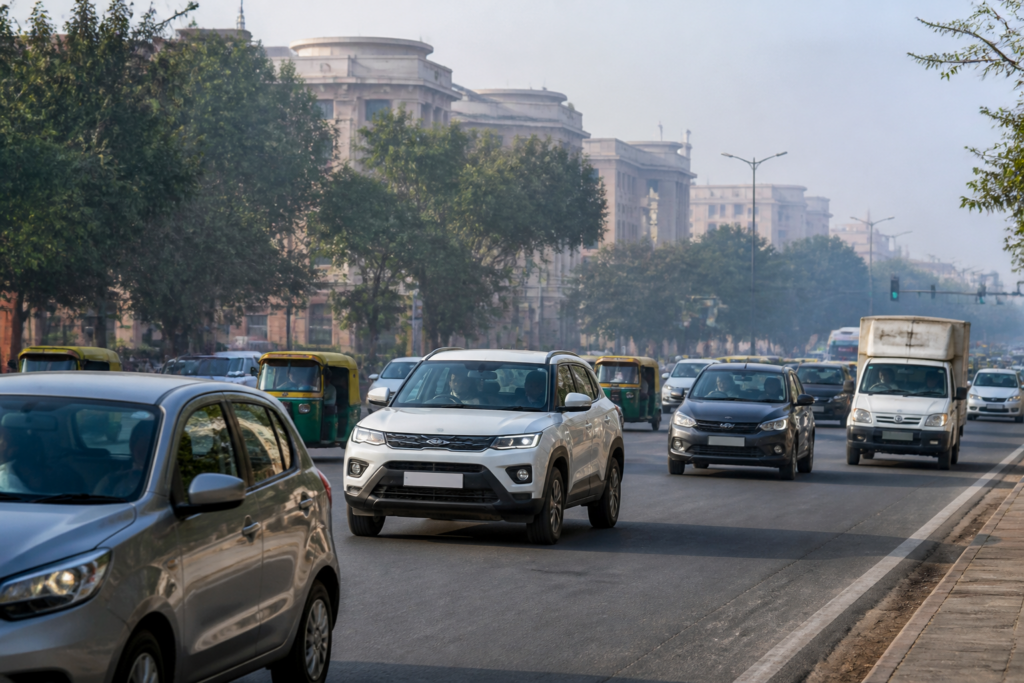
India plans to introduce BS-VII emission standards for new cars and SUVs from April 2029, followed by small goods delivery vehicles and pick-up vans from April 2030 and heavy-duty vehicles from April 2031, a senior government official said on Wednesday.
The proposed standards have been approved by the Ministry of Road Transport and Highways, according to the official. Draft notifications are expected this week, marking the next formal step before the new requirements are introduced for vehicle manufacturers and buyers.
The government has said the BS-VII norms will fully align with Euro 7 standards. The framework is intended to regulate pollutants emitted by vehicles, including carbon monoxide, nitrogen oxides, hydrocarbons and particulate matter. These pollutants are associated with road transport and are particularly relevant to cities where vehicle ownership, traffic volumes and congestion continue to shape daily air quality.
The standards will be introduced in phases rather than applied to every vehicle category at the same time. New cars and SUVs are scheduled to come under BS-VII from April 2029. Small goods delivery vehicles and pick-up vans are scheduled to follow from April 2030, while heavy-duty vehicles are to be covered from April 2031.
The phased approach places different parts of the road transport system on separate compliance timelines. Passenger vehicles will be the first category affected, followed by light commercial vehicles used for deliveries and goods movement. Heavy-duty vehicles, which include larger commercial vehicles, will have a later implementation date under the proposed schedule.
Bharat Stage standards set limits on the pollutants vehicles can emit. India has enforced BS-VI norms since April 2020, when it moved directly from BS-IV to BS-VI and skipped BS-V. The earlier transition was intended to accelerate pollution control by requiring vehicles to meet stricter emission requirements.
Vehicles meeting BS-VI standards emit substantially lower levels of regulated pollutants than vehicles built under earlier standards. The BS-VI transition also required the use of low-sulphur fuel, linking vehicle regulations with the fuel available through the national transport system.
The proposed BS-VII framework would extend that progression by aligning India’s next vehicle emission standards with Euro 7 norms. Its effect will depend on the final notifications, the technical requirements prescribed for each vehicle category and how compliance is enforced after the standards take effect.
The immediate milestone is the release of the draft notifications by the road transport and highways ministry. Those documents are expected to set out the detailed requirements and implementation provisions for the phased introduction of BS-VII standards.


