

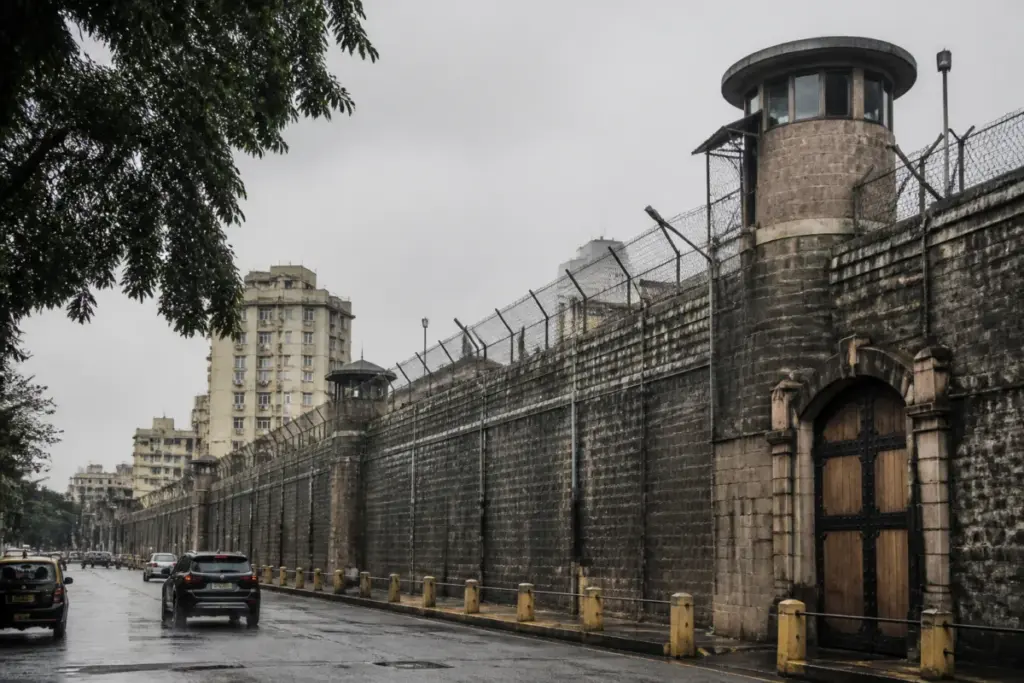
The Bombay High Court has raised concern over severe overcrowding at Mumbai’s Arthur Road Jail, where a barrack designed for 50 prisoners is reportedly housing between 220 and 250 undertrial accused. The court’s observations came while granting bail to a murder accused who had spent nearly four years and 10 months in custody without charges being framed.
Justice Milind Jadhav granted the accused conditional bail against a bond of Rs 25,000. The order cited the prolonged detention, the delay in starting the trial and the scale of evidence still to be examined by the prosecution.
According to the report referred to by the court, the overcrowding at Arthur Road Jail is nearly five times the barrack’s stated capacity. The court also took note of the wider problem of prisoners being held beyond sanctioned capacity and the effect of delayed trials on undertrials.
The prosecution is expected to examine 61 witnesses in the case, while charges had not yet been framed. The court noted that the accused had already spent approximately four years and 10 months in custody. Six other accused in the case had previously been granted bail.
In explaining its decision, the High Court referred to established Supreme Court principles that bail is the rule and imprisonment is the exception. It said that keeping an accused in custody for an extended period before conviction can have a punitive effect, even though the person has not been found guilty.
The court linked the right to a speedy trial to Article 21 of the Constitution, which protects personal liberty. It said that bail decisions must consider not only the seriousness of the alleged offence but also the likelihood of the accused participating in the trial, influencing witnesses or tampering with evidence.
The court further observed that the trial was unlikely to begin or conclude in the near future. In these circumstances, continued detention would affect the accused’s constitutional rights, particularly the right to personal liberty and a timely trial.
The bail order includes conditions requiring the accused to cooperate with the proceedings and not influence witnesses. The case also places renewed attention on the relationship between prison capacity, the pace of criminal trials and the large undertrial population in Mumbai’s correctional system.


