

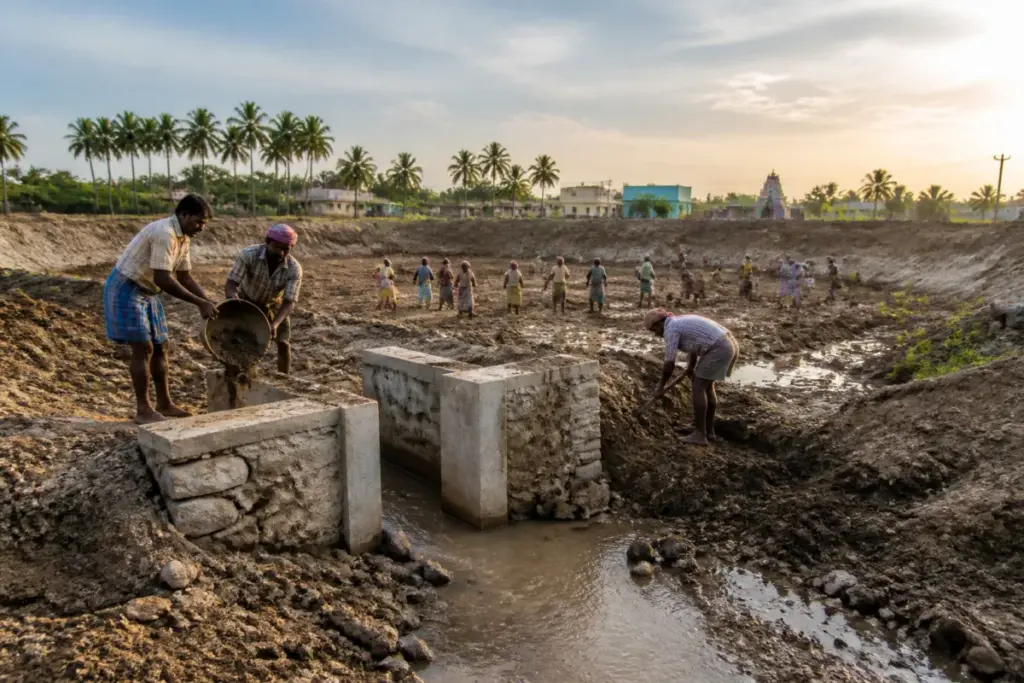
Tamil Nadu has taken up more than 40,000 water conservation projects in the current financial year under the VB-G RAM G scheme, with the state prioritising ponds, check dams, recharge shafts and channel restoration in areas facing rainfall fluctuations and groundwater stress.
The works include more than 13,000 ponds, around 1,700 check dams and the conversion of over 10,000 defunct hand pumps into groundwater recharge shafts. Recharge wells and percolation tanks are also being created, particularly in blocks identified as facing severe groundwater stress, officials said.
The state has planned 10,598 recharge shafts in arid and semi-arid areas this year, compared with a little over 1,000 taken up during the previous financial year. The nearly tenfold increase is intended to improve the movement of rainwater into aquifers and reduce dependence on groundwater extraction, according to a senior official quoted in the report.
Officials said districts including Tiruvannamalai, Villupuram and Tirupur would receive particular attention because of declining groundwater levels. Blocks in the delta region have also been prioritised to improve water flow through supply channels managed by village panchayats.
Construction of ponds at more than 6,000 sites is almost complete, the department said. The programme has also engaged more than 17,000 workers to desilt 19,085 km of channels and remove bushes obstructing water flow. Officials said these works were identified according to local needs and demands raised in village panchayats.
The Union government has released ₹2,176 crore as its first instalment under the scheme. Funding follows a 60:40 Centre-state pattern, with the Tamil Nadu government contributing its share, officials said. A significant portion of the allocation is being used for wages paid to workers involved in water conservation activities.
The water conservation programme links rural employment with the creation and maintenance of local water infrastructure. Ponds, channels, percolation tanks and recharge structures can help retain rainfall closer to where it falls, while desilting can improve the movement of water through existing village systems. However, the effectiveness of these assets will depend on their location, construction quality and continued maintenance by the relevant local institutions.
The department is expected to begin construction of 1,752 check dams planned across the state during the current financial year. The works are being taken up as Tamil Nadu faces concerns over uneven rainfall and the implications of continued pressure on groundwater resources.


