

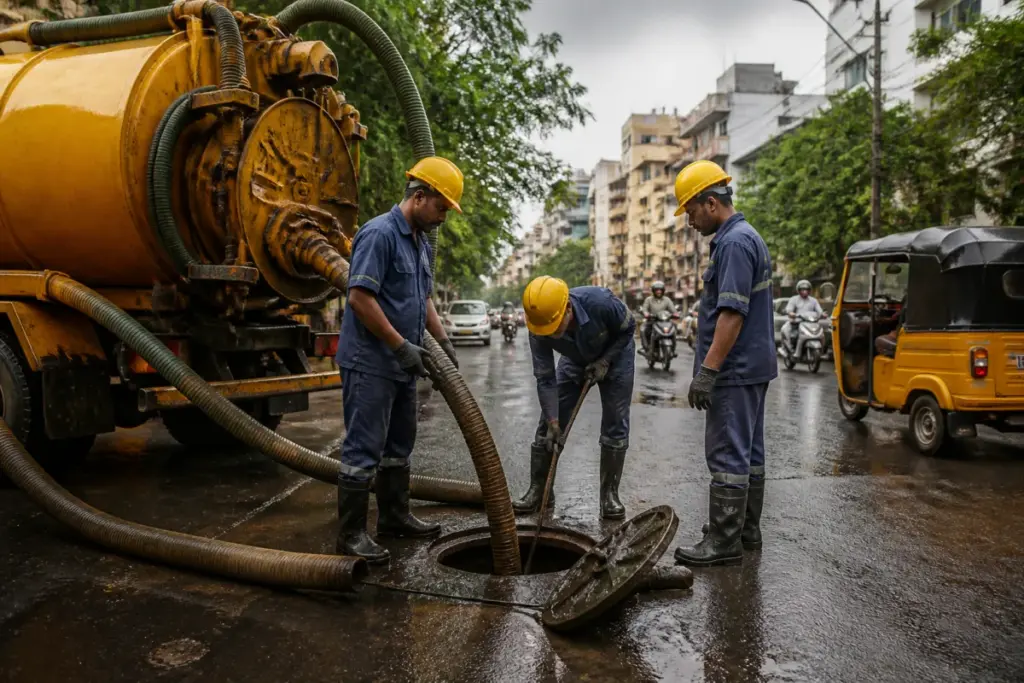
Chennai Metrowater has desilted 9.6km of sewer lines and 433 manholes across 227 Greater Chennai Corporation streets, while expanding its equipment and monitoring systems to respond to sewage blockages after rainfall.
The work was carried out using 218 machines, according to a report by the Times of India. Metrowater is monitoring sewage pumping levels around the clock through an Internet of Things-based system. If pumping levels fall after rain, officials identify the affected stretch and deploy workers to clear blockages.
The utility has also added 29 sewage suction vehicles hired from other districts to its existing fleet. Its wider equipment pool includes 580 machines and 173 contract-operated jetting-cum-grabbing vehicles. The additional vehicles are intended to strengthen the response capacity available for sewer maintenance and emergency clearance within the GCC limits.
Metrowater is also keeping generators and fuel ready to maintain operations at critical water and wastewater facilities. These include eight water treatment plants, 143 water distribution stations, 22 sewage treatment plants and 438 sewage pumping stations.
The preparations cover multiple points in Chennai’s water and sewage network, where interruptions at treatment plants, pumping stations or distribution facilities can affect service continuity across neighbourhoods. The utility’s use of live pumping-level data is intended to help officials identify operational problems and locate stretches requiring field intervention after rainfall.
Alongside the sewerage work, Metrowater has doubled its daily drinking-water quality testing. The number of samples collected across the corporation’s 15 zones has increased from 900 to 1,800 a day. The expanded testing is aimed at increasing surveillance of drinking-water quality across the city’s administrative areas.
The scale of the operation reflects the multiple systems that must function together during periods of heavy rain: sewer lines and manholes need to remain clear, pumping stations must continue operating, treatment facilities require backup power, and drinking water must be tested across a large urban network. The figures released by Metrowater also show that the response relies on a combination of its own fleet, contracted equipment and vehicles brought in from other districts.
Residents can report water-supply and sewage-related complaints through Metrowater’s 1916 helpline. The utility’s stated response process involves using pumping-level monitoring to identify affected stretches and deploying workers to clear blockages after rainfall.


