

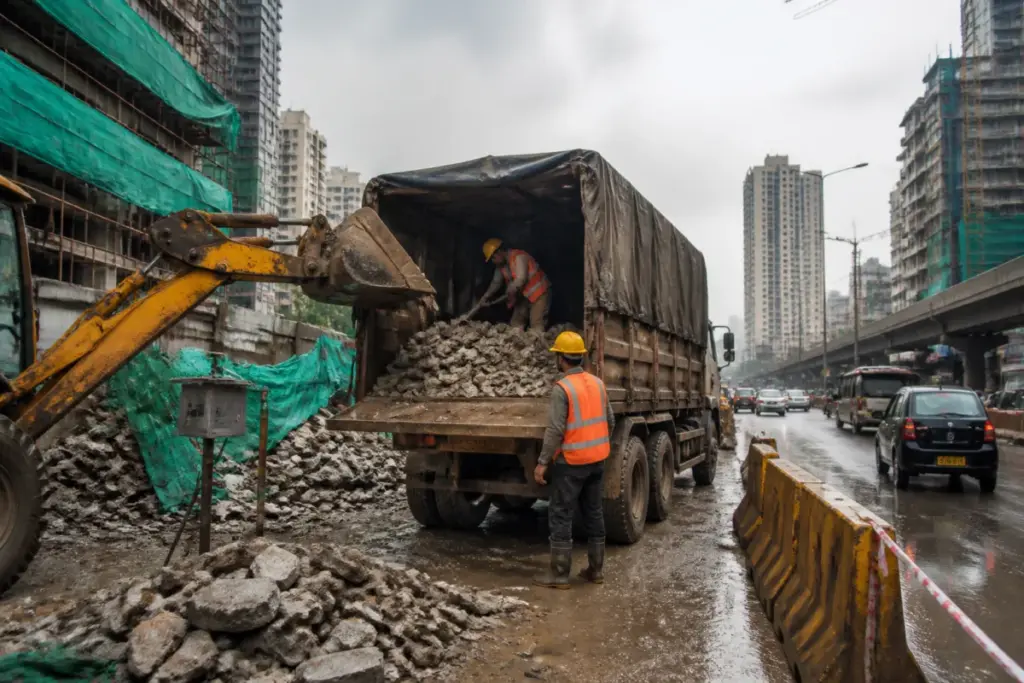
Mumbai’s construction and demolition waste collection has increased sharply in 2026 as the Brihanmumbai Municipal Corporation (BMC) expands tracking, site registration and enforcement against illegal debris disposal. However, a material discrepancy in the figures supplied in the report means the headline collection data requires confirmation before it can be treated as final.
The BMC said construction and demolition waste collection increased by approximately 46 per cent on a comparable January-to-September basis from 2025. The civic body also reported that approximately 2.06 lakh metric tonnes of debris had been collected between January 1 and October 18, while around 2.01 lakh metric tonnes had been processed during the same period. The report says this collection had already exceeded the approximately 1.69 lakh metric tonnes recorded during the whole of calendar year 2025.
However, the body of the supplied report separately describes the collection figure as approximately 206 lakh metric tonnes. That figure does not match the 2.06 lakh metric tonnes stated in the report’s summary, making verification of the unit and decimal placement necessary. The stated 46 per cent comparable-period increase also cannot be independently reconciled from the annual figures provided.
The BMC said the measures are being implemented under the guidance of the High Power Committee overseeing air pollution mitigation. They include stricter use of the Mumbai Debris Control and Tracking System, mandatory registration of construction sites, vehicle tracking and transportation of debris only to authorised processing or unloading facilities.
The civic body has directed its wards to identify and register private, government, semi-government and municipal construction and demolition sites. It has also asked bulk waste generators to transport debris only to authorised recycling facilities. Mumbai currently has two BMC-operated construction and demolition waste processing facilities, located at Dahisar and Daighar, according to the supplied report.
As of October 20, 499 stakeholders had registered on the MDCTS portal, including 331 builders and developers. The BMC recorded 48 registrations on that day alone, including 40 builders and developers. The tracking system is intended to establish accountability from the point where debris is generated to its authorised destination.
The BMC has also emphasised the installation and active use of Vehicle Tracking and Monitoring Systems on vehicles carrying construction debris. The system is intended to allow officials to monitor vehicle movement and check whether each load reaches an authorised facility rather than being dumped on roadsides, open spaces or other unauthorised locations.
Enforcement action has produced Rs 10.50 lakh in penalties between April 1 and October 15, 2026. Civic authorities detected 42 cases involving the transportation of construction and demolition waste without an approved plan. The BMC said non-compliant vehicles may attract penalties of up to Rs 25,000 per vehicle per day.
The enforcement framework links debris management to Mumbai’s wider air-pollution response. The BMC said improved tracking, recycling and compliance would help reduce illegal dumping and construction-related dust. The civic body’s stated objective is for every construction site to be registered, every debris vehicle to be tracked and every load to reach an authorised processing or unloading facility. The collection and processing figures, however, require clarification from the BMC before the reported totals can be published as established fact.


