

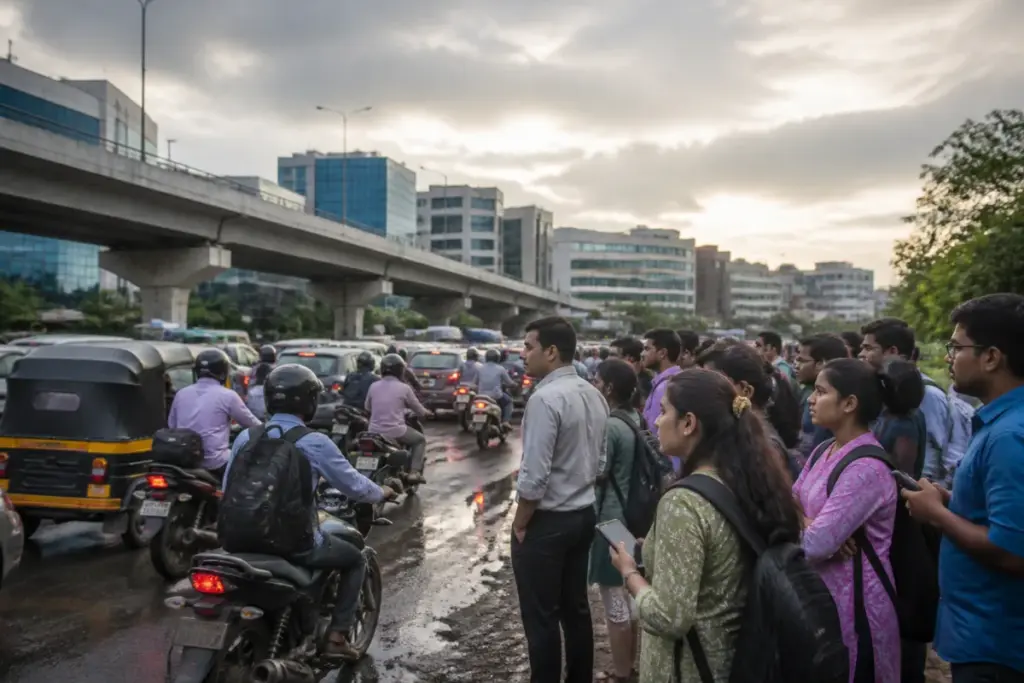
The Pune bike taxi ban has removed a low-cost and time-saving travel option for office workers, students and other commuters, leaving many dependent on autorickshaws and app-based cabs amid traffic congestion and complaints about high fares and cancellations. The Regional Transport Authority (RTA) issued the ban orders after autorickshaw organisations opposed bike-taxi operations and indicated that they could launch protests, according to a report by Civic Mirror – Pune.
The decision affects commuters who used two-wheelers booked through bike-taxi services to travel through areas such as Hinjewadi, Wakad and Kharadi. These locations include major information technology offices and educational institutions, where passengers often seek alternatives to crowded roads, limited bus frequency and expensive peak-hour rides.
Passengers quoted in the report said the ban had increased uncertainty over daily travel costs and journey times. Amit Deshpande, an IT employee from Hinjewadi, said bike taxis had been an affordable option during the morning rush. He alleged that some autorickshaw drivers were now demanding arbitrary fares, while app-based cab drivers sometimes cancelled rides or sought additional payments after accepting bookings.
The impact is also being felt by passengers travelling at night. Snehal Kulkarni, a resident of Kothrud, said bike taxis had allowed her to travel at a lower cost and that the closure had created another mobility concern for women seeking dependable late-hour transport. She said commuters expected autorickshaw operators to improve service and charge fares according to the meter.
Students are among the other groups affected by the order. Akshay Mohite, a student at Savitribai Phule Pune University, said the timing of Pune Mahanagar Parivahan Mahamandal Limited bus services and the cost of autorickshaw travel already required students to plan their journeys carefully. He said bike taxis had helped students manage their monthly travel budgets.
The dispute places Pune’s transport administration between competing demands: autorickshaw organisations seeking protection from competition and passengers seeking affordable, reliable and quick last-mile connectivity. The reported RTA order also brings legal and regulatory questions around the operation of bike taxis into focus. The report does not provide details of the specific legal basis, duration or enforcement mechanism of the ban.
For commuters, the immediate concern is whether existing public transport and paratransit options can absorb demand from passengers who previously used bike taxis. Complaints cited in the report include rejected autorickshaw trips, demands for fares above expectations and cancelled cab bookings. These problems are particularly significant in employment corridors where travel demand rises sharply during office hours.
Citizens have called for a reconsideration of the ban and for a transport solution that addresses passenger affordability, safety and reliability alongside regulatory requirements. The report does not state whether the RTA has announced a review timetable or any alternative arrangement for affected commuters.


