

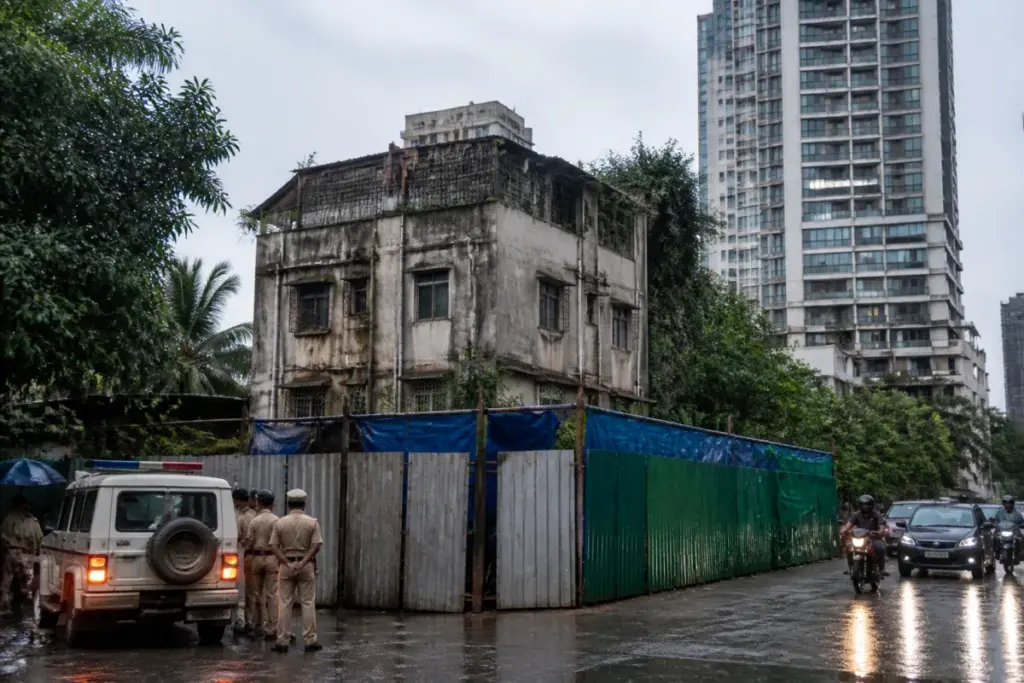
Mumbai’s Crime Branch has added the organised-crime provision under Section 111 of the Bharatiya Nyaya Sanhita (BNS) in an alleged ₹11 crore extortion case linked to a disputed Bandra property, and is examining the invocation of the Maharashtra Control of Organised Crime Act (MCOCA) against the accused.
The Anti-Extortion Cell added the provision against five accused in the case, which relates to an alleged attempt to pressure a developer over redevelopment of a prime property on Perera Road, Bandra. Police officials said the investigation found that at least two accused had previous criminal cases and were allegedly linked to the Chhota Rajan gang.
The case began last month when police arrested five people, including a brother and sister, for allegedly attempting to extort money from a developer. According to the complaint, the accused first demanded ₹22 crore to withdraw claims over the property. The alleged demand was later reduced to ₹11 crore, after which the police intervened and caught the accused red-handed, the report said.
The complaint was filed by Gagan Sharma, head of business development at Diljay Property Developers Pvt Ltd. Sharma alleged that the company had acquired the Church property on Perera Road through an auction and had obtained a no-objection certificate from the Charity Commissioner. Members of the Stevens family, identified in the report as Daniel, Ethel and their cousin Tony, disputed the company’s rights over the property and approached the court. Civil litigation between the parties remains pending.
Police said the alleged extortion attempt involved claims that the family members were prepared to relinquish their rights over the property in return for payment. During negotiations, Nilesh, Abdullah, Nazir and Remy allegedly approached Sharma through an intermediary, according to the complaint and police account cited in the report.
Rajwinder Singh, proprietor of Rajlakhsmi companies, and Remi Fernandes have been shown as absconding accused in the case. Police allege that Singh provided ₹10 lakh and later sent armed men to the site to threaten the developer. The allegations have not been established in court.
A sessions court rejected Singh’s anticipatory bail application last week after the prosecution presented these allegations. Police officials also said that six offences were registered against Singh and Fernandes and described them as habitual offenders. The Crime Branch is now legally examining whether the evidence meets the requirements for invoking MCOCA, a stringent law used in cases involving alleged organised criminal activity.
The addition of Section 111 changes the legal framing of the case from an alleged property-linked extortion attempt to one involving suspected organised crime. The redevelopment dispute itself remains before the civil court, while the criminal investigation is focused on the alleged demand for money, threats and the involvement of multiple accused. The Crime Branch’s next step is its legal review of whether MCOCA can be invoked.


