

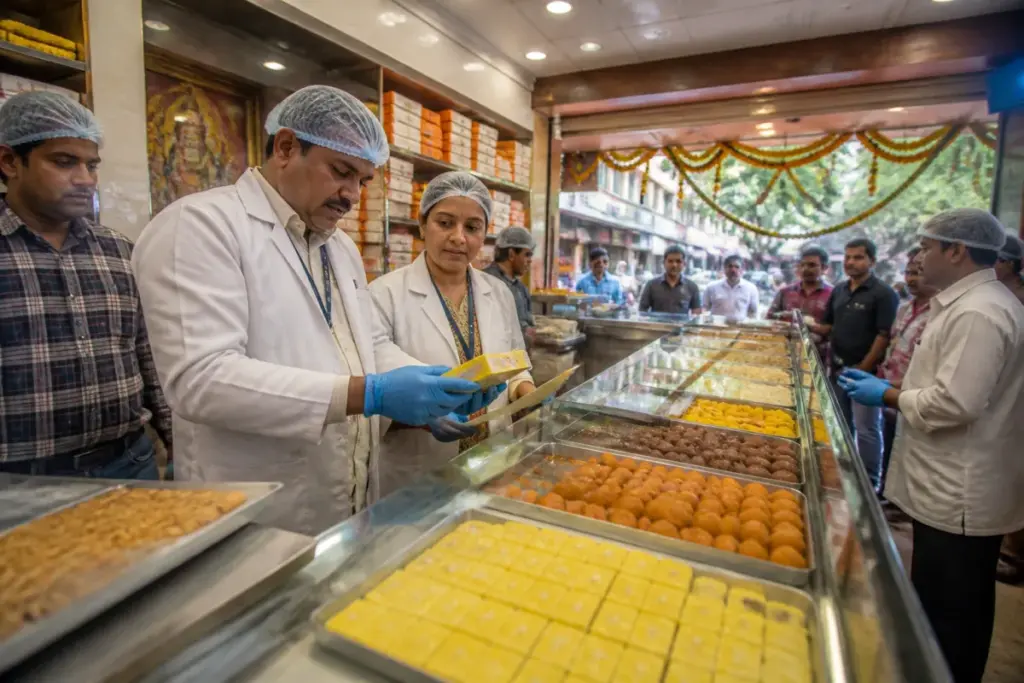
Bengaluru sweet shops and other sweet manufacturing and sales units are facing action after Karnataka’s Food Safety Department inspected 106 establishments across the state and issued notices to 15 units for violations under the Food Safety and Standards Act, 2006.
The department also imposed a combined fine of ₹7,000 on two sweet-making units for poor hygiene. Officials found shortcomings in cleanliness and defects in product labelling during the inspections, according to the department’s statement cited by Prajavani.
The inspections are part of a special statewide campaign launched ahead of the Dussehra and Diwali festivals, when the production and sale of sweets rise sharply. The campaign is aimed at checking whether manufacturers and retailers are complying with food safety and quality requirements during the seasonal increase in demand.
Officials inspected 106 sweet manufacturing and sales units on Friday. A further 80 sweet-making and sales outlets had been inspected on Thursday, taking the number of inspections reported over the two days to 186. During the inspections, 145 food samples were collected and sent to government food laboratories for testing against quality and food safety standards.
The department said notices were issued after officials identified sanitation deficiencies and errors in labels. The report did not specify the names or locations of the 15 units that received notices, or whether the laboratory tests had been completed.
Food Safety Department Commissioner K. Srinivas said further legal action would be taken under the Food Safety and Standards Act, 2006. “Continuous inspections will be conducted against any sweet manufacturing and sales outlet violating the prescribed standards. Strict legal action will be taken as per the rules,” he said.
The inspection drive places attention on two separate parts of the food-supply chain: conditions in production kitchens and the information provided to consumers through product labels. While hygiene violations can affect the safety of food prepared for sale, labelling deficiencies can limit consumers’ access to information about the products they purchase.
The samples collected by officials will undergo testing at government laboratories. The department’s next steps will depend on the inspection findings, laboratory results and the responses submitted by the units that received notices. The department has said inspections will continue across the state during the festive season.


