

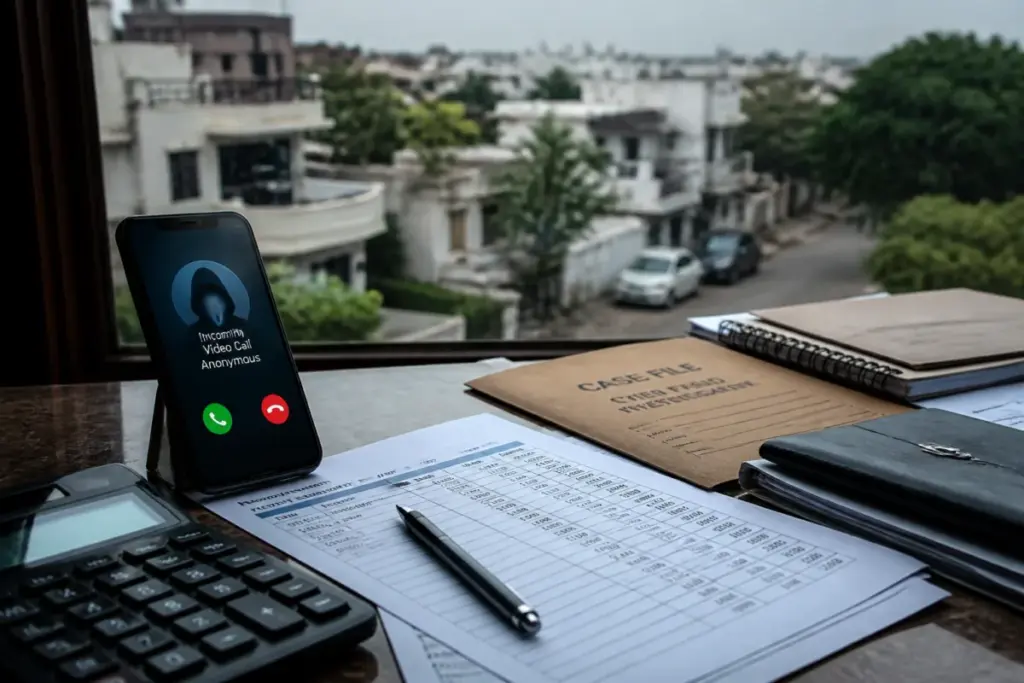
A retired Chandigarh public health department official and his wife lost nearly ₹2 crore after callers posing as Anti-Terrorism Squad officers accused them of links to terror financing and kept them under alleged digital house arrest, according to cybercrime police.
The couple, identified as Rattan Chand Kashyap and Parveen Kashyap, live in Sector 38-C. Police said they received a WhatsApp call on September 29 from a man who identified himself as ATS officer Vikram Singh. The caller allegedly told them that identity documents bearing their names had been recovered from terrorists arrested in Kashmir.
The caller further claimed that an HDFC Bank account in the couple’s names had transferred ₹70 lakh to terror groups. The fraudsters allegedly threatened the couple with arrest under the National Security Act, showed them fake Supreme Court warrants and warned that they could be detained in Pune for 45 days.
Under instructions to remain on a digital call as part of the purported investigation, the couple shared photographs of their fixed deposits and passbooks. The callers presented the exercise as an audit by the National Investigation Agency, police said.
Between October 1 and 9, the couple made four Real-Time Gross Settlement transfers to bank accounts specified by the callers. The transfers included ₹39 lakh and ₹60 lakh from the husband’s State Bank of India accounts, ₹70 lakh from his Punjab National Bank account and ₹29 lakh from his wife’s ICICI Bank account.
The callers allegedly told the couple on October 9 that their accounts had been cleared of suspicion and promised that the money would be returned the following day. The couple realised they had been defrauded after communication stopped on October 11.
They then contacted the national cybercrime helpline 1930 and submitted transaction details to the Sector 17 cybercrime police station. Chandigarh Police have initiated an investigation into the financial trail, including the accounts that received the transfers.
The case highlights how digital arrest scams combine police impersonation, fabricated legal documents and prolonged video or telephone surveillance to pressure victims into transferring money. The fraudsters’ use of bank records and fixed-deposit details also shows how financial information shared during a purported official inquiry can be used to intensify coercion.
Chandigarh’s cybercrime department has recently advised residents to independently verify the identity of anyone claiming to represent the police or a central investigative agency. Police have urged citizens not to transfer money in response to arrest threats and to contact a local police station or the 1930 helpline immediately if they suspect fraud.


