

Pune’s first FIR against Rapido over alleged unauthorised petrol bike-taxi operations is not only a police action against one ride-hailing company. It exposes a wider regulatory problem: the city’s demand for app-based, two-wheeler mobility has moved faster than the permissions, vehicle rules and enforcement systems governing it.
Vishrantwadi police registered the case against Roppen Transport Services Private Limited, which operates Rapido, after the company allegedly continued its bike-taxi service despite a direction from Pune collector and Regional Transport Authority chief Jitendra Dudi to stop operations within 24 hours. The complaint was filed by Pune Regional Transport Office inspector Prasad Survase.
According to the report, the FIR invokes provisions of the Bharatiya Nyaya Sanhita, the Motor Vehicles Act and the Information Technology Act. The allegations relate to cheating, operating a transport service without valid licences and permits, and using personal vehicles for commercial passenger transport. These are not merely technical questions about an app. They determine whether a vehicle has been legally authorised to carry paying passengers, whether the operator is accountable to transport authorities, and what regulatory protections apply to users and drivers.
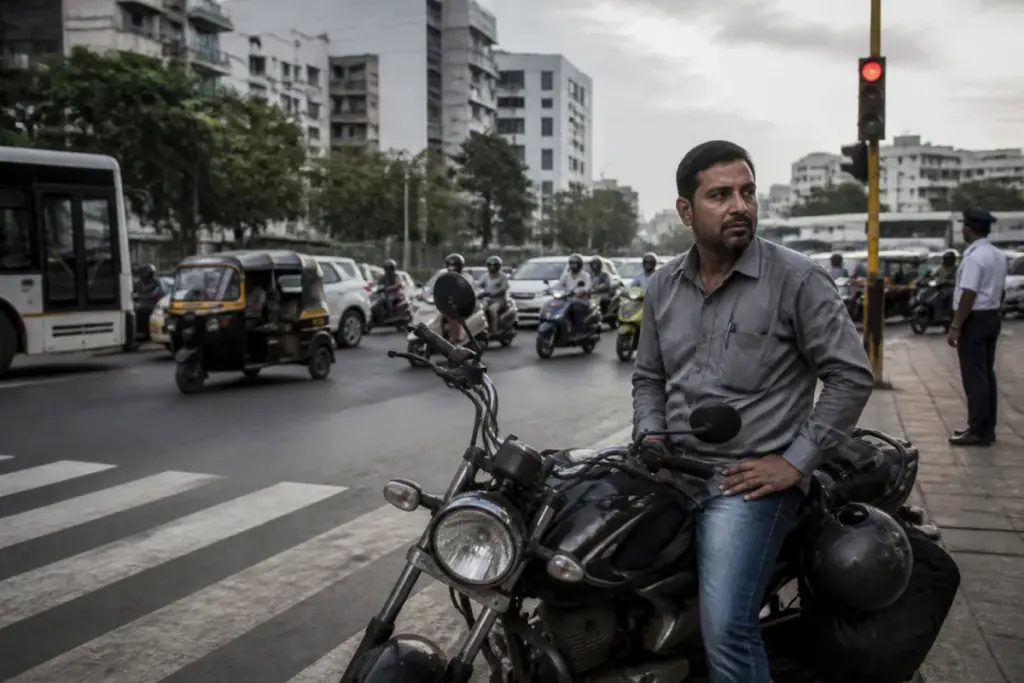
The immediate trigger was a ride booked through the Rapido application on October 16 from Yerawada to Kothrud. The passenger was served by a petrol-powered motorcycle, according to the complaint. The rider was questioned, the vehicle was seized and a challan was issued under the Motor Vehicles Act. The incident gave the authorities a specific enforcement point after the wider stop direction was allegedly not followed.
Police said their team would visit Rapido’s office in Yerawada and seize hardware and other equipment used to operate the bike-taxi service. Rapido was also given a copy of the FIR and asked why the bike-taxi option remained available on its application despite the stop order. The company’s response was awaited at the time of publication of the report.
The institutional history matters because Pune’s conflict with bike taxis is not new. The RTO had moved to halt such services in December 2022, and the Bombay High Court dismissed Rapido’s challenge in January 2023, according to the report. The latest FIR therefore follows an earlier enforcement attempt and a court proceeding rather than representing the beginning of the regulatory dispute.
The central issue is the legal status of the vehicle being used. The complaint concerns petrol-powered, non-transport two-wheelers being used to provide passenger services. A private motorcycle and a transport vehicle do not occupy the same regulatory category. The distinction affects permits, registration, enforcement responsibility and the conditions under which commercial passenger operations can be conducted.
Maharashtra’s policy framework adds another layer. Regional transport officer Archana Gaikwad said earlier that Rapido and Uber had applied to operate bike taxis under the state’s policy. That policy permitted only electric two-wheelers and required regulatory approvals, the report said. The applications remained pending. This means that even companies seeking to operate within the policy framework could not treat an application as equivalent to authorisation.
The gap between an application and an approval is particularly important in app-based transport. A digital platform can make a service appear operational to passengers even when the regulatory process remains incomplete. The user sees a booking option, a fare and a rider allocation. The authority sees a question of vehicle eligibility, permits and compliance. Unless those two systems are aligned, the existence of a functioning digital service can create the impression that the underlying transport activity is lawful.
Rapido representatives reportedly told a recent RTA meeting that Pune operations were being conducted on a trial basis. But a trial operation does not, by itself, resolve the legal question of whether the vehicles, drivers and aggregator have the permissions required for commercial passenger transport. The FIR shows that the authorities treated continued operations after the stop direction as an enforcement matter rather than as an informal experiment.
This is also why the dispute cannot be reduced to a contest between a technology company and transport officials. The RTA, the RTO, the police, the state government and the platform each occupy a different part of the regulatory chain. The transport authority determines or administers permissions; the RTO enforces vehicle and permit requirements; the police register criminal cases and investigate alleged offences; and the company controls the digital system through which rides are offered. When responsibility is divided in this way, a service can continue in the space between administrative directions and operational reality.
Autorickshaw unions have argued that the police action is inadequate. Keshav Kshirsagar, president of Maharashtra Kamgar Sabha and the Baghtoy Rickshawaala union, called for an in-depth inquiry into the role of Rapido’s city head and other officials overseeing its Pune operations. That response reflects a second dimension of the dispute: existing transport operators view unauthorised bike taxis not only as a compliance issue but also as a question of competitive fairness.
The supplied report does not establish the scale of Rapido’s Pune operations, the number of riders using the service, the number of vehicles involved or whether every ride on the platform was being provided through a petrol motorcycle. Those details are important for understanding the operational reach of the alleged violation, but they are not established in the available material. What is clear is that at least one ride cited in the complaint involved a petrol-powered motorcycle, and that authorities allege the platform continued to offer the service after the stop direction.
The episode also highlights the difference between policy intent and implementation capacity. Maharashtra’s policy, as described in the report, favours electric two-wheelers and requires approvals. Yet the enforcement action concerns a petrol vehicle being used in a service that remained visible on a major digital platform. The issue is therefore not only whether a company has applied under a policy. It is whether regulators can verify vehicle type, track platform activity and respond quickly when an operation does not match the permitted framework.
For passengers, the uncertainty is practical. A person booking a bike taxi may assume that the service displayed in an application has cleared the relevant transport approvals. The report does not establish what disclosures Rapido made to users about the status of the service, nor does it detail the insurance, liability or safety arrangements applicable to the rides in question. Those matters remain part of the larger regulatory question raised by the FIR.
For cities, the case illustrates how mobility innovation can outpace administrative classification. Two-wheelers can offer a flexible alternative in congested corridors, but their use as paid passenger services changes the regulatory obligations attached to them. The state’s electric-vehicle requirement, pending applications, earlier legal action and current police case show that the operating model remains unsettled in Pune.
The FIR is therefore best understood as an escalation in a long-running dispute rather than a final resolution. Police have indicated that they will visit the Yerawada office and seize operational equipment, while the RTO and RTA processes concerning applications remain relevant. The next significant developments will be the police investigation, the company’s response to the allegations, and any further decision by the transport authorities on whether and under what conditions bike-taxi services can operate in Pune.


