

The renewed campaign for a Mangaluru High Court bench is not simply a demand for another judicial facility. It is a regional argument about how people in Dakshina Kannada, Udupi, Kodagu and Chikkamagaluru access the state’s highest court, how specialised land disputes are understood, and how a large case backlog is distributed across Karnataka’s judicial system.
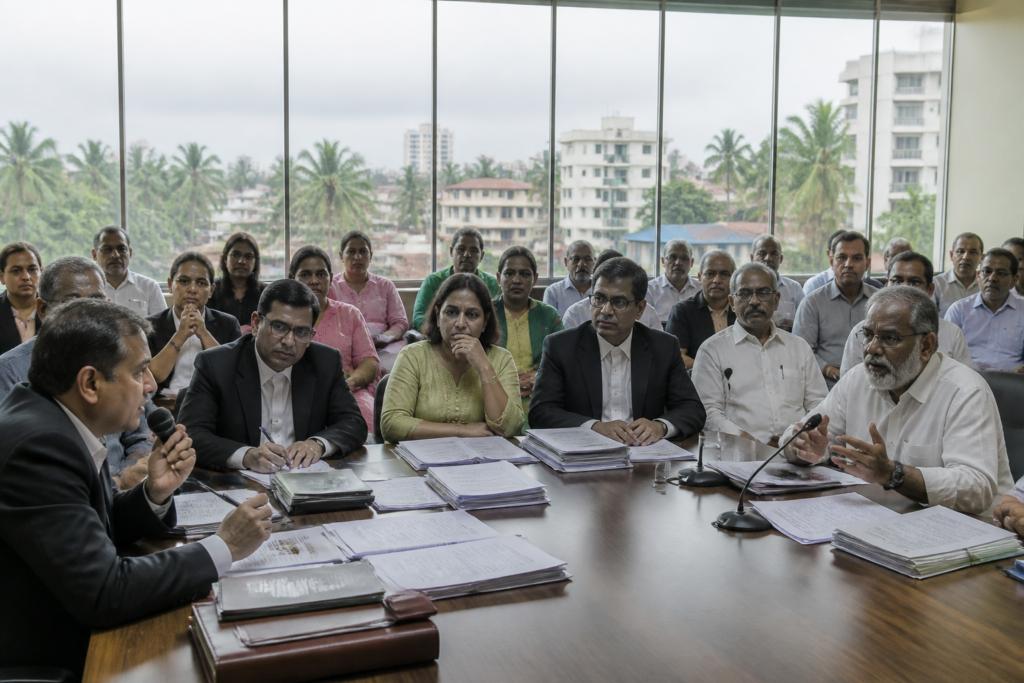
The demand was raised again at a consultation meeting organised by the United Legal Research and Justice Trust in Mangaluru. Advocate M.P. Noronha called on organisations, students and people across social groups to collectively place the need for a circuit bench before a committee constituted by the court. He said residents of the region had been seeking such an arrangement for 18 years and that the campaign had now entered its second stage.
The immediate development, therefore, is not the creation of a bench. It is an effort to persuade the committee examining the demand. The distinction matters. The report records a renewed mobilisation and arguments being prepared for the committee, but it does not establish that the committee has recommended a bench, that the court has approved one, or that a timetable has been fixed.
The institutional question behind the campaign is whether judicial access should depend heavily on physical proximity to the principal court. A circuit bench would be intended to bring at least some High Court proceedings closer to the districts that generate or handle the disputes. The report does not specify the proposed location, jurisdiction, number of sitting days, infrastructure requirements or administrative model. Those details remain part of the unresolved policy and institutional discussion.
### A regional demand with a specific legal geography
The advocates supporting the demand have pointed to the distinctive nature of disputes emerging from the coastal and surrounding districts. Noronha referred to cases involving the Aliyasantana system, mulageni rights and kumki rights. These are land and tenure-related matters with a particular regional and historical context. His argument was that the committee members should be made aware of the issues that make the region’s litigation different from a generic case load.
This is an important feature of the proposal. The case for a circuit bench is not being presented only in terms of distance or convenience. It is also being framed as a question of institutional familiarity. Where disputes arise from region-specific land records, customary arrangements or tenure practices, lawyers supporting the demand believe that the judicial system should be more directly exposed to the legal and social context in which those disputes occur.
The report does not provide a classification of the cases involving these rights, nor does it state how many are pending, how frequently they reach the High Court or how a circuit bench would change their disposal time. Those gaps prevent a quantitative assessment of the proposed bench’s likely effect. But they also identify the evidence the committee would need while examining the demand: the volume of region-specific cases, their geographic distribution, their age and the stages at which they remain pending.
Noronha said the campaign had already succeeded in establishing the claim for consideration and that the next task was to convince the committee members. This indicates a shift from public advocacy to institutional persuasion. The campaign’s second stage will depend less on the existence of the demand and more on the quality of the material placed before the committee.
### The backlog argument
The other major argument at the meeting concerned the size of the High Court’s pending case load. Noronha cited 3,21,240 cases pending before the High Court and said the figure would show the scale of the burden on the court. The report does not provide the date of the count, a category-wise break-up or the share of cases originating in the four districts named at the meeting. The number should therefore be understood as a figure cited by the speaker, rather than as a complete statistical picture of the judiciary.
Even with that limitation, the backlog figure is central to the campaign’s institutional logic. If a court is handling a large number of pending matters, a regional sitting arrangement is presented as one possible way to improve access and distribute judicial work. But a backlog number by itself cannot establish that a circuit bench would reduce pendency. That would require information on judicial strength, case complexity, filing rates, disposal rates, courtrooms, registry capacity and the legal powers assigned to the proposed arrangement.
The demand consequently raises two connected but separate issues. The first is physical and procedural access: how easily litigants and lawyers from the four districts can participate in High Court proceedings. The second is capacity: whether the court has enough judges, staff, courtrooms and administrative systems to process cases within a reasonable period. A circuit bench may address the first issue directly, while its effect on the second would depend on how it is designed and funded.
Jagadish Shenava, president of the Mangaluru Bar Association, said the High Court would need at least 10 years to dispose of the litigation pending from Dakshina Kannada, Udupi, Kodagu and Chikkamagaluru. The report attributes this assessment to him but does not provide the case count or method behind it. The statement nevertheless shows how the bar is framing the problem: as a regional accumulation of litigation that cannot be resolved quickly through the existing arrangement.
### What the committee will have to examine
The committee’s task, as described in the report, is not merely to measure public support. It will have to assess whether a circuit bench is legally, administratively and operationally justified. That assessment would need to connect the campaign’s broad claims with verifiable evidence.
The first area is demand. A case for a Mangaluru High Court bench would be stronger if it showed the number of matters filed from each of the four districts, the distance and travel burden involved in attending proceedings, the proportion of cases requiring repeated appearances and the categories of litigation most affected. The report records the broad regional geography but does not include those measurements.
The second area is the character of the litigation. The references to Aliyasantana, mulageni and kumki rights suggest that land and tenure disputes are part of the region’s distinctive legal landscape. The committee would need to determine how many such matters reach the High Court and whether their regional specificity creates a practical reason for a circuit arrangement. Without that assessment, the argument remains persuasive in principle but incomplete as an administrative proposal.
The third area is capacity. The cited backlog of 3,21,240 cases and the claim of a possible 10-year disposal period point to a serious workload concern, but they do not explain the causes of delay. A new sitting location could require additional judges, registry staff, court buildings, digital systems and budgetary allocations. The supplied report does not state whether such requirements have been estimated or who would bear responsibility for them.
The campaign is also being presented as a non-partisan regional issue. Shenava called for political differences to be set aside, while Noronha appealed to organisations, students and people from all sections of society. MLA Ivan D’Souza and United Legal Research and Justice Trust president B. Ibrahim attended the meeting. Their participation shows that the campaign is seeking a wider coalition, but the report does not record a formal government position or a response from the High Court committee.
### Access, capacity and the next stage
The larger urban and regional governance question is how institutions serving a wide territory should be organised when demand is concentrated in places away from the principal administrative centre. Courts are not transport projects, but their effectiveness also depends on geography, connectivity, administrative reach and the cost of participation. For litigants, lawyers and families, the location of a court can shape how often they can pursue a case and how much time and money the process requires.
At the same time, access cannot be separated from institutional capacity. Bringing proceedings closer to a region does not by itself resolve delays unless the new arrangement has the authority and resources to handle cases. The Mangaluru campaign is therefore seeking an answer to both questions: whether the region requires a closer High Court presence and whether that presence can be structured to deliver additional judicial capacity.
The evidence currently available confirms a long-running demand, a consultation intended to build support before a court-appointed committee, references to region-specific land disputes, a cited High Court pendency of 3,21,240 cases and a claim that litigation from four districts could take at least 10 years to dispose of. It does not establish that a circuit bench has been approved or that the backlog would automatically fall if one were created.
The next significant development will be the material placed before the committee and any recommendation or response that follows. The committee’s treatment of the regional case load, the distinctive land-rights disputes, the cited pendency and the administrative requirements of a circuit bench will determine whether an 18-year campaign moves from public demand to an institutional decision.


