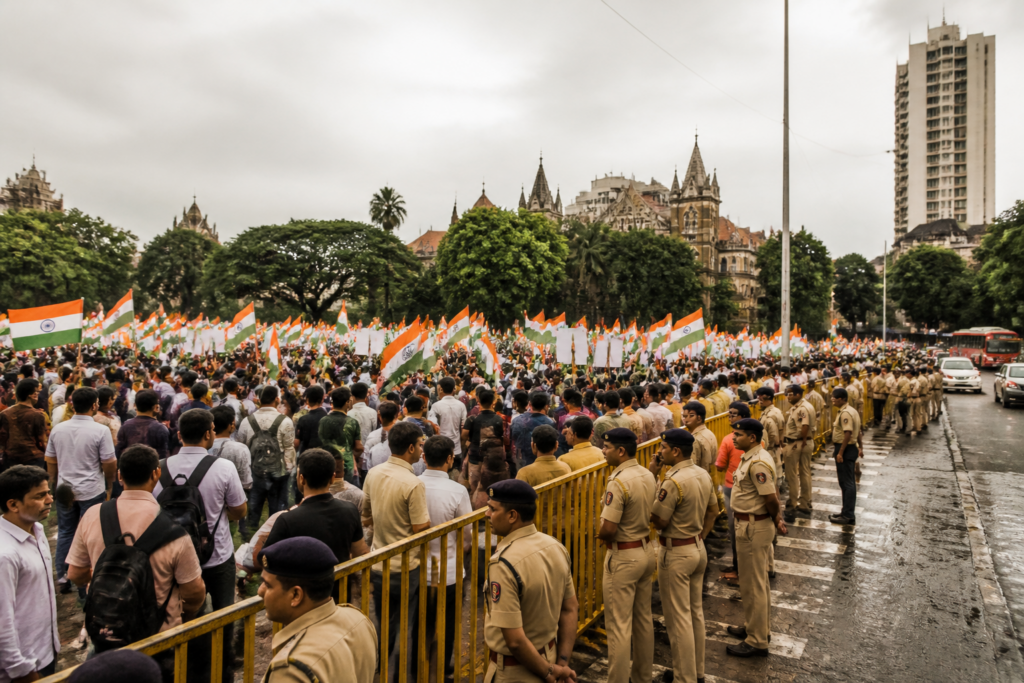
A demonstration at Mumbai’s Azad Maidan on Friday brought together protesters demanding the resignation of Chief Election Commissioner Gyanesh Kumar, withdrawal of the special intensive revision (SIR) of electoral rolls and the release of activists detained in New Delhi. Organised under the banner of ‘Lehra Do Tiranga’, the protest was held in solidarity with demonstrations in the national capital.
The demonstration was organised by Citizens for Peace and Justice (CPJ), according to its coordinator Amol Asulkar. He said the Mumbai event was intended to support protesters in New Delhi who had been opposing what he described as authoritarian rule. His allegations and the protesters’ demands could not be independently established from the material supplied for the report.
Participants also raised concerns about the detention of activists Ashutosh Ranka and Saurabh Das in New Delhi. Manan Desai, a volunteer with the Cockroach Janta Party, questioned the basis of their detention and said they had been arrested after unfurling the National Flag. Mr. Desai also said he had been detained two days earlier when protesters attempted to gather at Mumbai’s August Kranti Maidan.
The event featured demands linked to the SIR exercise, including protection of voters’ names on electoral rolls and an investigation into alleged electoral irregularities. Harshada, associated with DISHA, said activists were conducting anti-SIR campaigns across States through the Bhagat Singh Janadhikar Yatra. She alleged that the exercise could disproportionately affect Muslims, Adivasis, women and other marginalised communities. The protesters also demanded the replacement of electronic voting machines with paper ballots, withdrawal of criminal cases against demonstrators and the arrest of the Chief Election Commissioner.
Mumbai’s protest infrastructure was itself a central issue at the gathering. Ali Bhojani of Hum Bharat Ke Log criticised the restriction of demonstrations to Azad Maidan, saying infrastructure work had reduced the usable space at the ground. He called for the Bombay High Court to designate multiple protest locations across the city, including areas near the Mahatma Gandhi statue outside Mantralaya. The demand reflects a wider dispute over how Mumbai balances public demonstrations with restrictions on location, traffic and public order.
The Mumbai Police permitted the demonstration from 10 a.m. to 5 p.m., subject to conditions. These included a maximum gathering of 5,000 people, restrictions on loudspeakers and a ban on weapons or activities that could disturb public peace. Amey Gadigaonkar, a Class 12 student and CJP supporter, said Mumbai Police cooperated with the organisers in facilitating the event, while alleging that protesters in New Delhi had faced assaults by personnel without visible identification badges.
The demonstration followed reports of police action against protesters and journalists covering related events in New Delhi. The Committee to Protect Journalists said 43 journalists had been detained and several assaulted while reporting on protests against the Chief Election Commissioner. The report also noted that protesters led by the Students’ Federation of India were stopped at Janpath-Tolstoy Marg in New Delhi.
The Mumbai organisers’ demands included continued opposition to the SIR exercise and the release of detained activists. Friday’s event was permitted to continue until 5 p.m. under the conditions imposed by the Mumbai Police.