

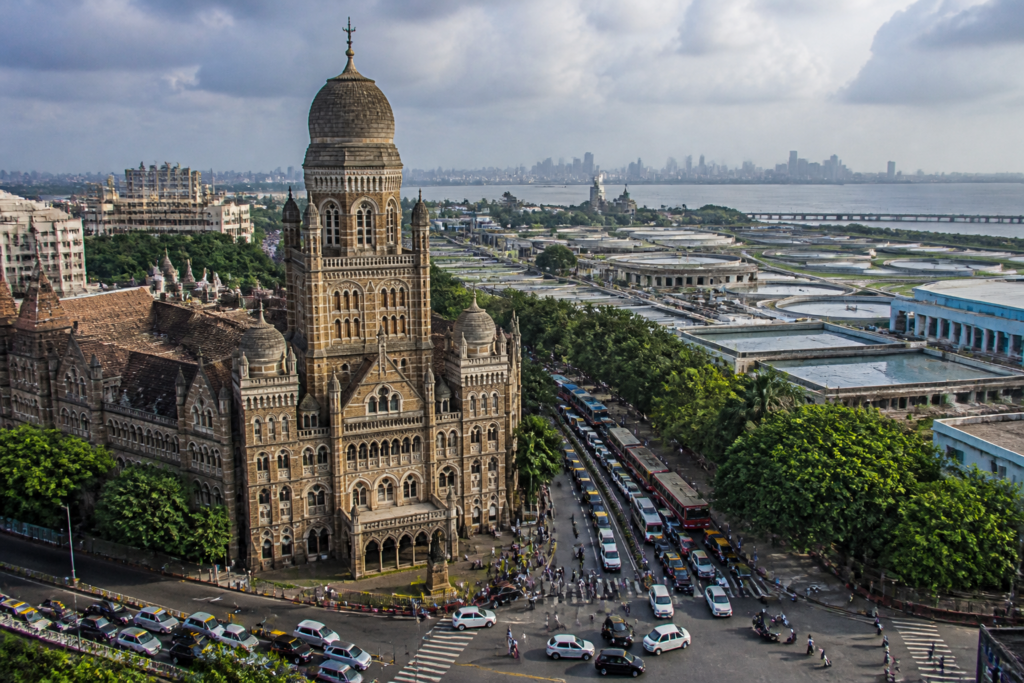
The Brihanmumbai Municipal Corporation has begun preparing a proposed green bond issue to fund major water and wastewater projects, even as questions remain over the scale of its liabilities and the financial pressure created by its infrastructure programme. The Indian Express has reported that the civic body has floated an expression of interest to appoint a debenture trustee, an important step before municipal bonds can be issued to investors.
The proposed BMC green bonds could raise between Rs 5,000 crore and Rs 10,000 crore, according to civic authorities cited by the report. The funds are expected to support wastewater treatment facilities in Dharavi, Versova, Bhandup, Ghatkopar, Bandra and Malad. The proposed borrowing may also help finance desalination plants, two water tunnel projects and the Gargai dam project.
The move shifts part of Mumbai’s infrastructure financing from the corporation’s reserves and annual revenues towards market-based borrowing. Municipal bonds are debt securities issued by urban local bodies to raise capital for public infrastructure. A debenture trustee acts as an intermediary between the issuer and bondholders, representing investors’ interests and overseeing compliance with the terms of the issue.
The BMC’s proposed trustee would be expected to oversee the bond issuance process, manage investors’ money and provide liquidity security for a period of 15 years, according to an official statement quoted by The Indian Express. The report also says that the civic body has finalised an agency to study its credit rating and selected the banks that will issue the bonds.
Credit rating is central to this process because it affects how investors assess the corporation’s ability to repay borrowed funds. The BMC had appointed a Securities and Exchange Board of India-registered agency in April to analyse its credit rating, according to the report. The assessment is expected to form part of the groundwork for future borrowing through the capital markets.
The proposed bond issue comes against the backdrop of large infrastructure commitments. The Indian Express report says the BMC is facing liabilities of Rs 2.34 lakh crore linked to large-scale infrastructure projects and that this amount is two and a half times the civic body’s annual 2026-27 budget. It also reports that the corporation recorded a loss of Rs 3,544 crore in its financial reserves during the year.
However, the supplied report contains a material inconsistency in its presentation of the liabilities figure. Its opening passage refers to liabilities of Rs 2.34 crore, while later passages state that the amount is Rs 2.34 lakh crore. These figures differ by several orders of magnitude and have substantially different implications for the BMC’s balance sheet, borrowing capacity and debt-servicing obligations. The correct figure should therefore be checked against the BMC’s budget documents, audited financial statements or an official municipal communication before the claim is treated as established.
That discrepancy matters because municipal borrowing is not simply a question of whether a corporation can raise money. The size, structure and repayment schedule of existing liabilities influence the cost of new debt, the confidence of bond investors and the ability of a civic body to maintain essential services while servicing loans. They also determine how much of the corporation’s future revenue may be committed to infrastructure financing rather than routine municipal operations.
The BMC’s proposed use of green bonds places the issue within a broader infrastructure-financing framework. Green bonds are generally linked to projects with environmental objectives, such as wastewater treatment, water conservation, renewable energy, climate resilience or pollution reduction. In Mumbai’s case, the projects identified in the report are concentrated in water supply, wastewater management and related infrastructure, areas that directly affect public health and the city’s environmental performance.
Wastewater treatment capacity has a direct relationship with how a dense coastal city manages pollution, public health and its waterways. Facilities spread across Dharavi, Versova, Bhandup, Ghatkopar, Bandra and Malad would be located in different parts of the metropolitan system, allowing the financing plan to be connected to multiple service areas rather than a single site. The supplied material does not establish the capacity, cost, construction timeline or completion status of each facility, so those details remain to be verified.
The inclusion of desalination plants and water tunnels suggests that the bond proposal is also linked to long-term water-security planning. The proposed Gargai dam project is another part of the package identified by the civic authorities. However, the report does not specify how the proposed bond proceeds would be divided among these projects, whether they would finance new construction or refinance existing expenditure, or what revenue mechanism would support repayment.
These distinctions are important for understanding the financial architecture of the proposal. A bond issued to build a new wastewater plant has a different risk profile from borrowing used to refinance earlier spending. Similarly, projects that generate direct user revenue may be assessed differently from essential civic infrastructure funded primarily through municipal taxes and grants. The supplied report does not provide this level of detail.
The Union Budget 2026-27 may provide an additional incentive for the proposed issue. Finance Minister Nirmala Sitharaman announced a Rs 100 crore incentive for a single municipal bond issuance of Rs 1,000 crore, according to the report. The article does not clarify the eligibility conditions, the number of municipalities that may access the incentive or whether the BMC’s proposed green bond issue would qualify under the announced framework.
The BMC is India’s richest civic body by budgetary scale, but financial size alone does not remove the institutional risks associated with borrowing. Market finance requires regular disclosure, credible accounts, repayment planning and clear project reporting. Investors and residents would need to know how much is being borrowed, the interest cost, the maturity period, the security offered to bondholders and the consequences for the civic body’s future budgets.
For Mumbai’s residents, the key issue is whether borrowing produces visible improvements in essential services without weakening the corporation’s ability to fund everyday municipal functions. Water supply, wastewater treatment and flood-related infrastructure require large upfront investments, but the benefits often emerge over long periods. The financial burden, meanwhile, begins when debt is raised and must be managed through future revenues.
The proposed issue therefore represents both a financing opportunity and a test of municipal financial governance. It could help the BMC bring forward projects that may be difficult to fund solely through annual allocations. At the same time, the scale and terms of the borrowing will determine whether the bonds expand infrastructure capacity responsibly or add pressure to an already committed financial system.
The immediate next steps are the appointment of a debenture trustee, completion of the credit-rating exercise and finalisation of the bond issuance process through the selected banks. Before the proposal can be assessed fully, the BMC’s verified liability figure, audited reserve position, project-wise funding plan and repayment structure will need to be established from primary municipal and financial documents.


