

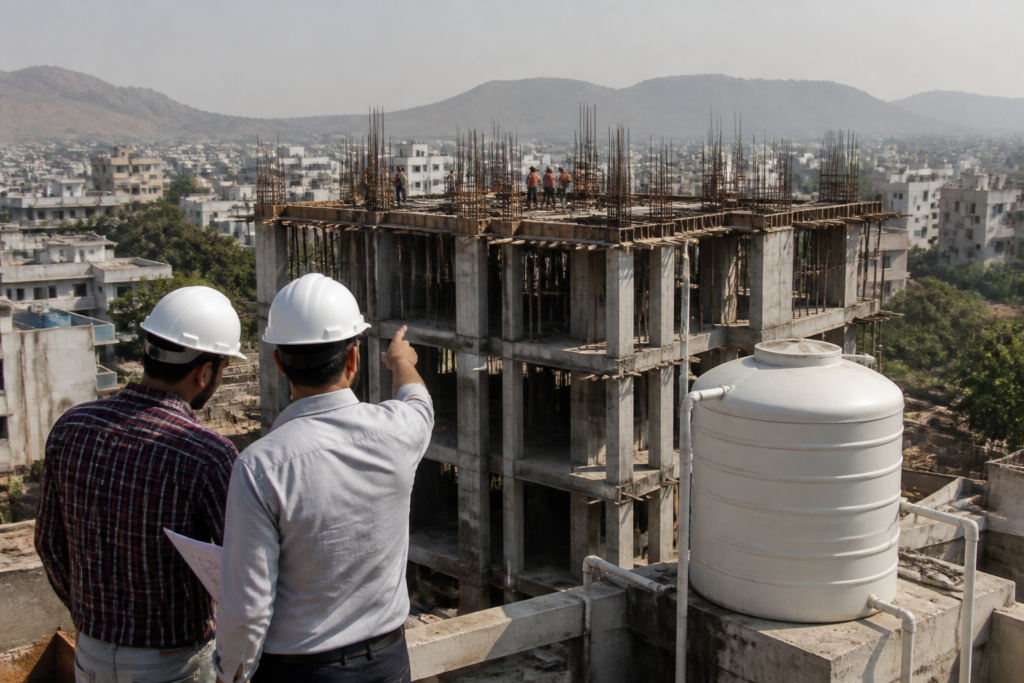
The Pune Metropolitan Region Development Authority (PMRDA) has made proof of assured water supply mandatory for building permissions and occupancy certificates, tightening approval requirements for developers across the region with immediate effect.
Under revised norms issued by PMRDA commissioner Abhijit Chaudhari, developers must obtain a water availability certificate from the competent authority. The certificate must confirm that the proposed water supply will meet the requirements of the project before construction permissions or occupancy certificates are granted.
The circular replaces a directive issued on September 2, 2024. A PMRDA official said the earlier requirement was limited to an undertaking from the developer. “Earlier, it was just a mere water affidavit. This has changed with this circular,” the official said.
The authority that issues the certificate will depend on the source of water proposed for the project. Certificates may be issued by a zilla parishad, Maharashtra Jeevan Pradhikaran, the Maharashtra Industrial Development Corporation, the Pune Municipal Corporation or Pimpri Chinchwad Municipal Corporation. Local municipal councils, nagar panchayats and the water resources department are also listed among the competent authorities.
The requirement covers projects that depend on wells or borewells. Where these water sources cannot be certified by the listed authorities, developers must obtain a water availability certificate from the Groundwater Surveys and Development Agency, or GSDA.
The revised norms apply to a wide range of developments in the Pune Metropolitan Region. These include residential layouts, bungalows, farmhouses, resorts, hotels, industrial establishments and commercial projects that rely on independent water sources.
For such projects, developers must provide the required water availability undertaking as part of the process for securing building permissions and occupancy certificates. The rule therefore places water documentation within the approval system rather than treating it as a separate declaration by the project proponent.
The change gives local and specialised water agencies a formal role in confirming whether a proposed project has access to adequate supply. It also distinguishes between projects connected to recognised public or institutional sources and those relying on groundwater through wells or borewells.
For residents, the approval requirement is directly linked to whether a project can demonstrate a water source capable of meeting its stated needs. For developers, the revised process creates an additional certification step before permissions and occupation approvals can be secured.
The circular issued by PMRDA takes immediate effect. Developers seeking approvals in the Pune Metropolitan Region will therefore need to submit water availability documentation under the revised framework rather than relying only on the affidavit-based requirement that applied under the previous directive.


