

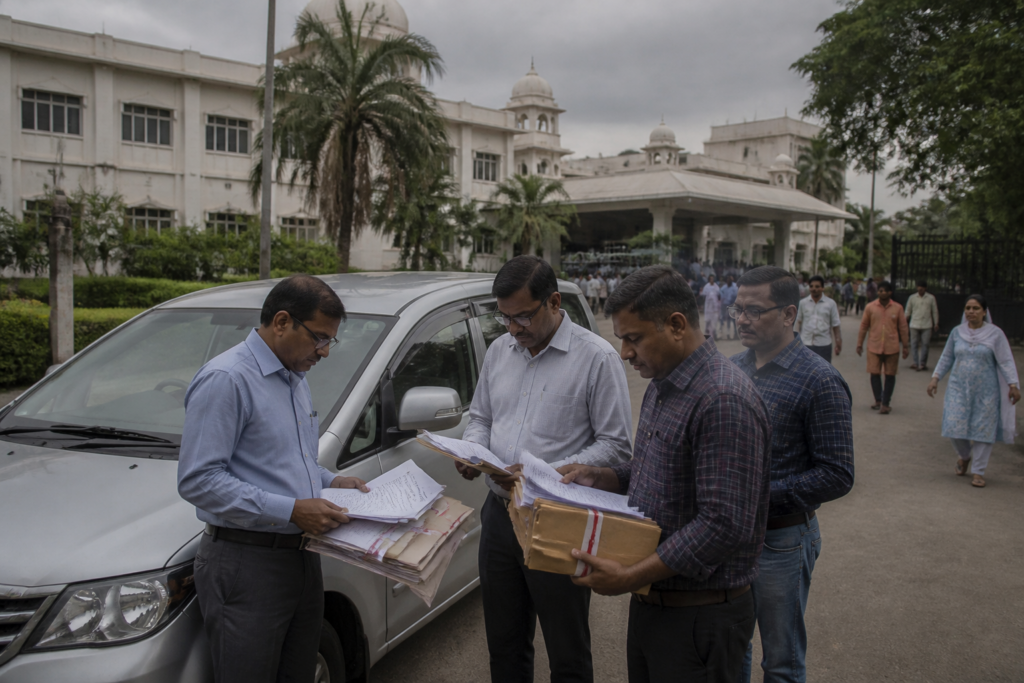
Nori Lakshmi Bhaskar, Additional Medical Superintendent of Hyderabad’s Nizam’s Institute of Medical Sciences (NIMS), was sent to Chanchalguda prison after the Telangana Anti-Corruption Bureau completed his three-day police custody in a disproportionate-assets case involving properties and investments valued at Rs.6.13 crore.
Bhaskar, 56, was arrested on September 22 after the ACB registered a case alleging that he had accumulated assets disproportionate to his known sources of income through corrupt practices and other dubious means during his service. The latest custody action followed the completion of questioning by the anti-corruption agency.
According to the ACB, searches were conducted at Bhaskar’s residence in Kalpataru Apartments, Erragadda, and at seven other locations linked to his relatives, friends, alleged benamis and other associates. The searches produced documents relating to flats, open plots, financial investments, gold ornaments and vehicles.
The agency placed the value of the identified movable and immovable assets at Rs.6.13 crore. It also said that the market value of the properties could be substantially higher than their documented value. The assets listed by the ACB include real estate holdings and financial transactions, bringing the case into the administrative and financial scrutiny surrounding a senior official of a major public medical institution.
During police custody, the ACB questioned Bhaskar about assets allegedly acquired in the names of benamis and other people. The report said the agency believed he was initially tight-lipped but later provided information during sustained questioning. These claims remain part of the investigation and have not been established by a court.
The ACB also said Bhaskar had invested Rs.1.30 crore in the purchase of a flat that was involved in a dispute before the Debt Recovery Tribunal. In addition, the agency found that Rs.1.33 crore had been lent by him to various people as hand loans.
The case illustrates the role of asset-disclosure and property-tracing investigations in corruption cases involving public officials. Documents relating to property, vehicles, investments and loans can become central to determining whether an official’s holdings are consistent with known income. In this matter, the ACB’s allegations concern both the scale of the assets and the use of properties and financial arrangements involving associates and other individuals.
Bhaskar’s movement to judicial custody follows the conclusion of the three-day police custody period. The ACB’s investigation into the alleged disproportionate assets and the ownership or control of the identified properties and investments will determine the next stage of the case.


