

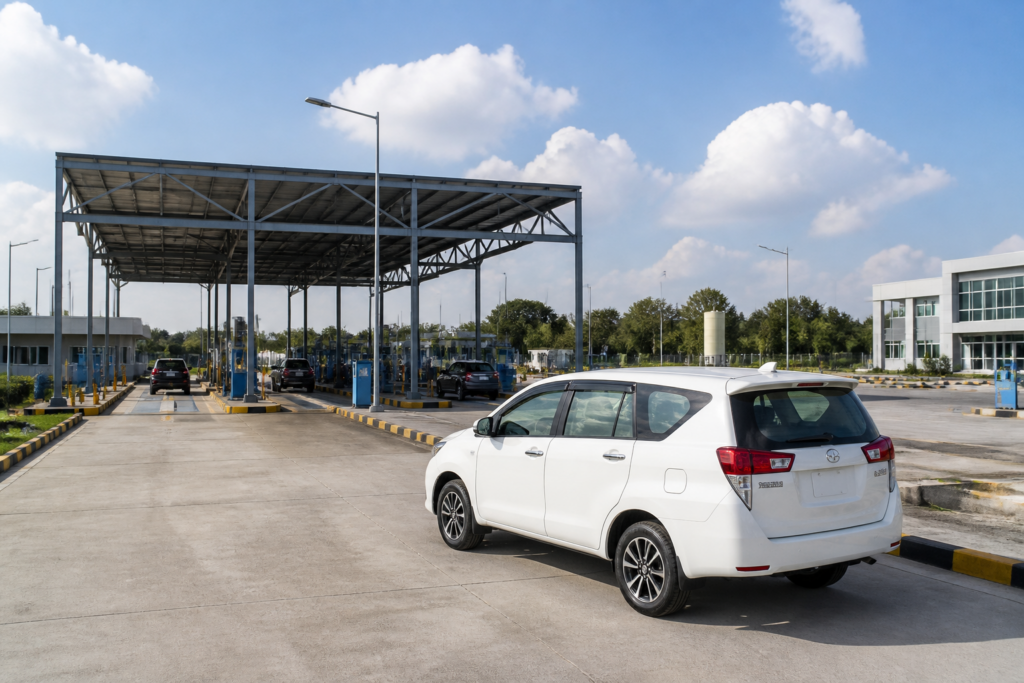
The Telangana government has approved revised administrative sanctions worth Rs.425.50 crore for 37 Automated Testing Stations (ATS) that will conduct vehicle fitness tests using modern technology, with the first phase covering 15 stations across the state.
The Transport department issued orders for the project, according to a report by Deccan Chronicle – South. The approval was communicated by the office of Transport Minister Ponnam Prabhakar.
The revised sanction increases the approved cost of each station to Rs.11.50 crore. Earlier administrative sanctions had approved a total outlay of Rs.296 crore, calculated at Rs.8 crore per station. The latest order raises the overall project allocation by Rs.129.50 crore.
In the first phase, one Automated Testing Station will be established at each of the former district headquarters. Four additional stations will be set up within the Greater Hyderabad and Hyderabad Metropolitan Development Authority region, taking the initial phase total to 15 stations.
The government has approved Rs.172.50 crore for this first phase. The supplied report does not specify the locations of the four additional stations within the Greater Hyderabad and HMDA region, or provide a schedule for construction, commissioning or operationalisation.
Automated Testing Stations are intended to use technology-based processes for assessing vehicle fitness. In Telangana’s case, the approved project represents a shift from the earlier sanctioned plan towards a larger network of dedicated testing facilities. The department’s orders establish the revised administrative approval and the cost framework for the 37-station programme.
The location plan places the first phase across the former district headquarters while adding capacity in the Hyderabad metropolitan region. This structure gives the project both a statewide footprint and a specific concentration in and around the state capital, where the four additional stations are planned.
The revised cost is significant for transport administration because the project’s total allocation is now tied to a higher per-station estimate than the earlier sanction. The first-phase approval of Rs.172.50 crore corresponds to the 15 stations included in the initial rollout.
The announcement does not state whether all 37 stations will be developed simultaneously after the first phase, nor does it identify the agencies or contractors responsible for construction and operation. It also does not provide projected testing capacity, user charges, staffing details or the categories of vehicles that will be covered.
For vehicle owners and transport officials, the next operational milestones will be the identification of sites, completion of the approved facilities and notification of when testing begins. The Transport department’s revised orders provide the financial sanction and phase structure, while further implementation details remain to be announced.


