

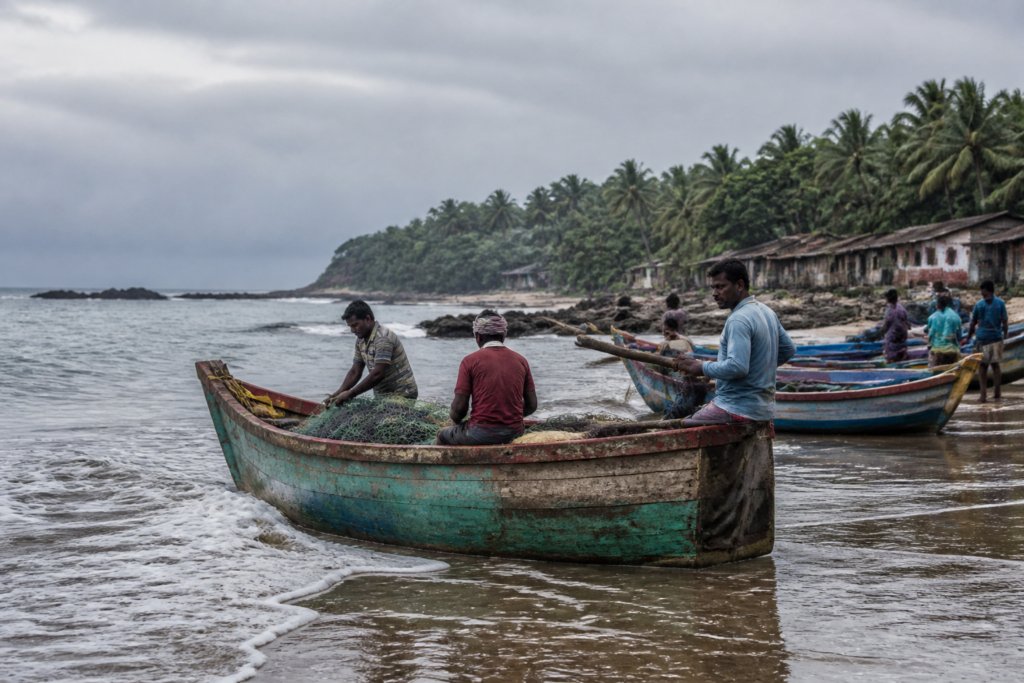
Goa’s fisherfolk have threatened an agitation if the state enforces its marine spatial planning framework, saying the policy could restrict access to traditional fishing grounds and put coastal livelihoods at risk.
The warning was issued by the National Fishworkers Forum (NFF), which said it has reservations about the framework’s possible impact on fishing communities and marine biodiversity. The forum’s position was discussed at a national consultation in Karwar attended by representatives from Goa, Karnataka, Maharashtra and Gujarat, according to the Times of India report.
Olencio Simoes, general secretary of the NFF, said policies introduced under the blue economy should not result in losses for fishing communities. “Goa cannot afford to lose its traditional fishing grounds to commercialisation of the sea. Our coastal communities depended on these waters for generations,” he said.
Simoes said any policy threatening local communities’ access to the sea would face opposition from the fishing community. The forum’s proposed agitation places marine spatial planning within a wider dispute over how India’s coastal waters should be managed and who should receive priority when marine areas are assigned for different uses.
The NFF alleged that marine spatial planning could enable the allocation of marine spaces within India’s territorial waters and exclusive economic zone to commercial and industrial activities. It said this could place corporate interests ahead of traditional fishers’ needs. The report did not specify which projects or activities would be allocated space in Goa under the framework.
Marine spatial planning is intended to organise the use of ocean areas for activities such as fishing, industry and other economic or conservation purposes. In Goa, however, the immediate concern raised by the NFF is whether such planning will recognise existing fishing grounds and protect communities whose livelihoods depend on continued access to coastal waters.
The dispute also highlights the administrative challenge of implementing a marine policy in areas where ecological protection, commercial activity and customary livelihood practices overlap. Any decision affecting marine access would have implications not only for fishing operations but also for the coastal communities that depend on them.
The NFF’s next step, as reported, is to launch an agitation if the state proceeds with enforcement of the framework. No date or detailed programme for the proposed protest was provided in the report, and the state government’s response was not included.


