

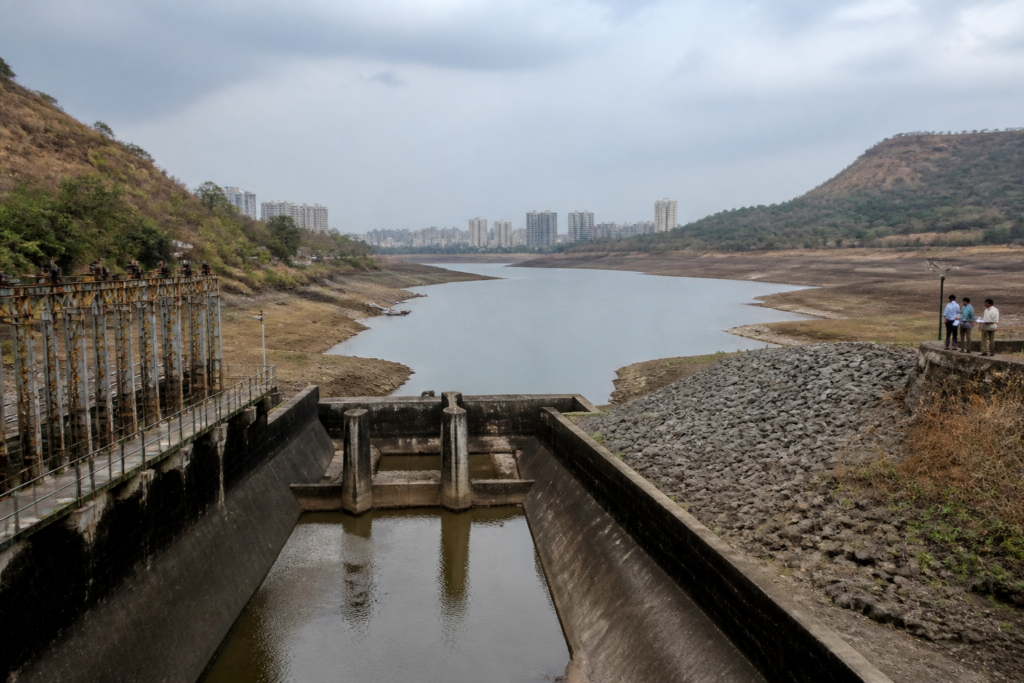
Pune’s water supply could face a 25% reduction, with alternate-day supply proposed for the city, after district authorities reviewed reservoir availability and warned of tighter water management through August 31, 2027. The measures were discussed at a meeting chaired by Pune district collector Jitendra Dudi against the backdrop of a possible El Niño impact and reduced water availability.
The meeting was held at the district collector’s office and attended by Pune Municipal Corporation commissioner Navalkishore Ram, Pune Zilla Parishad chief executive officer Gajanan Patil, Water Resources Department chief engineer Amol Kolhe, superintendent engineer Prithviraj Phalke and other officials. The administration said drinking water would receive priority in the allocation and use of available reservoirs.
According to information presented at the meeting, approximately 20 thousand million cubic feet (TMC) of water was available in the Khadakwasla project on October 15, excluding dead storage, evaporation requirements and buffer storage. This was estimated to be around 25% lower than the usual level for the period. Officials said the reduced availability would require careful planning for both drinking water and irrigation.
The district administration also cited the absence of a significant returning monsoon spell as a factor that could limit water use. The Water Resources Department said Pune city may need a 25% reduction in its water supply. Superintendent engineer Phalke proposed supplying water on alternate days, although the report did not state that the arrangement had been formally implemented.
Local self-government bodies have been instructed to plan for a 20% reduction in water use to ensure supplies last until August 31, 2027. Officials said the Pavana, Bhama Askhed, Chaskaman and Nira systems currently held between 90% and 95% of their storage capacity. Despite those levels, the administration said the water would need to be managed carefully over the full period covered by the planning exercise.
The meeting decided that irrigation releases for the rabi season would be planned according to available storage. However, officials said there may not be sufficient water left for summer irrigation after the requirements of all projects are assessed. As a result, summer irrigation rotations may not be possible.
The administration also ordered coordinated action against unauthorised water extraction. Joint flying squads involving the revenue department, Maharashtra State Electricity Distribution Company, police and the Water Resources Department are to be formed. Pumps and motors used for unauthorised extraction may be seized, while the electricity department has been instructed to take action to disconnect power connections where water theft is detected.
Police deployment and preventive law-and-order measures may also be arranged where required. District collector Dudi said coordinated action by all departments would be necessary to manage available storage, curb unauthorised extraction and reduce the risk of drinking-water shortages during the coming summer. The report did not specify the date on which any citywide supply cut or alternate-day schedule would begin.


