

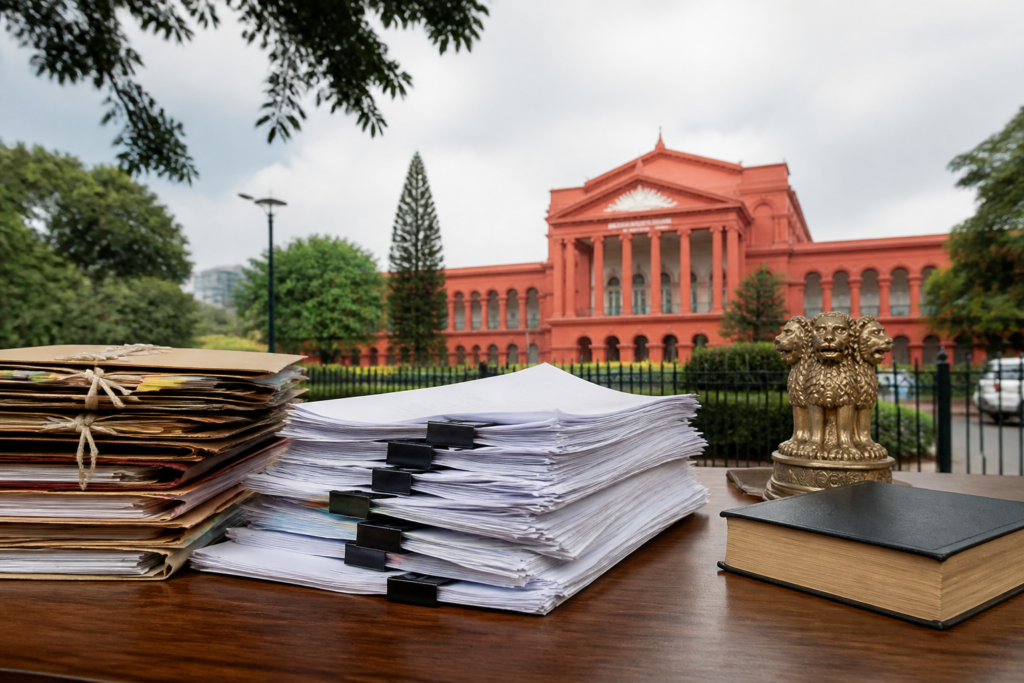
Karnataka’s 56% reservation law has been struck down by the state high court, forcing the government to confront a legal problem that is larger than the immediate dispute over Scheduled Caste and Scheduled Tribe quotas. The state must now decide whether to challenge the judgment, seek constitutional protection through the Centre, or rebuild the evidentiary case for exceeding the Supreme Court’s general 50% ceiling.
The cabinet is expected to consider its options after the high court on Monday quashed a 2022 law that increased reservation for Scheduled Castes from 15% to 17% and for Scheduled Tribes from 3% to 7%. Along with the existing 32% reservation for Other Backward Classes, the changes took the total reservation in Karnataka to 56%.
The court’s central objection, as reported by the Times of India, was that population share alone could not justify breaching the 50% limit. That finding places the state’s next steps within a constitutional framework shaped by evidence, procedure and judicial review, rather than by the size of a beneficiary community alone.
The immediate political response has focused on the Tamil Nadu model. Deputy Chief Minister G Parameshwara and minister KH Muniyappa have urged the government to review the 50% ceiling and explore the route used by Tamil Nadu to retain reservation above that limit. The comparison is relevant, but it does not offer Karnataka an automatic legal solution.
Tamil Nadu’s reservation structure developed over several decades. Its reservation crossed 50% in 1980 and reached 68%. The separation of the Scheduled Tribe quota from the Scheduled Caste allocation later took the total to 69%. Tamil Nadu enacted legislation in 1993 to protect the higher quota, and the Constitution (Seventy-sixth Amendment) Act, 1994, placed that law in the Ninth Schedule.
That history explains why the Tamil Nadu example is attractive to Karnataka. It suggests that a state can combine legislation, political consensus and constitutional action to preserve a reservation structure beyond the general ceiling. But the legal protection is not absolute. The Supreme Court’s 2007 judgment in IR Coelho held that laws added to the Ninth Schedule after April 24, 1973, can still be reviewed if they damage the Constitution’s basic structure.
For Karnataka, this means that a move towards the Ninth Schedule could provide a route to protection, but not a complete shield from judicial scrutiny. The state would need the Centre’s support for the constitutional process, and the resulting law could remain open to examination under the basic-structure doctrine.
The second route is an appeal against the high court order. An appeal would allow Karnataka to challenge the reasoning that population share is insufficient to justify the increase. It would also give the state an opportunity to argue that the legal framework permits departures from the 50% ceiling in exceptional circumstances.
The Supreme Court’s 1992 Indra Sawhney judgment established the general 50% ceiling while recognising that departures could be permitted in exceptional situations. That exception is central to Karnataka’s legal challenge. The question is not simply whether the state has a large Scheduled Caste or Scheduled Tribe population, but whether it can demonstrate constitutionally sustainable grounds for the higher quota.
The third route involves strengthening the evidentiary basis of the law. The state would have to substantiate the extent of social and educational backwardness and explain why a higher level of reservation is necessary. It would also need to satisfy the applicable procedural requirements. The high court’s decision indicates that population data by itself may not meet that threshold.
This shifts the dispute from a question of political intent to one of institutional proof. A reservation law that changes the distribution of public opportunities must be supported by a legal record capable of surviving scrutiny. That record would need to connect the policy to measurable social and educational disadvantage, while also explaining why the existing framework is inadequate.
The issue also illustrates the tension between constitutional uniformity and state-specific social realities. The 50% ceiling operates as a general constitutional principle, but the Indra Sawhney judgment recognised that exceptional circumstances may require departures. The difficulty lies in defining and proving those circumstances without turning the exception into a routine method of bypassing the ceiling.
Karnataka’s 2022 law did not merely make a technical adjustment. It altered the balance between SC, ST and OBC reservation and pushed the overall quota beyond the general limit. The high court’s intervention has therefore reopened the larger question of how reservation categories should be justified, measured and protected when their combined share crosses a constitutional threshold.
The dispute also involves different levels of government. Karnataka can pass or defend its own reservation law, but it cannot independently place that law in the Ninth Schedule. Any such effort would require the Centre’s assistance and a constitutional amendment process. The state’s legal strategy is therefore tied to federal coordination as well as litigation.
That institutional dependence is one reason the Tamil Nadu precedent cannot simply be replicated. Tamil Nadu’s arrangement was built through a specific legislative and constitutional sequence. Karnataka would need to establish its own evidentiary basis and navigate the present legal position, including the limits identified in IR Coelho.
Advocate Hidayathulla Kuvenda said Karnataka’s case could become stronger if the 50% reservation cap were removed. He referred to the 10% Economically Weaker Sections quota and to the exception recognised in the Indra Sawhney judgment. His assessment points to the broader legal debate over whether the ceiling remains workable in a constitutional system that has since introduced additional reservation provisions.
At the same time, the existence of the EWS quota does not by itself settle Karnataka’s case. The state still has to address the specific reasoning of the high court and establish why its 56% structure meets the conditions for an exception. The argument that the ceiling should be reviewed is different from demonstrating that the present law is legally sustainable.
For citizens, the immediate consequences will depend on the government’s next legal and administrative steps. The high court has quashed the 2022 increase, while the cabinet considers whether to pursue an appeal or seek a constitutional route. The supplied report does not establish the final impact on individual admissions, recruitment processes or pending implementation, so those consequences require separate clarification from the authorities.
The central lesson from the Karnataka-Tamil Nadu comparison is that reservation policy is not secured merely by legislative passage. It must also rest on a defensible constitutional record, clear evidence of disadvantage and a route that withstands review. Ninth Schedule inclusion may strengthen protection, but it does not eliminate the basic-structure test.
Karnataka’s next move will determine whether the dispute remains a state-level appeal, becomes a Centre-supported constitutional initiative, or develops into a wider challenge to the 50% ceiling. What is already clear is that retaining the 56% quota will require more than invoking population share or citing Tamil Nadu. The state must show how its policy meets the legal standards governing exceptional departures from the general rule.


