

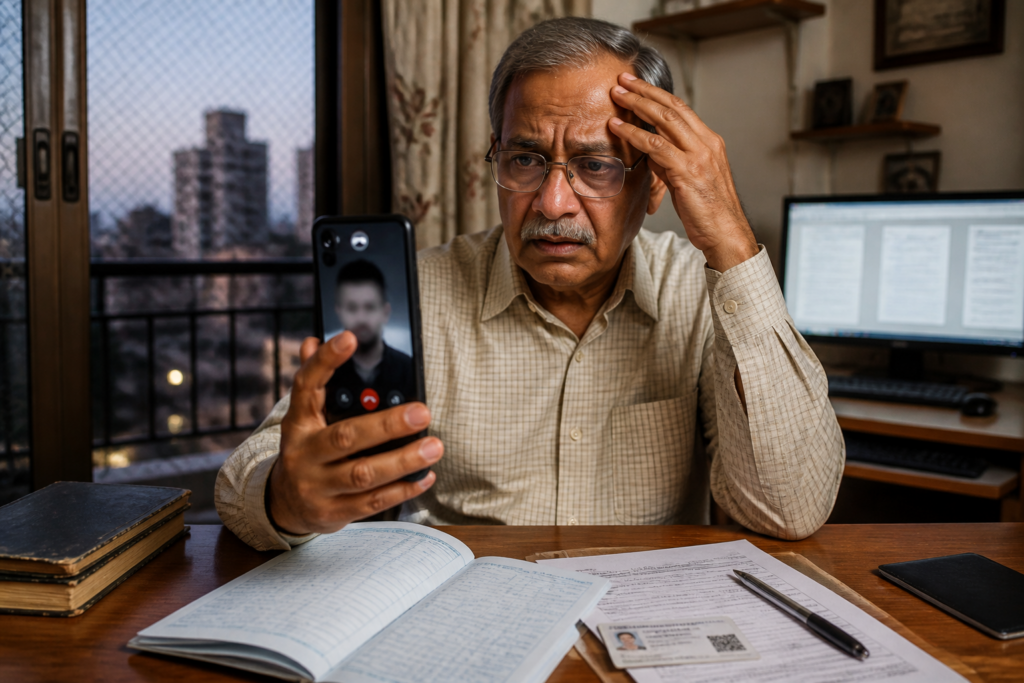
A 77-year-old retired teacher, Kantilal Thakkar, allegedly lost Rs 21.50 lakh after cyber fraudsters posing as Mumbai Crime Branch officials threatened him with arrest over the supposed misuse of his Aadhaar card, according to a complaint filed with the cyber crime police.
The fraud was carried out through WhatsApp video calls between October 6 and 12. The callers allegedly told Thakkar that his Aadhaar details had been used to obtain a fraudulent SIM card and open a Canara Bank account. They claimed the account was linked to money laundering and terrorist activities and warned that he could be arrested.
The impersonators then told Thakkar that he would have to cooperate with an investigation and transfer money for verification of the funds in his bank account. To make the claims appear genuine, they allegedly sent him documents bearing the names of the Mumbai Police, the Enforcement Directorate, the Reserve Bank of India and the Supreme Court.
The documents reportedly contained forged signatures and seals. The callers allegedly used the documents and the threat of arrest to persuade Thakkar that he was involved in a criminal investigation and needed to follow their instructions to avoid legal action.
According to the complaint, Thakkar transferred Rs 15 lakh through RTGS to a bank account on October 8. He transferred another Rs 6.50 lakh to a different account the following day, taking the total loss to Rs 21.50 lakh. After receiving the money, the fraudsters allegedly sent him fake receipts and stopped communicating with him.
Thakkar later realised that he had been deceived and approached the cyber crime authorities. A police complaint has been registered, according to the report. The source does not provide details of any arrests, recovery of the money or identification of the bank account holders.
The case reflects a growing form of digital deception in which criminals combine identity theft claims, forged government documents and video calls to create the appearance of an official investigation. The use of familiar institutions, including the police, financial regulators and courts, is intended to make victims respond immediately rather than independently verify the demand.
Law-enforcement and government agencies do not require individuals to transfer money to unknown bank accounts as a condition for avoiding arrest or verifying personal funds. Any demand made through an unsolicited call or video call should be checked through the agency’s official communication channels before any information or money is shared.
The cyber crime complaint will determine the next steps in the case, including tracing the accounts used for the transfers and establishing the identities of the callers.


